Woke rating
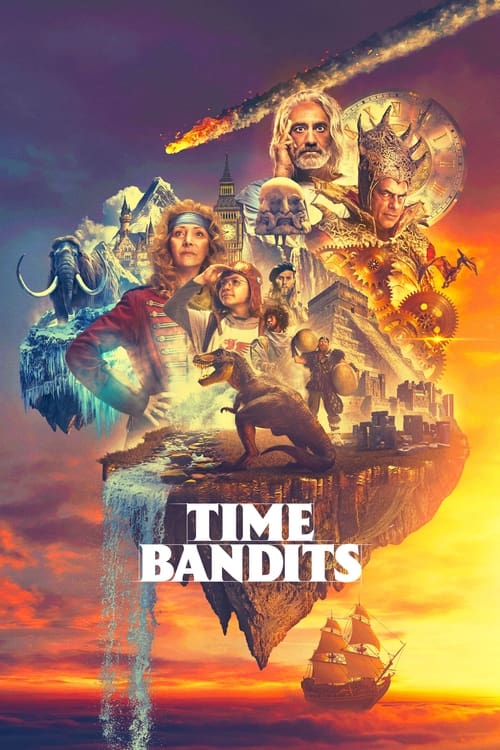
Time Bandits
None or negligible
A family time-travel comedy whose one available episode carries next to no messaging, just a glass-ceiling joke and a light jab at old accounts of the Mayainvaders' accounts of Maya human sacrifice, both undercut by the comedy around them.
Time Bandits is a comedy series built on Terry Gilliam's 1981 film. Kevin, a boy obsessed with history, falls in with a gang of time-travelling thieves led by Penelope (Lisa Kudrow), who are on the run from the Supreme Being with his map of time portals. In the one episode reviewed, the second, the gang tries to drop Kevin home and overshoots into the Ice Age, then lands in a Classic Maya city, where Kevin is sure the welcoming queen, Lady Sak K'uk', is fattening them up for sacrifice while the gang plots to rob her treasury.
The messaging is slight. At the feast, Judy asks the queen, as a successful female leader, for tips on cracking the glass ceiling, and gets a blank look and some general advice about making decisions. The sacrifice storyline ends in a short exchange that casts doubt on the historical sources Kevin relies on, and that is the episode's one direct point.
The messaging is slight. At the feast, Judy asks the queen, as a successful female leader, for tips on cracking the glass ceiling, and gets a blank look and some general advice about making decisions. Kevin's sacrifice warnings turn out wrong: the temple-top ritual is eating fruit and watching the sunset, and when he admits his gruesome account came from invaders, the queen tells him invaders make anything up. Kevin concludes he should not have trusted a secondary source. That exchange is the episode's one direct point.
Nearly everything else is presence or plain comedy. The crew mixes men and women of several ethnicities without comment, and each jab is undercut in its own scene: the glass-ceiling question is a joke at Judy's earnest office talk, Penelope's claim that the gang all lead equally is a joke about her wanting to be in charge, and the Maya court is not idealisedthe queen who calls invaders liars admits she smears the peoples she invades, and says her people kill marauders and behead thieves. Only one episode was available, so the rest of the series could differ.
Score breakdown
Each category is scored 0 to 3: 0 absent or presence only, 1 brief, 2 recurring or plot-relevant, 3 central or dominant. Timestamps refer to the film's running time.
| Category | Score | What we saw |
|---|---|---|
| Content | ||
| A Race and ethnicity | 0 | Race is not raised. The crew is mixed (frames S01E02 0:19:30, 0:28:30) without comment, and no couple appears. The Neanderthal gag (0:01:38) is about Kevin being dropped in the wrong era. |
| B Gender and feminism | 1 | One feminist talking point, played as a joke: Judy asks the Maya queen how a female leader cracks the glass ceiling, and the queen does not know the term and finds ruling boring. Her advice is about making decisions, with no gender angle.
|
| C Sexuality and gender identity | 0 | No LGBTQ+ content and no romance of any kind in this episode. |
| D Power and systems | 0 | No institution is critiqued as oppressing a group. The Supreme Being, the gang's pursuer, is a vain, bad-tempered boss fretting over his stolen map (0:32:40); the joke about invaders smearing the peoples they attack is counted under E. |
| E Cultural and historical revision | 1 | Kevin keeps his role from the 1981 film as the history-loving boy, and the bandits are new characters rather than recasts of the film's gang. The point is in the history: the episode's sacrifice storyline ends by doubting the account Kevin readthe episode's sacrifice storyline ends with the Maya ritual being fruit at sunset and the gruesome account blamed on invaders. It is one scene, told as comedy and immediately complicated, since the queen says her people do kill and behead some outsiders.
|
| F Religion portrayal | 0 | Islam does not feature. Religion appears only as the Maya leaving maize out for their gods (0:21:30) and the Supreme Being waving off 'today's prayers' (0:32:51), comedy about a fussy deity rather than a point. |
| Treatment | ||
| G Antagonist coding | 0 | The villains glimpsed here are a stock evil master and his servant Fianna, played for laughs (0:26:28), and the Supreme Being chasing his map (0:32:35). Neither is coded by group, and the Maya court is not the danger it seemsnot the danger Kevin feared, though it does behead thieves. |
| H Didacticism | 1 | No speeches. The one line that states a point outright is the queen's, about the historical recordthe queen telling Kevin not to listen to invaders, and it leads straight into a joke at her own expense.
|
| I Message over story | 0 | The story leads. The sacrifice storyline is a comic set-up and reversal built across the episode, and it feeds Kevin's arc about being wrong and learning to trust himself (0:15:09, 0:25:23). Nothing bends to make a point. |
| J Left-leaning politics framed as good | 0 | No politics are argued and no political camp is shown. The glass-ceiling line is office jargon played for laughs and is counted under B. |
How the number is reached
- Categories A to J add up to 3 of 30, which gives 1.0 (3 ÷ 30 × 10, rounded to the nearest 0.5).
- Counterweight −0.5: the episode undercuts its own jabs: the queen meets the glass-ceiling question with a blank look and calls ruling easy and boring (0:11:31), Penelope's talk of everyone leading equally is a joke about her wanting to be in charge (0:03:28, 0:15:01), and the Maya court is not idealised.the episode undercuts its own jabs: the queen meets the glass-ceiling question with a blank look and calls ruling easy and boring (0:11:31), and Penelope's talk of everyone leading equally is a joke about her wanting to be in charge (0:03:28, 0:15:01). The queen who calls invaders liars admits she paints the peoples she invades as worse than they are (0:22:17), her court lets slip that they attacked a village over a false rumour (0:22:30), and she says they kill marauders and thieves and behead bandits (0:22:45, 0:23:01).
- Final rating 0.5, none or negligible.
Considered, scored 0
- A crew that mixes men and women of several ethnicities, including Widgit and Judy (frames 0:19:30, 0:28:30), shown without comment.
- Women in charge: Penelope leads the gang and Lady Sak K'uk' rules the city (0:10:18, frame 0:10:30), with her son due to be king at 12 (0:12:58). Part of the story, with no point made.
- Kevin's dismissive parents, who tell him he always does the wrong thing (0:15:09, 0:28:55), as in the 1981 film.
- The Supreme Being as a vain, bad-tempered boss (0:32:24): comedy about a fussy god, not a point about religion.
Evidence and confidence
Confidence: Medium. Full English subtitles from the embedded track and 12 frames sampled every three minutes (the last is end credits). The first minute has no dialogue and is covered by the frames. Only one episode was available (1 of 1 episodes the owner has): S01E02, the second episode of season 1. The pilot and the rest of the series were not reviewed, so the rating reflects this episode only.
Category F definition: As in the rubric: Islam shown as a peaceful and tolerant religion, aligned with human rights, in a way that works as a corrective message.
Episodes reviewed: S01E02.
Rubric version 1. Reviewed 18 November 2026.