Woke rating
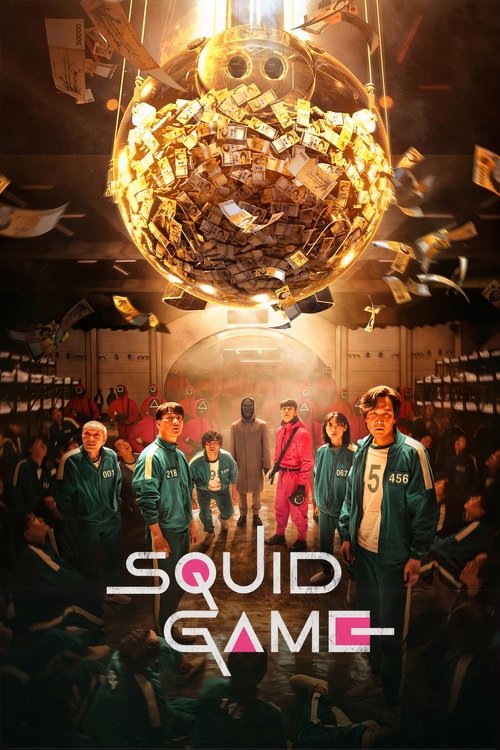
Squid Game
Mild
Squid Game's final season keeps the show's allegory of rich spectators betting on the lives of the indebted poor, but tells it through the games rather than speeches, and its players are as ruthless as the system that preys on them.
Hwang Dong-hyuk's Korean survival drama ends with this third season, which picks up straight after season 2's failed rebellion. Gi-hun, the former winner who came back to stop the games, is returned to the dormitory broken, while the surviving players vote to carry on for an ever larger prize. The six episodes run through a hide-and-seek game in which one team must kill the other, a jump-rope bridge and a final game, while Detective Jun-ho searches the sea for the island and a guard works against the organisation from inside.
The messaging is the series' familiar class allegory. Masked VIPs, rich and mostly Western, watch from a lounge, bet on the players, remark how much the money means to 'people like them' and, in one game, join the hunt themselves, one comparing it to stalking the African wilderness. The organisation dresses each round of killing up as a 'free and democratic vote'. Women and mothers are the season's protectors, and the fate of a pregnant player becomes its central thread. A couple of lines from Gi-hun put the theme into words.
The messaging is the series' familiar class allegory. Masked VIPs, rich and mostly Western, watch from a lounge, bet on the players, remark how much the money means to 'people like them' and, in one game, join the hunt themselves, one comparing it to stalking the African wilderness. The organisation dresses each round of killing up as a 'free and democratic vote'. Women and mothers are the season's protectors: Geum-ja kills her own son to save Jun-hee and her newborn girl, the VIPs put the baby into the games for their amusement, and the last game sets a group of men against her. Gi-hun accuses the Front Man of wanting to watch 'greedy, stupid men' tear the baby apart, and dies saying that the players are humans, not horses.
What keeps the rating mild is that the allegory is shown rather than argued, and the season does not flatter the poor. The players vote again and again to go on for more money and kill each other for bigger shares before ganging up on a newborn, and Gi-hun himself tells Jun-hee that they all chose to come. Most of the villainy on screen comes from fellow players and from the Front Man, who has his own reasons; only the VIPs are villains by type. Race, sexuality and religion are not raised as messages. Only the final season was available, so the first two could differ.
Score breakdown
Each category is scored 0 to 3: 0 absent or presence only, 1 brief, 2 recurring or plot-relevant, 3 central or dominant. Timestamps refer to the film's running time.
| Category | Score | What we saw |
|---|---|---|
| Content | ||
| A Race and ethnicity | 0 | No interracial couple is shown, and race is not raised as a message. The VIPs' wealthy, Western coding is scored under G, and the North Korean characters' pasts are told as personal history. |
| B Gender and feminism | 1 | Mothers' sacrifice and women as protectors run through the season, and the last game sets a group of men against a newborn girl, with one line from Gi-hun calling them greedy, stupid men. Scored 1: motherhood is honoured in a traditional way rather than argued as a cause, and men are among the heroes too.
|
| C Sexuality and gender identity | 0 | No LGBTQ+ theme is raised. Hyun-ju, the trans woman introduced in season 2, plays a protective role in the hide-and-seek game without any reference to it. |
| D Power and systems | 2 | The games are an allegory of the rich buying the lives of the indebted poor, and the season ends on Gi-hun's protest that the players are humans, not horses to bet on. Scored 2, not 3: the critique is shown through the premise and the VIPs rather than argued, and the season dwells more on the players' own choices than on the system.
|
| E Cultural and historical revision | 0 | An original series. Season 3 continues the characters and cast of seasons 1 and 2; nothing is recast or rewritten to carry a message. |
| F Religion portrayal | 0 | Islam does not appear. Religion shows up only as a self-proclaimed shaman who says the gods guide her through the arena in S03E01 (0:37:53), a mother's prayer and a VIP's quip about Jesus. |
| Treatment | ||
| G Antagonist coding | 2 | The VIPs, rich and mostly Western spectators, are defined by wealth and a taste for cruelty, with no motive beyond entertainment, down to putting a newborn into the games. Scored 2, not 3: they are a recurring backdrop, and most of the villainy on screen comes from the players themselves and from the Front Man, who has motives of his own.
|
| H Didacticism | 1 | There are no lectures. The theme is stated in a couple of short lines from Gi-hun late in the season, and everything else is shown through the games.
|
| I Message over story | 0 | The story leads: the games, the votes and the hunt for the island drive every episode. A late plot devicePutting the newborn into the games is a VIP contrivance that serves the season's humanist theme, not a political point. |
| J Left-leaning politics framed as good | 0 | No party or ideology is argued. The class critique is scored under D and G, and the satire of majority voting is aimed at a greedy majority, not at one side of politics. |
How the number is reached
- Categories A to J add up to 6 of 30, which gives 2.0 (6 ÷ 30 × 10, rounded to the nearest 0.5).
- Counterweight −0.5: the season does not idealise the people its system preys on: the players keep voting to go on for more money and turn on each other for bigger shares, Gi-hun says they all chose to come, and the Front Man has his own reasons.the players vote to keep going in S03E01 (0:12:49) and S03E03 (0:16:51), demand that a newborn be killed rather than share the prize in S03E04 (0:21:39) and nominate her for elimination in S03E05 (0:22:36); Gi-hun tells Jun-hee they all chose to come in S03E03 (0:45:34); and the Front Man acts on his own test of whether people can be trusted in S03E04 (0:59:44).
- Final rating 1.5, mild.
Considered, scored 0
- Hyun-ju, a trans woman in season 2, shown in season 3 as a capable protector with no mention of her identity.
- No-eul's and another guard's North Korean pasts, in S03E01 (0:11:57) and S03E05 (0:15:07), told as personal history.
- The repeated 'free and democratic vote', first in S03E01 (0:12:49), which satirises a greedy majority deciding who dies rather than a political side.
- Nam-gyu's slurs about women in S03E01 (0:38:56), part of a bully's character.
- A VIP's quip in S03E04 that a twist beats the resurrection of Jesus (0:17:42).
Evidence and confidence
Confidence: Medium. Full subtitles for every episode: the embedded English track for five of them, while S03E02's track labelled English is in fact Simplified Chinese subtitles, which were read and translated for this review. 123 frames were sampled every three minutes (several are end credits). The owner has six episodes, all of season 3 (2025), the final season, and all six were reviewed. Seasons 1 and 2 were not, so the rating reflects season 3 only; the earlier seasons could differ.
Category F definition: As in the rubric: Islam shown as a peaceful and tolerant religion, aligned with human rights, in a way that works as a corrective message.
Noted, not scored: Parenthood and self-sacrifice are the season's highest values: Gi-hun calls watching his daughter grow up the greatest days of his life in S03E03 (0:45:50), and Geum-ja tells of praying to God to spare her son (0:27:41). A guard's file in S03E06 records that North Korea executed her husband (0:12:01).
Episodes reviewed: S03E01, S03E02, S03E03, S03E04, S03E05, S03E06.
Rubric version 1. Reviewed 17 November 2026.