Woke rating
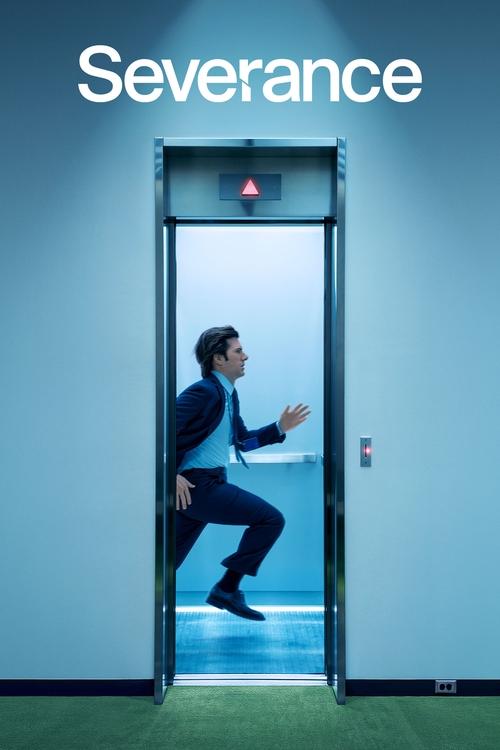
Severance
None or negligible
The season 2 opener of this office-dystopia mystery carries no identity politics; its only messaging is the premise itself, a deadpan satire of a company that keeps its workers' office selves captive.
Severance follows office workers at the Lumon corporation who have had their memories surgically split: their 'innies' know only the office, their 'outies' only life outside. The one episode reviewed is the season 2 opener, in which Mark (Adam Scott) returns to the severed floor months after the revolt that ended season 1 and finds Mr. Milchick in charge, a replacement team at the desks and a company eager to show it has reformed.
The messaging is the show's premise. The recap has the innies telling outsiders they are tortured prisoners, Milchick admits he locked Mark up like an animal, and a cheerful animated video recasts the revolt as the 'Macrodat Uprising' and lists the reforms it won, which come down to snacks, hall passes and a mirror room. Milchick then offers each innie a free choice to leave, while quietly working on them one by one. The innies are a rightless group under a cult-like company, so this counts under power and systems, but it is shown through the absurd setting, not argued. The episode's emotional strand, Irving's grief over Burt, is a same-sex romance played without comment.
The messaging is the show's premise. The recap has the innies telling outsiders they are tortured prisoners, Milchick admits he locked Mark up like an animal, and a cheerful animated video recasts the revolt as the 'Macrodat Uprising' and lists the reforms it won, which come down to snacks, hall passes and a mirror room. Milchick then offers each innie a free choice to leave, while secretly promising Dylan a family visitation suite and asking him to keep it from the others. The innies are a rightless group under a cult-like company, so this counts under power and systems, but it is shown through the absurd setting, not argued. The episode's emotional strand, Irving's grief on finding Burt living with a husband, is a same-sex romance played without comment.
What keeps the score at the bottom is that nothing touches real-world politics or identity. The mixed cast is shown without comment, the villains are one strange company and its managers rather than a group, and the workers are not simple victims: Mark's outie begged to come back, Irving says he was last happy when all he knew was his job, and each innie is left to decide whether to stayall four choose to stay. Only this one episode was available, so the rest of the series could differ.
Score breakdown
Each category is scored 0 to 3: 0 absent or presence only, 1 brief, 2 recurring or plot-relevant, 3 central or dominant. Timestamps refer to the film's running time.
| Category | Score | What we saw |
|---|---|---|
| Content | ||
| A Race and ethnicity | 0 | No race theme. The cast is mixed and Milchick, a Black man, now runs the floor, but nothing is said about race. No interracial couple is shown: the two outie wives mentioned in the episode do not appear. |
| B Gender and feminism | 0 | No gender theme. The departed boss, Cobel, is called a sadist (0:06:20) and the new deputy manager is a child (0:10:27), but neither is used to make a point about women. |
| C Sexuality and gender identity | 0 | No LGBTQ+ message. Irving's love for Burt, a same-sex romance carried over from season 1, drives his storyline here, after he finds Burt living with another man (0:38:11), but it is played as heartbreak, with no commentary. |
| D Power and systems | 2 | The premise is a corporation that keeps its workers' office selves as a captive group with no say, and the episode keeps it in view: the innies' revolt, Lumon's cosmetic reforms and management's manipulation. Scored 2, not 3: it is shown through a cult-like fictional company and its mysteries rather than argued as a critique of capitalism or real institutions, and the workers are not drawn as simple victims.
|
| E Cultural and historical revision | 0 | An original series. Nothing is adapted, recast or revised. |
| F Religion portrayal | 0 | Islam does not feature. The only faith is Lumon's own cult of its founder, Kier Eagan, with its hymn and thanks to Kier (0:05:55, 0:29:09), which the show treats as part of its satire. |
| Treatment | ||
| G Antagonist coding | 0 | The antagonist is Lumon's management: Milchick, the unseen Board and the departed Cobel. They are defined by their company and its cult, not by race, sex, faith, politics or wealth, and Milchick is drawn as an individual with his own manner and concerns, down to having his title spelled right on his welcome screen (0:41:54). |
| H Didacticism | 0 | No speeches state a message. Mark's plea to the Board is about getting his friends back (0:18:36), Helly's line that innies owe their outies nothing (0:37:02) is about the show's split selves, and the company video is corporate spin the show mocks, not a lecture. |
| I Message over story | 0 | The episode runs on its mysteries: where the old team went, what each innie saw outside, the wedding photo and Irving's paintings of a dark hallway (0:39:21). Nothing bends toward a message. |
| J Left-leaning politics framed as good | 0 | No real-world politics. 'Severance reform' is an in-universe cause, and the workers' grievance against the company is scored under D. |
How the number is reached
- Categories A to J add up to 2 of 30, which gives 0.5 (2 ÷ 30 × 10, rounded to the nearest 0.5).
- Counterweight −0.5: the episode does not make its workers simple victims of the company: Mark's outie begged to come back (0:07:20), Mark says he wants his team back so they can serve Kier together (0:19:22), Irving says he was last happy when all he knew was his job (0:38:33), Dylan's case for staying includes pride in his own productivity (0:40:27), and Milchick, the face of management, says he respects them and offers each a free choice (0:29:35, 0:29:47).Mark's outie begged to come back (0:07:20), Mark says he wants his team back so they can serve Kier together (0:19:22), Irving says he was last happy when all he knew was his job (0:38:33), Dylan's case for staying includes pride in his own productivity (0:40:27), Milchick says he respects them and offers each a free choice (0:29:35, 0:29:47), and all four go back to their desks at the end (0:45:54, 0:46:30).
- Final rating 0.0, none or negligible.
Considered, scored 0
- A mixed cast, including Milchick, now the floor's manager, and Miss Huang, his child deputy, shown without comment. Milchick's insistence that his welcome screen read 'Mr. Milchick' (0:41:54) is a passing detail here, with nothing said about race.
- Irving's love for Burt, a same-sex romance from season 1: Irving's grief at seeing Burt with another man, whom Dylan calls his husband (0:38:11, 0:39:46), played sincerely and without comment.
- Mark's late wife and Dylan's wife are mentioned but not seenMark's outie's late wife, whom he recognised in a wedding photo as Ms. Casey (0:31:46), and Dylan's wife Gretchen (0:42:49) are only mentioned; neither appears in this episode, so no couple is counted. The 'love' in the company video is an embrace between cartoon versions of Mark and Helly (targeted frame 0:28:00), both white.
- Cobel, whom Milchick calls a sadist with an erotic fixation on Mark (0:06:20, 0:06:40): one character's misconduct, with no point made about women in power.
- Helly's view that innies are not the same as their outies and owe them nothing (0:36:54, 0:37:02): about the show's own split selves, not a real-world identity.
Evidence and confidence
Confidence: Medium. Full English subtitles from the embedded track, and 16 frames sampled every three minutes, plus 12 targeted frames from the source to check the company video, the break-room and Irving scenes and the end of the episode. Only one episode was available (1 of 1 episodes the owner has): the season 2 opener, S02E01. Season 1 and the rest of season 2 were not reviewed, so the rating reflects this episode only; later episodes could differ.
Category F definition: As in the rubric: Islam shown as a peaceful and tolerant religion, aligned with human rights, in a way that works as a corrective message.
Episodes reviewed: S02E01.
Rubric version 1. Reviewed 18 November 2026.