Woke rating
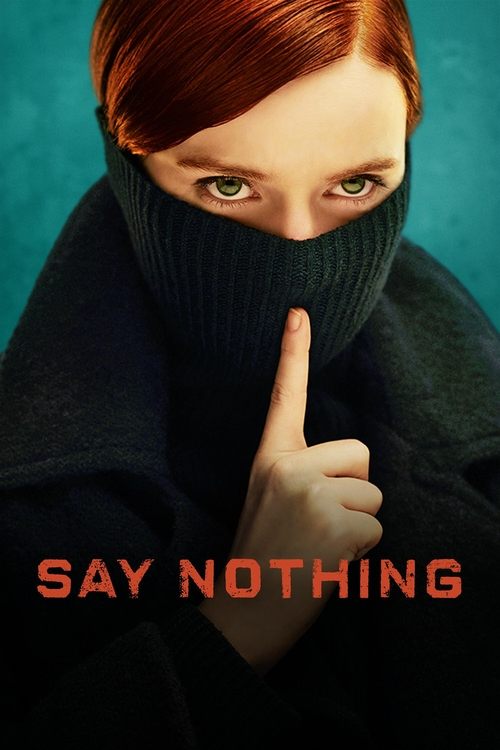
Say Nothing
Mild
A Troubles drama that sets out the Catholic grievance and two sisters' fight to be let into the IRA's war, but spends most of its length on the cost of that war's violence and silence, which keeps its messaging mild.
Adapted from Patrick Radden Keefe's book, Say Nothing follows Dolours Price and her sister Marian from the civil-rights marches of the late 1960s into the Provisional IRA, told through Dolours's later interview for the Belfast Project, a confidential oral history. Alongside them are the IRA commander Brendan Hughes, a rising Gerry Adams, and the children of Jean McConville, a widowed mother of ten taken from her Belfast flat in 1972.
The messaging is concentrated early. The first episode lays out the Catholic case directly: a rigged state that gave Protestants the jobs, the houses and the police, and a peaceful march attacked by loyalists on a route the police chose. The sisters then push to fight rather than roll bandages in the women's auxiliary, a thread that returns laterreturns when they demand a women's prison in Ireland and call force-feeding an affront to their ownership of their own bodies. The British state is drawn as a hard occupier: house raids, internment, beatings in custody, and a brigadier who learned his trade in Kenya.
What keeps the score low is that the series is not an argument for the cause. Its subject is what the IRA did to its own people and the silence afterwards, and Dolours's own narration calls the cause's promises lies. British figures get a humane face and a fair hearing, and the women who fight their way into the war end up doing its darkest work.
What keeps the score low is that the series is not an argument for the cause. Its subject is what the IRA did to its own people and the silence afterwards: Dolours drives a friend and two informers to their executions, Brendan Hughes concludes that not one death was worth it, and Gerry Adams denies ever being in the IRA. The English doctor who force-feeds the sisters is humane, the state's case is heard, and the last episode reveals that Dolours and Marian shot Jean McConville themselves.
Score breakdown
Each category is scored 0 to 3: 0 absent or presence only, 1 brief, 2 recurring or plot-relevant, 3 central or dominant. Timestamps refer to the film's running time.
| Category | Score | What we saw |
|---|---|---|
| Content | ||
| A Race and ethnicity | 1 | Discrimination against Catholics is set out as the background to the conflict, and anti-Catholic and anti-Irish slurs recur, but after the opening the series builds no argument on it.
|
| B Gender and feminism | 2 | The sisters' fight to be let into combat rather than the women's auxiliary drives the first episode and returns in the second, and in prison Dolours argues for a women's prison and frames force-feeding as women's control over their own bodies. Scored 2, not 3: it is one thread among several, and the series does not hold up where it leads.
|
| C Sexuality and gender identity | 0 | No LGBTQ+ characters or themes. Sexual frankness, such as bawdy jokes and an erotic novel read aloud in prison, carries no message. |
| D Power and systems | 2 | The British state is drawn as a hard occupier across several episodes: army raids and internment, beatings in custody, and a counter-insurgency brigadier schooled in Kenya, then the force-feeding in Brixton. Scored 2, not 3: the series spends more time on the IRA's own crimes than on the state's, and the state's case gets a hearing.
|
| E Cultural and historical revision | 0 | Real people (the Price sisters, Brendan Hughes, Gerry Adams, Jean McConville and her children) are played as themselves from a non-fiction source. No established characters are recast and no history is visibly changed to carry a message. |
| F Religion portrayal | 0 | Islam does not appear. Religion here means the Catholic community and its priests, shown without a corrective message. |
| Treatment | ||
| G Antagonist coding | 1 | The British side's lesser villains are national or class types: a loyalist mob and a patrician colonial brigadier, then bigoted English guards and jeering prisoners. But Kitson has a clear strategy, the doctor is humane, and the series' real antagonist is the IRA's own leadershipGerry Adams and the IRA's code of silence.
|
| H Didacticism | 1 | The opening narration states the Catholic grievance outright and Dolours argues the case for women fighters in a few exchanges. The series' many other direct statements are about the futility of violence and the cost of silence, which this rubric does not score.
|
| I Message over story | 0 | The story leads. It follows the real events closely, and nothing visibly bends to make a point. |
| J Left-leaning politics framed as good | 1 | The Catholic civil-rights movement is framed as a just, peaceful cause and the Unionist majority as a product of where the lines were drawn. The series never extends this to modern left-right issues, and the armed republicanism that follows is shown failing.
|
How the number is reached
- Categories A to J add up to 8 of 30, which gives 2.5 (8 ÷ 30 × 10, rounded to the nearest 0.5).
- Counterweight −1.0: the series turns hard on the side it starts out with: the IRA kills civilians and its own men, Dolours's own narration calls the cause's promises lies (S01E01 0:40:48), Brendan Hughes concludes that not one death was worth it (S01E08 0:38:05), and British figures get a humane face and a fair hearing (S01E06 0:03:49, 0:20:03).the series turns hard on the side it starts out with: Dolours drives a friend and two informers to their executions (S01E03 0:38:11, S01E04 0:37:07) and says she never thought her part in the war would be killing Catholics (S01E04 0:40:53); her narration calls the cause's promises lies (S01E01 0:40:48); Brendan Hughes concludes that not one death was worth it (S01E08 0:38:05); the English doctor who force-feeds the sisters is humane and his reasoning is heard (S01E06 0:20:03, 0:24:28); the governor's case that there are no political explosions and that a hunger strike is blackmail gets aired (S01E06 0:03:49, 0:08:42); and the women who fought their way into the IRA turn out to have shot Jean McConville themselves (S01E09 0:41:09).
- Final rating 1.5, mild.
Considered, scored 0
- A prison doctorDr. Mansuri, the Brixton doctor, of South Asian appearance (S01E06 0:19:09, frame 0:19:30), shown without comment on his background.
- The Catholic Church: a priest tells Helen McConville to forgive and stop asking about a choir member she says took her mother (S01E07 0:28:39), and another priest carries the first peace overture (S01E08 0:01:44). Part of the community's silence, not a message about the Church.
- Sexual frankness, such as Dolours's bawdy jokes (S01E03 0:05:36) and an erotic novel read aloud in prison (S01E06 0:20:30), shown without a message.
- A Catholic and a Protestant detective working together in a later episodeto question Gerry Adams, noted in passing as a sign of changed times (S01E09 0:30:31).
- Marian's teenage daughter calls a remark about her bust 'shaming' and is brushed off (S01E09 0:06:05), a family joke.
- No interracial couple appears in the dialogue or frames.
Evidence and confidence
Confidence: Medium. Full English subtitles (the embedded English track) and 117 frames sampled every three minutes for the eight episodes prepared. 8 of the owner's 9 episodes were reviewed: S01E05 (which the recap at the start of S01E06 shows covers the London bombing and the trial) was not among the prepared files, so its dialogue and frames were not seen. A few subtitle lines are garbled (for example S01E06 0:11:46) and a couple of short Irish-language phrases are untranslated; neither bears on the scores.
Category F definition: As in the rubric: Islam shown as a peaceful and tolerant religion, aligned with human rights, in a way that works as a corrective message.
Noted, not scored: The series' through-line is a rejection of political violence and its romance: Dolours calls the cause's promises lies (S01E01 0:40:48), Brendan Hughes says not one death was worth it (S01E08 0:38:05), and a journalist and Dolours agree that disappearing people is a war crime (S01E09 0:19:29). Gerry Adams, the republican movement's own leader, is portrayed as a man who is accused of running the unit that disappeared people yet denies ever being in the IRA (S01E07 0:20:43).
Episodes reviewed: S01E01, S01E02, S01E03, S01E04, S01E06, S01E07, S01E08, S01E09.
Rubric version 1. Reviewed 18 November 2026.