Woke rating
One Hundred Years of Solitude
Mild
A lavish, faithful adaptation of García Márquez whose civil-war episodes side with Macondo's Liberals against a heavy-handed Conservative state and Church, but which gives both sides their brutes and their decent men; race and sex appear without comment.
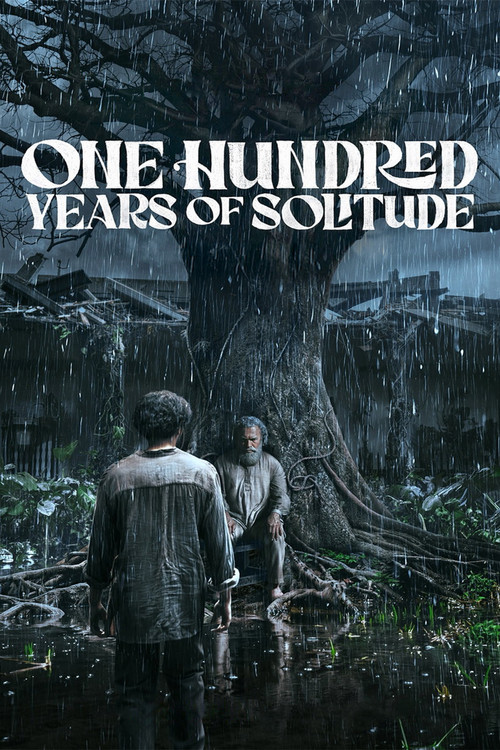
This Spanish-language Netflix series adapts the first half of Gabriel García Márquez's 1967 novel. The cousins José Arcadio Buendía and Úrsula Iguarán flee a killing, cross the mountains and found Macondo in the swamps of Colombia. Their family grows around the dreamer patriarch lost in alchemy, a wild elder son, the silent silversmith Aureliano, their daughter Amaranta and the orphan Rebeca, through gypsy fairs, an insomnia plague, weddings and rivalries. From the first line the narrator says Aureliano will one day face a firing squad as a colonel, and the second half of the season turns to the civil wars between Liberals and Conservatives.
The messaging arrives with the state. A magistrate orders every house painted blue, the founders insist they built the town without any government, and in episode 6 the Conservative authorities bring curfews, confiscations and soldiers while a Liberal doctor recruits the founders' children. The series ties Macondo's founding ideals (a secular town where everyone decides how to live, laid out so every house gets the same water and sun) to the Liberal Party, and the Church arrives as a money-minded intruder. Úrsula is the practical head of a family of feckless men, and Rebeca, played as brown-skinned, is courted by the fair Italian Pietro Crespi, which the rubric counts on sight.
The messaging arrives with the state. A magistrate orders every house painted blue, the founders insist they built the town without any government, and in episode 6 the Conservative authorities bring curfews and confiscations, switch the ballots after the Liberals win, seize the school and shoot the Liberal doctor without trial. Aureliano goes to war as a Liberal colonel. The series ties Macondo's founding ideals (a secular town where everyone decides how to live, laid out so every house gets the same water and sun) to the Liberal Party, and the Church arrives as a money-minded intruder. Úrsula is the practical head of a family of feckless men and ends up ruling the town, and Rebeca, played as brown-skinned, is engaged to the fair Italian Pietro Crespi before she leaves him for José Arcadio; the rubric counts that couple on sight.
What keeps the score low is that the politics are the novel's and the series does not flatter its own side. The Liberal cause is shown turning ugly tooThe Liberal doctor plans to murder the magistrate's wife and six daughters, and Arcadio's Liberal rule of Macondo becomes conscription, extortion and murder, a Conservative general is drawn as one of the most decent men in the story, and Aureliano himself says Liberals and Conservatives differ only in what time they go to mass. Race and sex are present but never argued: nothing is said about the mixed couple, the slurs are period insults, and the story's taboos (incest above all) are treated as transgressions, not causes.
Score breakdown
Each category is scored 0 to 3: 0 absent or presence only, 1 brief, 2 recurring or plot-relevant, 3 central or dominant. Timestamps refer to the film's running time.
| Category | Score | What we saw |
|---|---|---|
| Content | ||
| A Race and ethnicity | 2 | The rubric counts an interracial couple on sight. Rebeca, played as brown-skinned, is courted by and engaged to the fair, blond Italian Pietro Crespi through the middle episodes, until she leaves him: a supporting romance, shown without comment. Otherwise race is presence only.
|
| B Gender and feminism | 1 | Úrsula is the enterprising, practical head of the family while the men chase alchemy, women and war, and she later takes charge of the townlater faces down a firing squad and rules the town. This is the novel's matriarch, shown rather than argued. The sexual exploitation of women (a girl forced into sex work, Arcadio's assault on Pilar) is shown as part of the story, not framed as a point about patriarchy.
|
| C Sexuality and gender identity | 0 | No LGBTQ+ themes. Two period slurs, 'a fairy' for the Italian dance teacher and 'fairies' for a spy disguised as a woman, are insults, not commentary. The frank sex and incest come from the novel and are treated as transgression, not as sexual-freedom advocacy. |
| D Power and systems | 2 | The arrival of the state drives the second half: a magistrate's decrees, a census, curfews and confiscations, a rigged election, the army's seizure of the school and executions without trial. It is framed as a government oppressing the town, and the Church is shown as grasping. Scored 2, not 3, because the series turns the same critique on the Liberal side and on war itself.
|
| E Cultural and historical revision | 0 | A faithful adaptation of the novel, credited in every episode (S01E01 0:58:07). No established characters are recast with another sex or ethnicity; the Italian suitor, the mulatta girl and the civil-war politics are all the book's. |
| F Religion portrayal | 0 | Islam does not feature beyond passing mentions of traders from Arabia (S01E02 0:02:45) and 'the Arab's shop'. |
| Treatment | ||
| G Antagonist coding | 1 | The Conservative state's soldiers are mostly faceless enforcers who rig votes and shoot prisoners. But its local face, Moscote, is a fatherly, frightened family man, a Conservative general is drawn as decent, and the Liberals get villains of their ownthe worst tyrant of the season is the Liberal Arcadio.
|
| H Didacticism | 1 | Political speeches come in character: a magistrate's list of Liberal sins, a rally, a general's addressMoncada's address. They are motivated by the election and the war, and the rally's speaker has already been introduced by the narrator as a forger and terrorist.
|
| I Message over story | 0 | The story leads. The series follows the novel's chronology and magic-realist incidents, and its political turns are the book's own. |
| J Left-leaning politics framed as good | 2 | Macondo's founding ideals are explicitly tied to the Liberal Party, and the Conservatives are called frauds and shown rigging the vote, while the arrival of the Church is mocked as the family turning conservative. Scored 2, not 3: the Liberals' own radicalism and brutality are shown at length.
|
How the number is reached
- Categories A to J add up to 9 of 30, which gives 3.0 (9 ÷ 30 × 10, rounded to the nearest 0.5).
- Counterweight −1.0: the series complicates its own side throughout: the Liberal doctor is introduced as a forger and a terrorist (S01E06 0:08:16), Liberal rule turns ugly, Aureliano says Liberals and Conservatives differ only in what time they go to mass (S01E08 0:30:28), and the Conservative general Moncada is drawn as one of the most decent men in the story (S01E08 0:32:01).the Liberal doctor is introduced as a forger and a terrorist (S01E06 0:08:16) and plans to kill Moscote's wife and six daughters, which Aureliano calls butchery (S01E06 0:34:22, 0:35:01); Arcadio's Liberal rule brings conscription, a tax on drinks and on prostitutes (S01E07 0:18:18), the killing of Aníbal (0:21:37), the beating of the priest (0:31:02) and an attempt to shoot Moscote (0:42:58), and Moscote mocks the result as a Liberal paradise (0:40:16); the Liberal leaders turn on their own fighters (S01E08 0:27:00); Aureliano says all politicians are worthless and the parties differ only in what time they go to mass (S01E08 0:30:28); the Conservative general Moncada is called the most decent man Aureliano knows and tells him to stop attacking civilians (S01E08 0:31:26, 0:32:01); and Úrsula's last word is that the war freed them of nothing and made her son a monster (S01E08 0:57:01).
- Final rating 2.0, mild.
Considered, scored 0
- A mainly Colombian cast, with the Wayuu-speaking servants Visitación and Cataure and Rebeca's Wayuu (S01E03 0:14:27), shown without comment.
- Úrsula telling the children to stop speaking Wayuu (S01E02 0:53:23), a household scene with no commentary.
- Eréndira, 'the mulatta' kept in sex work by her grandmother (S01E03 0:37:15, 0:39:56), a borrowed García Márquez character shown without comment.
- Period slurs: 'a fairy' for Pietro (S01E03 0:51:11) and 'fairies' for a Liberal spy disguised as a woman (S01E07 0:48:39).
- Incest and frank sex, including José Arcadio and Rebeca's marriage (S01E06 0:28:20) and Aureliano José and his aunt Amaranta (S01E08 0:41:23), all from the novel and condemned within the story.
- Arcadio's assault on Pilar Ternera (S01E05 0:43:44), shown as his brutality rather than as a point about men.
Evidence and confidence
Confidence: Medium. Full English subtitles (the embedded English track) for every episode, and 170 frames sampled every three minutes, plus 8 targeted frames from the source to check the couples. All 8 of the owner's episodes were reviewed (8 of 8), which is the whole of the first season; the later generations of the novel are not covered. The subtitle track follows the dub, so one line about speaking Spanish reads as 'English' (S01E02 0:53:25); the Wayuu, Latin and Italian lines are translated.
Category F definition: As in the rubric: Islam shown as a peaceful and tolerant religion, aligned with human rights, in a way that works as a corrective message.
Noted, not scored: Úrsula's Catholic faith is treated with respect: her litany for the dead before the battle (S01E08 0:56:00) is played straight, and she calls politics nothing but a plague (S01E08 0:17:17), a view that cuts against both parties.
Episodes reviewed: S01E01, S01E02, S01E03, S01E04, S01E05, S01E06, S01E07, S01E08.
Rubric version 1. Reviewed 17 November 2026.