Woke rating
Breakthrough: The Ideas That Changed the World
None or negligible
A six-part PBS history of invention that traces the telescope, airplane, robot, car, rocket and smartphone back through chains of earlier discoveries; apart from brief nods to overlooked women pioneers and one passage on car emissions, it carries no progressive messaging.
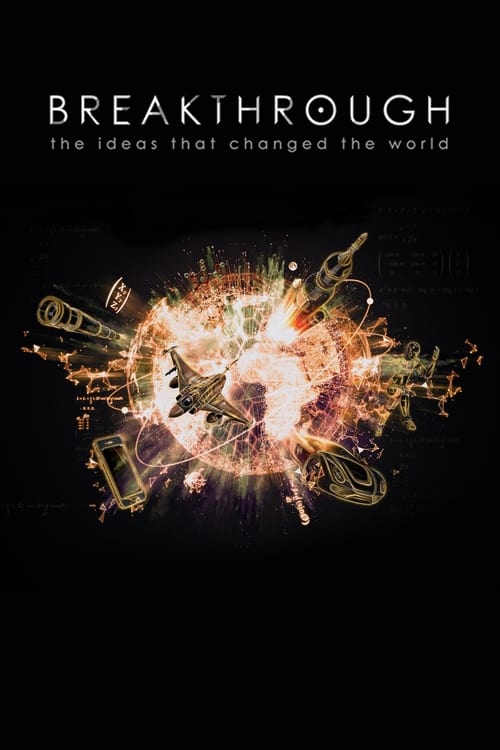
Breakthrough is a six-part PBS documentary series with one invention per episode: the telescope, the airplane, the robot, the car, the rocket and the smartphone. Each episode traces its machine back through a chain of earlier and often accidental discoveries, from Stone Age dolmens in Portugal and the House of Wisdom in Baghdad to Daguerre's spilled mercury, a Chicago slaughterhouse and the V2. It mixes narration, expert interviews, reenactments and modern demonstrations, and ends each hour with a look at the next breakthrough.
The nearest thing to a message is a recurring interest in women pioneers. Four episodes give one a segment: Henrietta Leavitt and Harvard's women 'computers', Ada Lovelace, Bertha Benz's first long-distance drive and Hedy Lamarr's frequency hopping. Each comes with a line or two noting that women were rare in science, hemmed in by their roles or denied credit; in the smartphone episode a speaker says the world saw Lamarr only as a beautiful woman (0:43:30). The car episode also says the combustion engine has created an environmental crisis, citing 5.1 billion tons of carbon dioxide a year (0:47:14), before presenting graphene batteries as the fix.
The score stays at the bottom of the scale because these women are real links in the stories being told, and the remarks about them are asides in otherwise factual accounts. The emissions passage treats climate as an engineering problem rather than a political one and is not repeated. The generous credit given to medieval Muslim scholars is science history, not a point about religion, and Alan Turing's death is reported with no mention of his sexuality. The series' own enthusiasm is for inventors and entrepreneurs.
Score breakdown
Each category is scored 0 to 3: 0 absent or presence only, 1 brief, 2 recurring or plot-relevant, 3 central or dominant. Timestamps refer to the film's running time.
| Category | Score | What we saw |
|---|---|---|
| Content | ||
| A Race and ethnicity | 0 | Nothing about race is said. Experts and presenters of many backgrounds appear without comment, and the one couple in the sampled frames, a reenacted wedding of Samuel Morse and Lucretia Walker in S01E06 (0:07:30), is white. |
| B Gender and feminism | 1 | Four of the six episodes give a segment to a woman pioneer, and each adds a line or two about women being rare in science, constrained or uncredited. The women are genuine links in the chains being traced and the remarks are brief, so the theme recurs without being argued.
|
| C Sexuality and gender identity | 0 | No LGBTQ+ content. Alan Turing's death is reported in S01E03 (0:31:46) without any mention of his sexuality or prosecution. |
| D Power and systems | 0 | No institution is framed as oppressing a group. Officials, armies and companies appear as historical actors: the Dutch committee that denies Lippershey a patent, the Navy that turns Lamarr down, the lawsuits over Bell's patent, and the Nazi and Soviet rocket programmes. |
| E Cultural and historical revision | 0 | History is told as history, with legends flagged as legends (Ibn Firnas's flight, Li Tian's rockets), and reenactments cast historical figures to type. The Lamarr and Bertha Benz segments repeat the popular versions of their stories, such as Lamarr's patent leading to cellular networks, but that is the usual telling, not a recasting. |
| F Religion portrayal | 0 | The Islamic Golden Age gets generous credit: Ibn al-Haytham and Baghdad's House of Wisdom, the Banu Musa brothers' programmable flute player and Ibn Firnas's legendary flight. This is science history; Islam as a religion is never discussed. |
| Treatment | ||
| G Antagonist coding | 0 | No villains coded by group. The Nazis and the Soviet state appear as historical forces, and the few rogues, a patent examiner with shifting testimony and Lamarr's possessive first husband, are individuals. |
| H Didacticism | 1 | No lectures. The messaging comes as single lines in narration or interviews.
|
| I Message over story | 0 | Each episode follows its chain of inventions; the segments on women are links in that chain, not detours, and nothing is bent to make a point. |
| J Left-leaning politics framed as good | 1 | One passage in the car episode frames emissions as an environmental crisis that new batteries will help solve. It is presented as an engineering problem rather than argued politically, and climate does not come up in the other episodes.
|
How the number is reached
- Categories A to J add up to 3 of 30, which gives 1.0 (3 ÷ 30 × 10, rounded to the nearest 0.5).
- No counterweight: None applies. The only messaging is a few brief remarks on overlooked women and one passage on car emissions, already scored at the minimum, and the series neither complicates nor mocks them.
- Final rating 1.0, none or negligible.
Considered, scored 0
- Experts and presenters of many backgrounds, among them a Black astronomer in S01E01 (0:25:30) and a Black aerospace engineer in S01E02 (0:25:30), shown without comment.
- Medieval Muslim scholars: Ibn al-Haytham and the House of Wisdom in S01E01 (0:08:59), Ibn Firnas in S01E02 (0:02:26) and the Banu Musa brothers in S01E03 (0:04:46), credited as science history.
- A roboticist's remark in S01E03 that robots will fill the role of previously exploited low-cost labor (0:03:13), made in passing while arguing they will not take jobs.
- Early electric cars marketed as a woman's car in S01E04 (0:35:26), a period detail told by an interviewee.
- The V2's slave-labor victims in S01E05 (0:33:35) and Korolev's exile to a gulag (0:36:09), stated as historical fact.
Evidence and confidence
Confidence: Medium. No subtitles were available, so the dialogue comes from a Whisper transcript of the audio for every episode, alongside 18 frames per episode sampled every three minutes. The owner has all six episodes of the series, and all six were reviewed. Whisper garbles some names (Lippershey, Henrietta Leavitt, Tsiolkovsky) and does not identify speakers, so a few interview lines cannot be tied to a named expert.
Category F definition: As in the rubric: Islam shown as a peaceful and tolerant religion, aligned with human rights, in a way that works as a corrective message.
Noted, not scored: The series celebrates inventors and enterprise: Henry Ford's mass production puts the car within reach of the average Joe in S01E04 (0:41:41), private rocket companies are called the future in S01E05 (0:02:36), and a roboticist argues in S01E03 that robots fill factory jobs people no longer want rather than taking jobs (0:42:49).
Episodes reviewed: S01E01, S01E02, S01E03, S01E04, S01E05, S01E06.
Rubric version 1. Reviewed 17 November 2026.