Woke rating
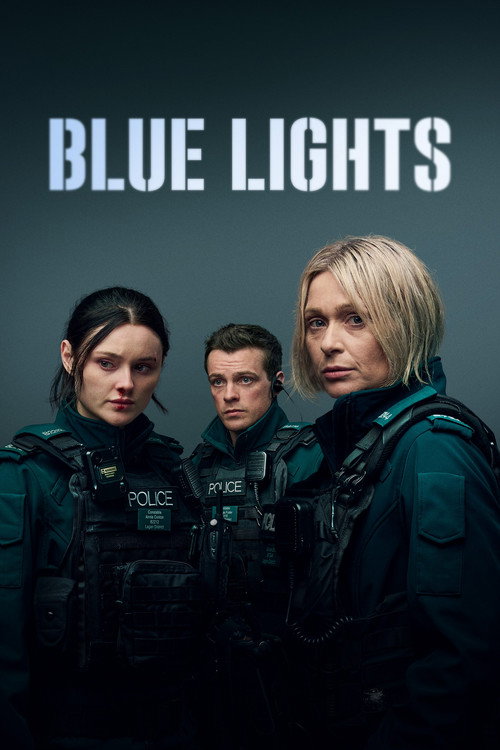
Blue Lights
None or negligible
A Belfast police drama whose first two episodes of season 2 complain about cuts to policing and public services but otherwise stay a procedural about drugs and a loyalist feud, with almost no progressive messaging.
Blue Lights, from Declan Lawn and Adam Patterson, follows the response officers of a Belfast station, where the job carries pressures and dangers of its own. The owner has the first two episodes of season 2. A year on and short of officers, the section faces a flood of drugs into the city centre and a feud between two loyalist gang leaders on the Mount Eden estate, while a detective from the Paramilitary Crime Task Force leans on the section for intelligence and Jen, now a trainee solicitor, starts asking questions about a 1978 chip-shop bombing.
The messaging that does show up is about money. Officers leave for better-paid work, there are too few cells to hold a man who later attacks a pharmacist, a man in crisis has waited seven months for a mental-health assessment, a soup kitchen loses its government grant, and the neighbourhood team that knew the estate has been cut; an investigator says frontline officers deserve better. Grace's insistence that she does not need Stevie to protect her adds a light gender note to their unspoken romance, and Jen's inquiry hints that the old bombing investigation was deliberately botched.
What keeps the score near zero is that none of this is framed as one group oppressing another. The complaints come from inside the police and are as much about too few officers and cells as about social services, and no party or ideology is blamed. The villains are loyalist gangsters fighting over drugs, turf and family, while Lee and Mags, who run the loyalist pub, and their band's march for a dead veteran are drawn with sympathy, even though Lee turns out to be behind the firebombing of Dixon's house. Two episodes are a thin sample, and the rest of the series could differ.
Score breakdown
Each category is scored 0 to 3: 0 absent or presence only, 1 brief, 2 recurring or plot-relevant, 3 central or dominant. Timestamps refer to the film's running time.
| Category | Score | What we saw |
|---|---|---|
| Content | ||
| A Race and ethnicity | 0 | Race does not come up. Sergeant Sandra Cliff, a Black Londoner, appears without comment; her late partner Gerry is spoken of but never shown, so no couple is counted (see zeroed). |
| B Gender and feminism | 1 | One strand: Grace tells Stevie, her patrol partner and would-be lover, that she does not need protecting after he keeps steering her away from danger, and his protectiveness causes trouble again in the second episode. It plays as a workplace romance more than a point about gender.
|
| C Sexuality and gender identity | 0 | No LGBTQ+ content. The romances are between men and women (Grace and Stevie, Tommy and Aisling, Annie and Shane). |
| D Power and systems | 1 | Underfunding runs through both episodes: officers leaving, too few cells, public services cut. It is framed as a system starving the police and the vulnerable, not as oppression of a group, and the force itself is drawn sympathetically. Jen's inquiry adds a hint of an old police cover-up.
|
| E Cultural and historical revision | 0 | An original series. Nothing recasts established characters or known history. |
| F Religion portrayal | 0 | Islam does not feature. |
| Treatment | ||
| G Antagonist coding | 0 | The villains are loyalist gang leaders feuding over drugs and turf, with personal motives: money, rivalry and revenge for attacks on their families. The loyalist label does not define the villainy, and the loyalist pub family and their band are drawn with sympathy. |
| H Didacticism | 1 | No speeches about identity. The cuts message is stated outright twice, in character: by the inspector to her chief and by the investigator about her report.
|
| I Message over story | 0 | The story leads. The cuts feed the plot (the man let go in the morning returns to attack the pharmacist) rather than bending it to make a point. |
| J Left-leaning politics framed as good | 0 | No party politics or left-versus-right framing. The funding complaints are about police numbers and cells as much as social services, and no government, party or ideology is named as the cause. |
How the number is reached
- Categories A to J add up to 3 of 30, which gives 1.0 (3 ÷ 30 × 10, rounded to the nearest 0.5).
- Counterweight −0.5: the show gives other views a hearing alongside the system-blame: Annie blames her own judgement, not the system, for letting the attacker go (S02E01 0:46:25, 0:46:34); on Soupy's death, Lee says he made his own choices against Mags's view that they should have been there for him (S02E01 0:31:09); Stevie teases Grace for getting 'social worky' about Soupy's childhood in care (S02E01 0:41:05); and Grace and Stevie make up after her rebuke (S02E02 0:13:52).
- Final rating 0.5, none or negligible.
Considered, scored 0
- Sergeant Sandra Cliff, a Black Londoner who stayed in Belfast to remember her late partner Gerry (S02E01 0:19:54, 0:21:23; frame S02E02 0:16:30). Gerry is never shown, so no couple is counted.
- No interracial couple seen: Grace and Stevie (frame S02E02 0:13:30) and Annie and Shane (frame S02E02 0:04:30) are white; Tommy's date Aisling is not in the sampled frames.
- Women in command, including the inspector, the section sergeant and the chief superintendent, and Tina, who links the gangs to their Dublin suppliers and makes Dixon apologise (S02E01 0:17:41), shown without comment.
- Dixon's sexual taunts at Grace during the search (S02E02 0:37:14, 0:37:39): a villain's provocation.
- Archive audio of Bill Clinton on peacemakers and Ian Paisley on Ulster's convictions opening the season (S02E01 0:03:47, 0:04:08): period backdrop with no comment.
- Loyalist gangsters as the villains and an officer's jibe 'For God and Ulster' at an arrested thug (S02E02 0:30:46): the setting. Lee's march for Soupy, a veteran, is drawn with sympathy (S02E02 0:33:51).
- Lee's line to Tina at the Titanic museum that people like them would have been locked below in steerage (S02E02 0:18:39): a pitch for her business, not a point the show makes about class.
- A veteran's heroin overdose and a pharmacy besieged over methadone (S02E01 0:05:18, 0:07:51): the drugs plot.
- DS Canning tipping off Dixon that he is watched, which he calls containment (S02E01 0:35:43, 0:36:47): police tactics shown as a matter of judgement, not oppression.
Evidence and confidence
Confidence: Medium. Full English SDH subtitles from the embedded track for both episodes, and 38 frames sampled every three minutes. The owner has two episodes, S02E01 and S02E02, the first two of season 2, and both were reviewed (2 of 2 episodes the owner has). Season 1 and the rest of season 2 were not reviewed, so the rating reflects the opening of season 2 only. Tommy's date Aisling does not appear in the sampled frames.
Category F definition: As in the rubric: Islam shown as a peaceful and tolerant religion, aligned with human rights, in a way that works as a corrective message.
Noted, not scored: The show is firmly on the side of frontline police: Annie and Shane rescue a mother and child from a petrol-bombed house (S02E02 0:05:01), and the funding complaints include too few officers and cells (S02E01 0:11:26, S02E02 0:11:25), a law-and-order point as much as a welfare one.
Episodes reviewed: S02E01, S02E02.
Rubric version 1. Reviewed 18 November 2026.