Woke rating
Wolf Man
None or negligible
A bleak, tightly contained creature horror about a father changing into something else in front of his wife and daughter, with no progressive messaging: its one theme is anger handed down from father to son.
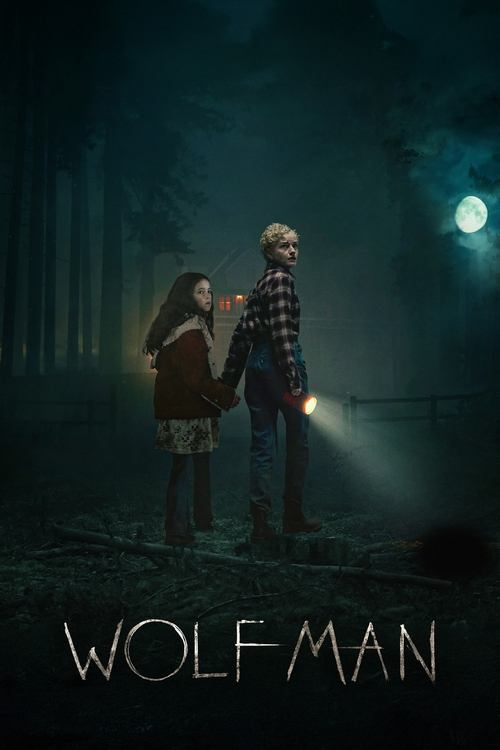
Leigh Whannell's reworking of the Universal monster opens with a boy, Blake, hunting in the Oregon mountains with his stern father Grady when something attacks them. Decades later Blake (Christopher Abbott) is an out-of-work writer who looks after his daughter Ginger while his wife Charlotte (Julia Garner) works as a journalist. When Grady is finally declared dead, Blake persuades his strained family to spend the summer clearing out the remote farm. A creature ambushes them on the way in, Blake is scratched, and over one long night he begins to change.
There is nothing here for the rubric to score. Apart from a neighbour, the family is the whole cast; nobody remarks on race, sex or politics, and the only couple is the married leads. The film's one theme is fathers and anger: Grady terrifies his son to keep him safe, Blake snaps at Ginger and then apologises, and he tells her that a father too afraid of his children being scarred can become the thing that scars them. That is played as one family's history, not as a point about men. Charlotte being the busy earner and Blake the parent at home is a source of friction between them, not a statement about gender roles.
The score stays at zero because nothing is argued. The threat is an infection and whatever carries itthe infection and the creature that Grady has become, and the last act is a mother protecting her child, the genre's usual survivor role that ends with Charlotte shooting Blake when Ginger says he wants it to be over. The opening title card, which says the Indigenous people who came before had their own name for the illness, is lore and nothing more.
Score breakdown
Each category is scored 0 to 3: 0 absent or presence only, 1 brief, 2 recurring or plot-relevant, 3 central or dominant. Timestamps refer to the film's running time.
| Category | Score | What we saw |
|---|---|---|
| Content | ||
| A Race and ethnicity | 0 | No race theme and no interracial couple. The opening card's note that the Indigenous people who came before called the illness 'face of the wolf' (0:01:30) is background lore. |
| B Gender and feminism | 0 | Charlotte is the working journalist and Blake the out-of-work writer doing the childcare (0:15:20, 0:27:29); the film treats it as strain in a marriage, not as a point. Charlotte becomes the protector in the last actCharlotte becomes the protector in the last act and is the one who ends Blake's suffering (1:28:50), which is the genre's convention, shown rather than argued. |
| C Sexuality and gender identity | 0 | No LGBTQ characters or themes. |
| D Power and systems | 0 | No institutions appear. The mountain community's fear of the dark and Blake's remark that everyone around here has a gun (0:23:55) are atmosphere, not commentary. |
| E Cultural and historical revision | 0 | A reimagining of the Universal monster with new characters and a new setting; no established character is recast with another sex or ethnicity. |
| F Religion portrayal | 0 | Religion does not feature. Islam is not portrayed. |
| Treatment | ||
| G Antagonist coding | 0 | The threat is a disease and the creature that carries itthe creature that was once Grady and the disease that turns Blake. No villain is defined by a demographic or ideological group. |
| H Didacticism | 0 | No speeches carry a social message. Blake's bedside talk about fathers who scar their children (0:37:33) and Charlotte's declaration of love (0:57:14) are personal. |
| I Message over story | 0 | A contained survival story whose turns serve suspense and the body-horror of the transformation; none bends toward a message. |
| J Left-leaning politics framed as good | 0 | No politics appear, left or right. |
How the number is reached
- Categories A to J add up to 0 of 30, which gives 0.0 (0 ÷ 30 × 10, rounded to the nearest 0.5).
- No counterweight: None applies: there is no progressive messaging to complicate or mock.
- Final rating 0.0, none or negligible.
Considered, scored 0
- The opening title card giving an Indigenous name for the illness (0:01:30), lore without a message.
- Charlotte as the earner and Blake as the parent at home (0:15:20, 0:27:29), shown as friction in the marriage rather than as a point about gender roles.
- Grady's harsh, drill-sergeant parenting (0:02:09, 0:07:03) and Blake's own temper with Ginger (0:13:32), a family theme about inherited anger rather than a statement about men.
- Charlotte's unease about an armed stranger and Blake's reply that everyone around here has a gun (0:23:55), rural atmosphere rather than a comment on guns.
- Charlotte as the protector in the last act, the genre's survivor role.
Evidence and confidence
Confidence: Medium. Full English SDH subtitles from the embedded text track, and 103 frames sampled once a minute. Long stretches of the attacks and the transformation have no dialogue and are covered by the frames only at one-minute intervals, and much of the picture is very dark. Where the film plays Charlotte's voice through Blake's failing hearing, the subtitles mark it as distorted or indistinct (for example 0:57:36). The last eleven frames are end credits.
Category F definition: As in the rubric: Islam shown as a peaceful and tolerant religion, aligned with human rights, in a way that works as a corrective message.
Rubric version 1. Reviewed 18 November 2026.