Woke rating
Train to Busan
None or negligible
A Korean zombie thriller with pointed digs at a fund manager's and an executive's selfishness and at official reassurances, but no identity politics, and it finds ordinary passengers as ready to abandon others as the rich.
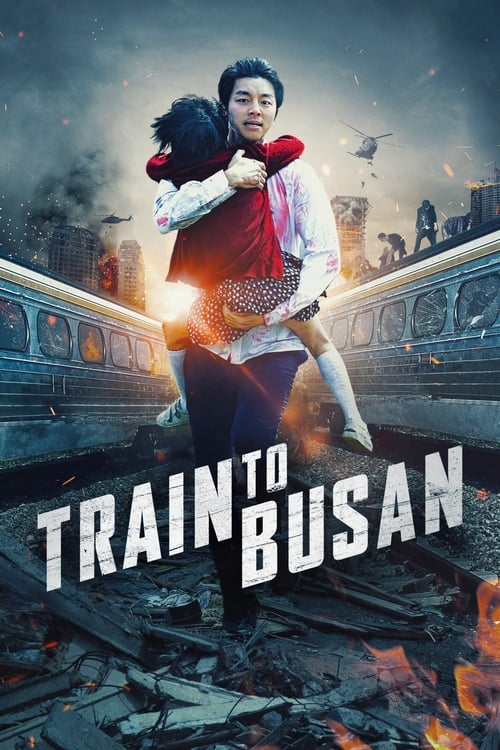
Yeon Sang-ho's zombie thriller follows Seok-woo (Gong Yoo), a Seoul fund manager estranged from his wife, who has little time for his young daughter Su-an and reluctantly takes her on the express train to her mother in Busan for her birthday. An infected woman boards just before departure, and as the outbreak spreads through the carriages and the country, the survivors, among them a burly husband (Ma Dong-seok) and his pregnant wife, a high-school baseball team, two elderly sisters and a bus-company executive, fight their way toward Busan.
The messaging is about class and selfishness, not identity. Seok-woo dumps holdings with a sneer at 'the lemmings', and the husband, Sang-hwa, calls fund managers bloodsuckers who leech off others. The main human villain is the executive, who holds up a homeless man as a warning to Su-an and keeps trying to save himself at others' expense. A televised government address urging citizens to trust the state plays over footage of the riots, and the film has a pointed reveal about where the outbreak began.
The messaging is about class and selfishness, not identity. Seok-woo dumps holdings with a sneer at 'the lemmings', and the husband, Sang-hwa, calls fund managers bloodsuckers who leech off others. The main human villain is the executive, who holds up a homeless man as a warning to Su-an and keeps trying to save himself at others' expense, until he talks a carriage into shutting the survivors out. A televised government address urging citizens to trust the state plays over footage of the riots, and a late phone call reveals that the outbreak began at YS Biotech, the centrepiece of a scheme run by Seok-woo's fund.
The score stays low because the film keeps its points inside the story and spreads the blame. Race, sex and sexuality never come up, there are no speeches, ordinary passengers prove as ready as the executive to shut others out, and the fund manager is the hero, whose arc runs from selfishness to caring for othersfrom selfishness to giving his life for his daughter and Sung-kyung.
Score breakdown
Each category is scored 0 to 3: 0 absent or presence only, 1 brief, 2 recurring or plot-relevant, 3 central or dominant. Timestamps refer to the film's running time.
| Category | Score | What we saw |
|---|---|---|
| Content | ||
| A Race and ethnicity | 0 | Race never comes up. The cast is Korean throughout, and no interracial couple appears in the dialogue or the frames. |
| B Gender and feminism | 0 | Women are drawn as individuals, from the pregnant Sung-kyung to the cheerleader Jin-hee and the elderly sisters, with no comment on gender. |
| C Sexuality and gender identity | 0 | No LGBTQ+ characters or themes. |
| D Power and systems | 2 | Class and official bad faith recur: the hero is a fund manager who dumps holdings without regard for small investors and is called a bloodsucker, he uses a military contact to dodge quarantine, and a government broadcast urges trust while the cities fall, and a late reveal ties the outbreak to his own trade, and the outbreak turns out to have started at a biotech firm at the centre of his fund's scheme. Scored 2, not 3: it is carried by characters and plot rather than argued, and the film's real subject is selfishness against sacrifice, which it finds in every class.
|
| E Cultural and historical revision | 0 | An original story. No established characters, history or source material are recast. |
| F Religion portrayal | 0 | Islam does not feature. |
| Treatment | ||
| G Antagonist coding | 1 | The main human villain is a bus-company executive, marked by his title and his contempt for a homeless man, who keeps saving himself at others' expense. Scored 1: his motive is plain fear, the protagonist is a fund manager too, and a carriage of ordinary passengers goes along with him.
|
| H Didacticism | 1 | There are no speeches. The class barbs are one-liners, and the film's moral, selfishness against sacrifice, is put into words in a few short exchanges between father and daughter.
|
| I Message over story | 0 | The story leads: the outbreak, the train's route and the characters' choices drive every turn, and the biotech link is a single phone call. |
| J Left-leaning politics framed as good | 0 | No left-leaning politics are framed as good. The class critique is scored under D and G, and an elderly passenger's nostalgia for re-educating rioters is a passing line that her sister rebukes (0:20:35). |
How the number is reached
- Categories A to J add up to 4 of 30, which gives 1.5 (4 ÷ 30 × 10, rounded to the nearest 0.5).
- Counterweight −0.5: The film spreads the blame and humanises its villain: the fund manager is the hero who changes and joins the rescue run (0:55:03), a carriage of ordinary passengers goes along with shutting survivors out (1:16:03), and the executive is driven by plain fear.The fund manager is the hero, who joins the rescue run (0:55:03) and gives his life for his daughter and Sung-kyung (1:44:40); a carriage of ordinary passengers goes along with shutting the survivors out (1:16:03); and the executive's last human moments show a frightened man begging to be taken home to his mother (1:41:23).
- Final rating 1.0, none or negligible.
Considered, scored 0
- An all-Korean cast, with race never mentioned.
- Women drawn as individuals with no comment on gender: the pregnant Sung-kyung, the cheerleader Jin-hee, the elderly sisters and Su-an, of whom Sung-kyung and Su-an are the last survivors (1:51:29).
- An elderly passenger's remark that rioters used to be re-educated, which her sister rebukes (0:20:35).
- Soldiers overrun at Daejeon (0:44:30) and a sniper at Busan ordered to kill two unidentified figures (1:51:56), genre business rather than a comment on the military.
Evidence and confidence
Confidence: Medium. Full English subtitles (embedded track, with the on-screen captions) and 118 frames sampled once a minute, the last five of them end credits. Long action stretches have little or no dialogue (for example 1:04:42 to 1:08:31 and 1:46:08 to 1:51:16) and are covered by the frames only.
Category F definition: As in the rubric: Islam shown as a peaceful and tolerant religion, aligned with human rights, in a way that works as a corrective message.
Noted, not scored: Family and fatherhood are the film's moral centre: Seok-woo's mother tells him a marriage should not be broken off so easily (0:09:16), Sang-hwa tells him fathers get a bad rap but it is all about sacrifice (1:02:58), and the couple's unborn baby is a running motive (0:36:17); both fathers die protecting their families (1:12:41, 1:45:15).
Rubric version 1. Reviewed 18 November 2026.