Woke rating
The Plague
None or negligible
A tense coming-of-age drama about bullying at a boys' water polo camp with no progressive messaging: its crude locker-room talk is shown without comment, and its only lectures are about cruelty, not identity.
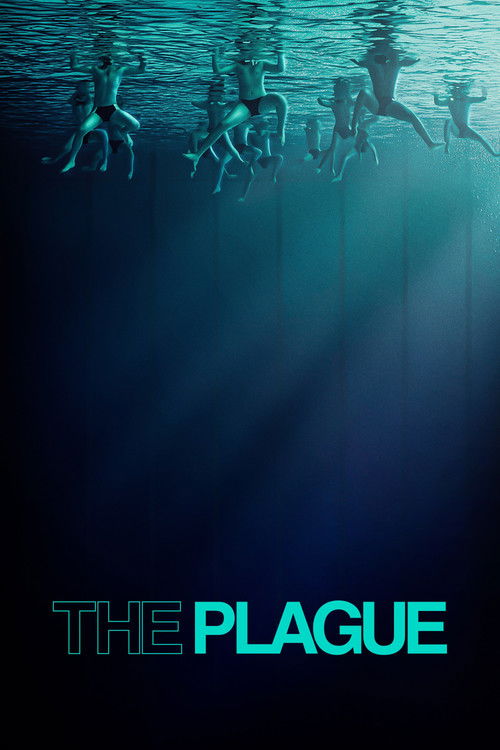
Charlie Polinger's debut feature follows Ben, a 12-year-old who has just moved from Boston, through a summer at a boys' water polo camp. The pack, led by Jake, has a running game: Eli, a loner with a rash and odd manners, has 'the Plague', and anyone he touches is infected. Most of the film is Ben's anxious effort to stay on the right side of that line, watched over by a kindly coach (Joel Edgerton) the boys call Daddy Wags.
The boys' talk is relentlessly crude: sex dares, girls called 'bitches', a crack about liking Asian girls (0:16:18) and a rumour that Ben gave Eli a back rub with lavender oil (0:48:24). The film shows all of it as the way the pack talks, without comment. The only speeches come from the coach, who asks the boys how they would feel being shamed in front of the girls (0:35:35) and later tells Ben that bullies are scared of anyone different and that everyone is different (1:02:14). Those are anti-bullying messages, which the rubric does not score, and the film undercuts them: the boys mimic the lecture (0:39:06) and Jake calls it kindergarten (1:08:01), then lets himself believe Eli snitched, and the pack turns on Eli (1:11:08).
Nothing here pushes a position on race, gender, sexuality or politics, so every category scores 0. The bully has personal motives rather than a demographic label, the adults are well-meaning but out of their depth rather than oppressors, and the story is a study of conformity and fear that ends with Ben turning on Eli himself at the camp dance (1:23:46).
Score breakdown
Each category is scored 0 to 3: 0 absent or presence only, 1 brief, 2 recurring or plot-relevant, 3 central or dominant. Timestamps refer to the film's running time.
| Category | Score | What we saw |
|---|---|---|
| Content | ||
| A Race and ethnicity | 0 | Race never becomes a theme. One boy's crack about liking Asian and half-Asian girls (0:16:18) is dormitory banter, and no interracial couple appears in the dialogue or the sampled frames. |
| B Gender and feminism | 0 | The boys' talk about girls is crude throughout, from insults to a shared sexual fantasy in the dorm (0:17:18), but the film shows it as pack behaviour without comment, and girls barely appear. The coach telling Ben it is okay to cry (1:01:19) is one kindly line, not a point about gender. |
| C Sexuality and gender identity | 0 | No LGBTQ characters or themes. Gay-tinged teasing, such as sexual would-you-rather questions (0:10:43) and the back-rub rumour (0:48:24, 0:55:12), is part of the bullying, not commentary. |
| D Power and systems | 0 | The camp and its staff are shown as well-meaning but ineffective; there is no critique of an institution oppressing a group. |
| E Cultural and historical revision | 0 | An original story; no established characters or history are recast. |
| F Religion portrayal | 0 | Islam does not appear, and religion plays no part in the story. |
| Treatment | ||
| G Antagonist coding | 0 | The ringleader, Jake, is given personal motives and a backstory: status in the pack, an older brother whose friends trade insults (1:07:43) and a dead mother (0:50:00). He is not defined by a demographic or ideological label. |
| H Didacticism | 0 | The only lecture-style dialogue is the coach's talk about shaming (0:35:35) and about bullies fearing those who are different (1:02:14). It is an anti-bullying message, which falls outside the rubric. |
| I Message over story | 0 | The story leads: a psychological study of a boy's fear of being the next outcast, with no turn bent toward a message. |
| J Left-leaning politics framed as good | 0 | No political positions are argued, and no side of politics is framed as good or bad. |
How the number is reached
- Categories A to J add up to 0 of 30, which gives 0.0 (0 ÷ 30 × 10, rounded to the nearest 0.5).
- No counterweight: None applies: there is no progressive messaging to mock or complicate. The film does undercut its own anti-bullying talk (0:39:06, 1:08:01, 1:14:24), but that message falls outside the rubric.
- Final rating 0.0, none or negligible.
Considered, scored 0
- A camp of boys from different backgrounds, shown without comment.
- A boy's crack about liking Asian and half-Asian girls (0:16:18), banter with no message.
- The boys' crude sexual talk about girls (0:15:05, 0:17:18, 1:21:45), shown as pack behaviour without comment.
- Gay-tinged teasing: sexual would-you-rather questions (0:10:43) and the rumour that Ben gave Eli a back rub with lavender oil (0:48:24), used as bullying rather than commentary.
- The coach's lectures on shaming (0:35:35) and on bullies fearing those who are different (1:02:14), and his telling Ben it is okay to cry (1:01:19): anti-bullying and pastoral talk outside the rubric, which the boys mock afterwards (0:39:06, 1:08:01).
- Eli's skin condition, social awkwardness and self-harm (0:41:08), shown without any label or message about illness or disability.
- Ben's mother leaving his father for another man (0:42:00), backstory without comment.
- Ben's vegetarianism and his line that cows should not be killed just because they are different (0:38:42), a veiled defence of Eli rather than an animal-rights message.
Evidence and confidence
Confidence: Medium. Full English subtitles from the embedded track, and 98 frames sampled once a minute. Several long stretches carry no subtitled dialogue (for example 0:18:12 to 0:19:55, 1:11:35 to 1:14:02, 1:26:18 to 1:29:06); the frames show these as wordless scenes.
Category F definition: As in the rubric: Islam shown as a peaceful and tolerant religion, aligned with human rights, in a way that works as a corrective message.
Rubric version 1. Reviewed 18 November 2026.