Woke rating
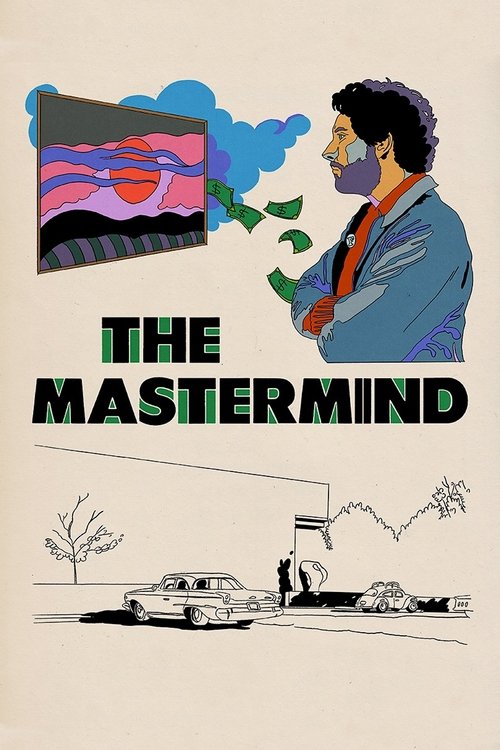
The Mastermind
None or negligible
A slow, deadpan heist drama set around 1970 that keeps the Vietnam War and the campus protests on the television in the background and has next to no progressive messaging.
Kelly Reichardt's period crime drama follows J.B. Mooney (Josh O'Connor), an out-of-work carpenter and art-school dropout in a Massachusetts suburb, who hires two small-time accomplices to steal four Arthur Dove paintings from the local museum. The robbery comes early, and the rest of the film follows its slow, unglamorous fallout as Mooney leaves his wife Terri (Alana Haim) and their two boys behind and drifts from one old friend's door to the next.
The only politics in it belong to the period. The war plays on televisions and radios: a news report on professors put on trial for joining student picket lines, a speaker answering the President, a dispatch from Cambodia. An acquaintance tells how a judge steered himwho was caught tells how a judge steered him into the Marines, and in a diner, working men heckle a table of long-haired young men as freeloading hippies who should fight for their country.
None of this is argued by the characters. Mooney has no politics at all, and when a friend offers him a place among draft dodgers and radical feminists on a farm across the border, he says it is not his scene. The film is a portrait of one man's selfishness and what it costs his wife, his sons and his parents, with no identity themes. The two brief points above are offset by the film's dry distance from the counterculture, which brings the rating to zero.
Score breakdown
Each category is scored 0 to 3: 0 absent or presence only, 1 brief, 2 recurring or plot-relevant, 3 central or dominant. Timestamps refer to the film's running time.
| Category | Score | What we saw |
|---|---|---|
| Content | ||
| A Race and ethnicity | 0 | No race theme. One of the hired accomplices is Black and is shown without comment, and no interracial couple appears. |
| B Gender and feminism | 0 | No gender message. Terri is left to cope with the boys while Mooney lies to her and borrows from his mother, but the film presents this as his selfishness, not as a point about men and women. |
| C Sexuality and gender identity | 0 | No LGBTQ characters or themes. |
| D Power and systems | 1 | The Vietnam War and the state's handling of protest are background, carried by news broadcasts and one friend's story, never by the plot.
|
| E Cultural and historical revision | 0 | Fictional characters in a period setting. No established character, history or source material is recast. |
| F Religion portrayal | 0 | Islam is not portrayed. |
| Treatment | ||
| G Antagonist coding | 0 | There is no ideological villain. The trouble comes from Mooney's own choices and the criminals he deals with, Guy's associates who take the paintings off him. The diner hecklers appear in one scene and are counted under J. |
| H Didacticism | 0 | No character lectures. The only direct statements of a position come from period broadcasts in the background, counted under D and J. |
| I Message over story | 0 | The story leads throughout; none of its turns bends toward a message. |
| J Left-leaning politics framed as good | 1 | The anti-war side is heard only on the air, but the one scene in which supporters of the war appear shows them as bullies.
|
How the number is reached
- Categories A to J add up to 2 of 30, which gives 0.5 (2 ÷ 30 × 10, rounded to the nearest 0.5).
- Counterweight −0.5: The film keeps the counterculture at a dry distance: Mooney turns down the commune, which his friend describes, deadpan, as draft dodgers, radical feminists and dope fiends, 'nice people' (1:21:10, 1:21:18); the acquaintance sent to the Marines says he was fine with it because he wanted to know whether he was brave or a coward (1:33:14); and Mooney's old thesis adviser, a professor, turns out to have been his fence (1:15:34).
- Final rating 0.0, none or negligible.
Considered, scored 0
- One of the hired accomplices is Black (frame 0:33:30), shown without comment.
- A teenager waiting in a car outside the museum reads aloud a classic passage calling all men and all women false and vain (0:26:34), a school text, not commentary.
- Mooney name-drops his father, a judge, to get the detectives to leave (0:52:37), played as his own bluff rather than a point about privilege.
Evidence and confidence
Confidence: Medium. Full English subtitles from the embedded track, and 110 frames sampled once a minute; a few frames were enlarged to check who is on screen. The film has little dialogue; its longest silent stretches were checked against the frames (0:39:56 to 0:46:40, 1:26:03 to 1:30:24).
Category F definition: As in the rubric: Islam shown as a peaceful and tolerant religion, aligned with human rights, in a way that works as a corrective message.
Rubric version 1. Reviewed 18 November 2026.