Woke rating
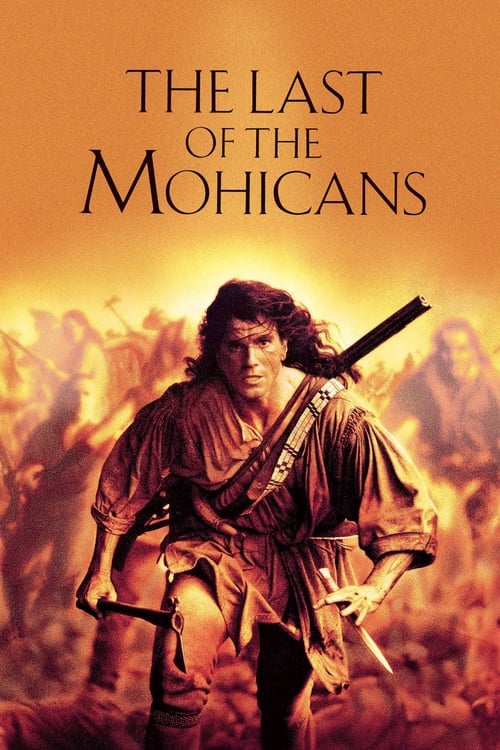
The Last of the Mohicans
None or negligible
Michael Mann's frontier epic sets a romance and a manhunt inside the British and French fight for America, criticising imperial arrogance and European greed in a few scenes while giving its villain a real grievance and every side its share of honour and blame.
Michael Mann's adaptation of James Fenimore Cooper's novel opens in the third year of the war between England and France for the American continent. Hawkeye (Daniel Day-Lewis), a white frontiersman raised by the Mohican Chingachgook (Russell Means) alongside his son Uncas (Eric Schweig), rescues Cora and Alice Munro (Madeleine Stowe and Jodhi May), the daughters of a British colonel, from a Huron war party led by Magua (Wes Studi), and guides them to the besieged Fort William Henry. Much of the film is battle, pursuit and romance, with little dialogue.
The messaging runs along two lines. The first is the colonists against the Crown: the settlers' militia was promised leave to defend their farms, the British commanders treat colonials with contempt and go back on the promise, and the film plainly sides with Hawkeye and the settlers, as does Cora. The second is the place of Native peoples between two empires, which a late speech by Hawkeye spells out. Only the second line is scored: the colonists' case against the Crown belongs to the American founding story rather than to progressive politics. Cora's refusal to let her father and suitor decide her marriage adds a little.
The messaging runs along two lines. The first is the colonists against the Crown: the settlers' militia was promised leave to defend their farms, Colonel Munro refuses it, Hawkeye helps the men slip away and is condemned for sedition, and Cora tells her father and Heyward she is guilty of sedition too. The second is the place of Native peoples between two empires: before the Huron sachem, Hawkeye blames the greed of the English and French and their masters in Europe for the brandy, land-grabbing and fur trade that have corrupted Magua. Only the second line is scored: the colonists' case against the Crown belongs to the American founding story rather than to progressive politics. Cora's refusal to let her father and suitor decide her marriage adds a little.
What keeps the score low is that the film shows far more than it argues, and it spreads blame and honour around. Magua is given a personal grievance against Munro, both empires' Native allies do terrible things, and Hawkeye's speech condemns the French as much as the English. The British officers are arrogant but also brave, and Heyward, the rival who lied about the raid, gives himself up in Cora's place.
Score breakdown
Each category is scored 0 to 3: 0 absent or presence only, 1 brief, 2 recurring or plot-relevant, 3 central or dominant. Timestamps refer to the film's running time.
| Category | Score | What we saw |
|---|---|---|
| Content | ||
| A Race and ethnicity | 1 | Native and European characters are at the heart of the story, but race itself is rarely made a point. A British officer's contempt for 'savages' is called a lie, and a late speechHawkeye's speech to the Huron casts the white man as the buyer of stolen land. No interracial couple is shown.
|
| B Gender and feminism | 1 | One strand: Cora is pressed to accept Heyward on her father's judgment and refuses in favour of her own. Otherwise she is strong-willed but also repeatedly rescued, and nothing is made of it.
|
| C Sexuality and gender identity | 0 | No LGBTQ+ content or sexual politics. |
| D Power and systems | 1 | Late in the filmAt the Huron council Hawkeye blames European greed for corrupting Native peoples, a brief anti-colonial point. The film's larger thread, the colonists' case against the Crown, is anti-tyranny in the American founding tradition rather than progressive messaging, so it is noted under non-progressive messaging instead of scored.
|
| E Cultural and historical revision | 0 | An adaptation of Cooper's 1826 novel. No character is recast with another sex or ethnicity to carry a message; the film's best-known change, making Cora and Hawkeye the lovers, goes the other way (see 'notScored'). |
| F Religion portrayal | 0 | Islam does not feature. Religion appears only as a plea for a Christian burial for the Cameron family (0:27:02) and Chingachgook's prayer to the Great Spirit over his son (1:46:50). |
| Treatment | ||
| G Antagonist coding | 1 | The British command is drawn as arrogant and careless of colonial lives, mostly through General Webb. But Munro is brave and honourable, and the main villain, Magua, has a personal motive rather than standing for a group.
|
| H Didacticism | 1 | Two short speeches state the film's points directly, both in character and both in scenes that call for them.
|
| I Message over story | 0 | The story leads. The politics explain why characters act as they do and never bend the adventure or the romance. |
| J Left-leaning politics framed as good | 0 | No modern political cause is promoted. The colonial-liberty theme is scored under D and is not a left-leaning position; the greed speech is counted under D and H. |
How the number is reached
- Categories A to J add up to 5 of 30, which gives 1.5 (5 ÷ 30 × 10, rounded to the nearest 0.5).
- Counterweight −0.5: Blame is shared and the villain has real motives: Magua tells Montcalm he was enslaved by Mohawks fighting for Munro and lost his wife to another man while presumed dead (1:08:57, 1:09:29); an Ottawa war party allied to the French massacres a settler family (0:42:27); a late speechHawkeye's speech to the sachem condemns French and English alike and says Magua would make himself into what twisted him (1:36:17). The British are also shown with honour: Munro is brave and keeps faith with his men: Munro tells Montcalm his men would rather fight to the end (1:05:37), Montcalm answers with generous terms (1:05:57), and Heyward, who lied about the raid, gives himself up in Cora's place (1:38:29).
- Final rating 1.0, none or negligible.
Considered, scored 0
- Chingachgook and Uncas as heroes, and Hawkeye's upbringing by a Mohican father (0:31:00, 1:36:24), shown without a message.
- Chingachgook's joke that Europeans are a breed apart who make no sense (0:29:08).
- Cora's refusal to leave the dead at the Cameron farm unburied (0:27:07), a matter of character rather than gender.
- Native warriors on both sides of the war, including Mohawk allies of the British (0:07:04) and Hurons and Ottawas allied to the French.
Evidence and confidence
Confidence: Medium. The file, the Director's Definitive Cut, has no English text subtitles, so the dialogue comes from a Whisper transcript of the audio, plus 114 frames sampled once a minute. The transcript garbles most names (Magua, Chingachgook, Uncas, Montcalm), loops one line (0:09:19 to 0:09:34), and leaves much of the Mohawk, Huron and French dialogue untranslated or only roughly rendered, notably Magua's council with Montcalm (0:43:42 to 0:45:28) and the Huron council late in the film (1:32:16 to 1:37:53). Burned-in English subtitles seen in frames of that council (1:32:30, 1:34:30, 1:35:30, 1:37:30) fill part of the gap. The long battle and chase stretches have music only, so they were judged from the frames.
Category F definition: As in the rubric: Islam shown as a peaceful and tolerant religion, aligned with human rights, in a way that works as a corrective message.
Noted, not scored: The frontier settlers are admired for self-reliance: they came out to be beholden to none and not live by another's leave (0:31:43). The colonists' quarrel with the Crown: the British break their word to the militia, and Hawkeye says that without its law the Crown has only tyranny over them (0:50:13, 0:53:00, 0:59:14).
Rubric version 1. Reviewed 18 November 2026.