Woke rating
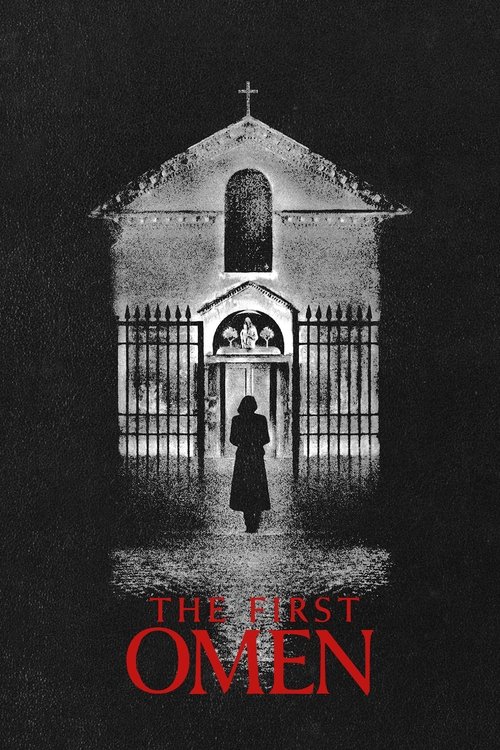
The First Omen
Mild
A prequel horror in which a young American novice uncovers a conspiracy inside the Church that preys on girls and women; its picture of clergy using female bodies to win back the faithful gives it a mild slant, though the heroes are believers too and the nuns share the blame.
Arkasha Stevenson's prequel to The Omen is set in Rome in 1971. Margaret, an American raised in a Church orphanage, arrives to take the veil and to work at an orphanage for girls run by nuns, where she is drawn to Carlita, a troubled girl the sisters keep apart from the others. Student and worker riots fill the streets, and an excommunicated priest, Father Brennan, warns her that something is being planned around the girl.
What the rubric picks up comes from how the Church treats the girls in its care. Disobedient girls are locked in a 'bad room' and tied to their beds, the abbess dismisses Margaret's worries as the hallucinations of an unstable young woman, and Brennan explains in one long scene that a powerful group of clergy fears secularism and means to frighten the world back to faith. The plot runs on girls' and women's bodies being used for that plan, and a prayer for a 'culture of life' is heard over scenes of confinement. The last act turns this on Margaret herself.
What the rubric picks up comes from how the Church treats the girls in its care. Disobedient girls are locked in a 'bad room' and tied to their beds, the abbess dismisses Margaret's worries as the hallucinations of an unstable young woman, and Brennan explains in one long scene that a powerful group of clergy fears secularism and means to frighten the world back to faith by breeding the Antichrist. Files show years of girls born to that end, and a prayer for a 'culture of life' is heard over scenes of confinement. Margaret learns that she herself was the child they raised for it and that she is pregnant; she asks to have it taken out, and Cardinal Lawrence, her mentor since childhood, proves to be behind the plan. At the birth, asked whether she hears God's voice, she says she hears only her own.
What keeps the score in the mild band is that most of this is shown through horror rather than argued. Brennan's exposition is the only speech, and he draws a line between the conspirators and the Church that he and Margaret belong to. The guilt is spread: the nuns run the orphanage's regime as much as the clergy, the heroes include two priests, Margaret's faith is sincere, and the period's secular rebellion appears as violent riots, not as a cause the film takes up. No politics are named.
Score breakdown
Each category is scored 0 to 3: 0 absent or presence only, 1 brief, 2 recurring or plot-relevant, 3 central or dominant. Timestamps refer to the film's running time.
| Category | Score | What we saw |
|---|---|---|
| Content | ||
| A Race and ethnicity | 0 | Race never comes up. The cast are Italian clergy, nuns and orphans and an American heroine, and no interracial couple appears in the dialogue or the frames. |
| B Gender and feminism | 2 | Girls and women controlled by the Church, and their bodies used for its plans, drive the plot, ending with Margaret as the unwilling mother. Scored 2, not 3: it is shown through horror, not argued as a point about men, and nuns are among the captors.
|
| C Sexuality and gender identity | 0 | No LGBTQ theme. Luz urging Margaret to let her body 'breathe' and to feel her beauty before taking the veil (0:18:36, 0:26:14) is a character beat, and the night out ends in a blackout and dread, not liberation. |
| D Power and systems | 2 | The Church, or a powerful faction of it, is the menace throughout, abusing the girls in its care to keep its hold on people. Scored 2, not 3: the critique is stated once, in exposition, and it is aimed at a cabal that the film sets apart from the faithful Church.
|
| E Cultural and historical revision | 0 | A prequel with a new heroine. Names carried over from the 1976 film, such as Father Brennan, Spiletto and Damien, are not recast by sex or ethnicity, and the ending sets up the original's adoption by the US ambassador (1:48:05). |
| F Religion portrayal | 0 | Islam does not feature. Catholicism is the setting and is scored under B, D, G and J where it carries a point. |
| Treatment | ||
| G Antagonist coding | 1 | The villains are clergy and nuns whose motive is the Church's power over a secularising world, with girls and women as their victims. Kept at 1 because the heroes are clergy too, and the chief villainLawrence acts from a sincere if monstrous faith rather than as a type.
|
| H Didacticism | 1 | One scene states the critique directly: Brennan's explanation of the conspiracy. Otherwise the point comes through short lines, such as Margaret's to Carlita.
|
| I Message over story | 0 | The story leads: a horror plot that builds through its reveals toward the franchise's known ending, with nothing bent to make a point. |
| J Left-leaning politics framed as good | 1 | No politics are named, but pro-life language is heard over the orphanage's cruelty, and a woman's wish to end a pregnancy she never chose is treated as plainly reasonable, and Margaret's demand to end the pregnancy is backed by the good priest. Scored 1: it is never argued, and the pregnancy is a supernatural horror device.
|
How the number is reached
- Categories A to J add up to 7 of 30, which gives 2.5 (7 ÷ 30 × 10, rounded to the nearest 0.5).
- Counterweight −0.5: The film complicates its own slant: the nuns, led by the abbess, run the orphanage's regime as much as the clergy (0:36:44, 0:59:25); Brennan sets the conspirators apart from the Church that follows Christ's teachings, which he and Margaret belong to (0:47:40), and another priestFather Gabriel risks himself to steal the files (1:18:03); and the secular unrest of 1971 is shown as riots between the far left and far right (0:31:51, 0:55:39), not as a cause the film endorses.
- Final rating 2.0, mild.
Considered, scored 0
- Luz's encouragement to explore nightlife and her body before taking the veil, and the disco night (0:18:36, 0:26:14, 0:27:07), a character beat that turns into dread.
- The 1971 student and worker protests and riots (0:08:46, 0:31:46, 0:55:39), period backdrop.
- A nun's deathA nun's suicide in front of the girls (0:44:41, 0:46:49), a horror set piece.
- Margaret's night out with Paolo (0:32:48)Margaret's night out with Paolo (0:32:48) and his death (1:02:01), plot rather than a point about sex.
Evidence and confidence
Confidence: Medium. Full English subtitles from the file's embedded track, with the forced track for the few Italian lines, plus 119 frames sampled once a minute. Long stretches have no dialogue (1:02:46 to 1:05:50, 1:07:02 to 1:11:53, 1:29:56 to 1:33:41), so parts of the last hourthe veil ceremony, the escape from the bad room and much of the birth were judged from the frames, many of which are very dark.
Category F definition: As in the rubric: Islam shown as a peaceful and tolerant religion, aligned with human rights, in a way that works as a corrective message.
Rubric version 1. Reviewed 18 November 2026.