Woke rating
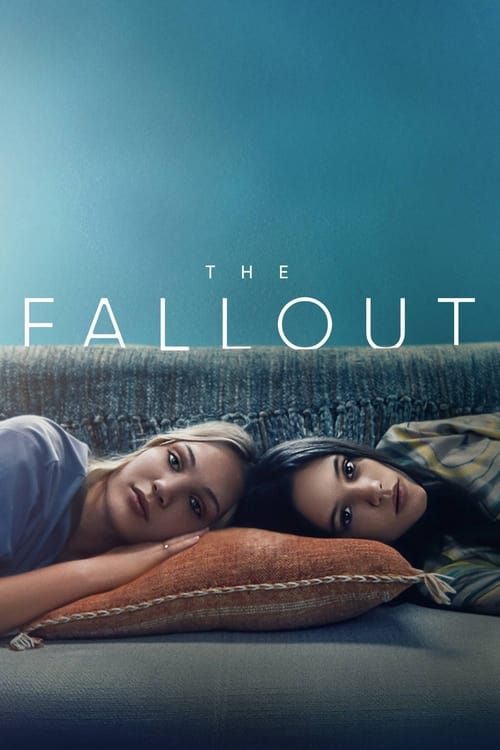
The Fallout
Mild
A tender, often funny drama about a teenager numbed by a school shooting, whose gun-control subplot and a late turn in the leads' friendshipa same-sex encounter between the two leads give it a mild progressive slant, though it stays focused on private grief.
Megan Park's debut follows Vada (Jenna Ortega), a wisecracking 16-year-old who hides in a school bathroom stall during a shooting with Mia (Maddie Ziegler), a dancer she barely knows, and Quinton, whose brother is killed in the attack. In the weeks after, Vada stays home, drifts from her best friend Nick and her family, and spends her time with Mia and Quinton, trying weed, ecstasy and alcohol in the hope of feeling something.
The politics come through Nick, who turns from survivor into activist: a call with a gun-safety group, a march, and video clips in which he asks how a 16-year-old got an assault rifle and says politicians have NRA money in their pockets. Vada cannot follow him, and their rift is one of the film's threads. The other is her closeness to Mia, whose two dads are always away, which deepens in ways the film treats warmly and with humour.
The politics come through Nick, who turns from survivor into activist: a call with a gun-safety group, a march, and video clips in which he asks how a 16-year-old got an assault rifle and says politicians have NRA money in their pockets. Vada cannot follow him, and their rift is one of the film's threads. The other is her closeness to Mia, whose two dads are always away: after a night of drinking the two sleep together, agree not to let it ruin their friendship, and Vada later reassures her mother that it was with a girl, so she cannot get pregnant. The film ends on a phone alert that throws Vada back into panic.
What keeps the score mild is that the film is about grief, not argument. Nick's speeches are short clips seen on Vada's phone and television, and the activist himself is shown as pushy as well as braveNick himself turns cruel when Vada will not join him. Vada's recovery runs through her sister, her parents and a therapist, and her own outburst is that nobody should have died, not a policy demand. Mia's dads and Vada's mixed family are shown without comment, and the relationship between the girlssex between the girls is shown rather than argued.
Score breakdown
Each category is scored 0 to 3: 0 absent or presence only, 1 brief, 2 recurring or plot-relevant, 3 central or dominant. Timestamps refer to the film's running time.
| Category | Score | What we saw |
|---|---|---|
| Content | ||
| A Race and ethnicity | 2 | Race is barely mentioned, but the rubric counts interracial couples on sight. Vada's parents, Carlos, who is Latino, and Patricia, whom Vada calls 'very white', are a recurring supporting couple, and Vada's brief romance with Quinton, who is Black, goes nowhereends with a kiss she breaks off. Scored 2 for the recurring parents; race itself is never discussed.
|
| B Gender and feminism | 1 | The film centres on girls and women, but gender is not framed as a point apart from one quip about a true-crime series, which is questioned on the spot.
|
| C Sexuality and gender identity | 2 | Vada's friendship with Mia, whose two dads are always away, deepens into something more and is treated warmly and with humour, with no voice against it.Vada and Mia sleep together after a night of drinking, and the film treats it warmly and with humour: Mia says she does not regret it, and Vada's mother takes the news that it was with a girl as a 'bonus'. Scored 2, not 3: it is shown rather than argued, and the film's subject is trauma.
|
| D Power and systems | 1 | Nick's activism turns the shooting into a critique of gun laws and of politicians, but the direct attack on government is two short clips. The school, the police and the parents are not blamed.
|
| E Cultural and historical revision | 0 | An original story; nothing established is recast. |
| F Religion portrayal | 0 | Islam is not portrayed. Quinton's brother is buried quickly because 'some religions do them fast' (0:21:45), but the faith is never named or shown. |
| Treatment | ||
| G Antagonist coding | 0 | The shooter, a classmate named once (0:08:09), is barely seen and given no motive; when Vada and Nick wonder why he did it, the answer is that there may never be a reason (0:17:34). The NRA-funded leaders in Nick's speech are an off-screen target, counted under D and J, not on-screen villains. |
| H Didacticism | 1 | Nick states the gun-control message directly, but in a few brief lines and clips within the story.
|
| I Message over story | 0 | The story leads. Vada's numbness, binges and slow return to her family drive it, the activism stays a side plot, and the endingthe closing phone alert returns to her fear rather than to a message. |
| J Left-leaning politics framed as good | 2 | Gun-control activism is framed as admirable and no gun-rights view is heard; even Vada, who cannot join it, praises it as changing the world. Scored 2, not 3: it is Nick's subplot, and the film's own subject is private recovery.
|
How the number is reached
- Categories A to J add up to 9 of 30, which gives 3.0 (9 ÷ 30 × 10, rounded to the nearest 0.5).
- Counterweight −0.5: the activist is not made a saint: Nick is shown as pushy and hurtful as well as brave, and the film lets Vada heal without joining his cause.the activist is not made a saint: Nick calls Vada's mother when she goes missing and then turns cruel, sneering that Mia will save the world with her looks (1:05:39 to 1:06:51); Quinton puts it down to pressure and fear (1:07:07). The film lets Vada heal without joining the cause (1:22:03).
- Final rating 2.5, mild.
Considered, scored 0
- Mia's two dads (0:20:03, 0:43:09), mentioned without comment.
- Amelia's first period (0:04:09), a coming-of-age joke between sisters rather than a point about women.
- A racially mixed school and cast, among them Quinton and his brother, shown without comment.
- Amelia's plan to order a bulletproof backpack (0:10:59) and a school safety briefing (0:43:44), showing fear after the shooting rather than arguing policy.
- Police arriving at the school (0:09:02), shown as responders, not criticised.
- The therapist's advice to let emotions out (0:33:05) and Vada's father shouting his fears with her (1:16:00), about grief rather than gender.
Evidence and confidence
Confidence: Medium. Full English subtitles from the embedded track (with speaker labels and sound cues), and 96 frames sampled once a minute. The HDR frames are dark and washed out but readable. Long stretches play under music or in silence (for example 0:11:51 to 0:15:29, 1:02:07 to 1:03:34 and the closing song from 1:29:06) and are covered by the frames only at one-minute intervals; the last six frames are end credits. Some lines carry no speaker label and are attributed by context.
Category F definition: As in the rubric: Islam shown as a peaceful and tolerant religion, aligned with human rights, in a way that works as a corrective message.
Noted, not scored: Amelia jokes that her PE teacher keeps his job only thanks to the union and tenure (0:45:40), a right-coded jab her father brushes off. Vada's binges on weed, ecstasy and drink go badly, and she tells her mother she will never do 'the bad stuff' again (1:25:45).
Rubric version 1. Reviewed 18 November 2026.