Woke rating
The Death of Robin Hood
None or negligible
A bleak, slow-burning retelling of the Robin Hood legend about violence, guilt and the lies stories tell, with no progressive identity messaging; its only lean is a sympathetic view of Christian faith.
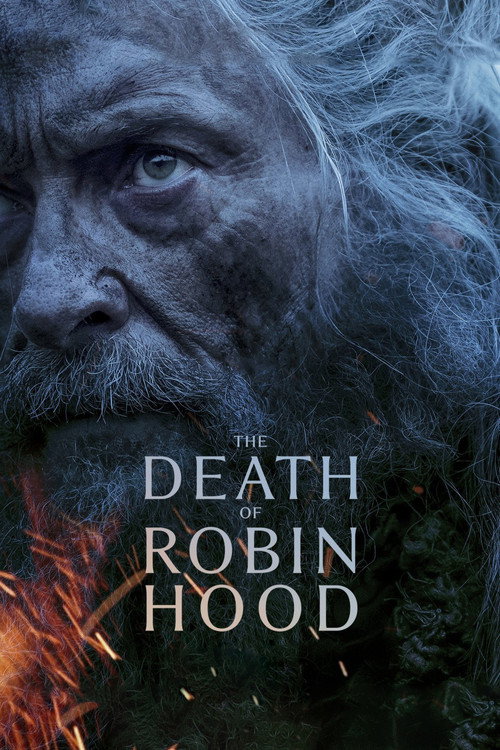
Michael Sarnoski's film finds an aged Robin Hood (Hugh Jackman) worn out by a life of killing. When Little John asks for help winning back a stolen farm, Robin goes along hoping for a 'right death', is gravely wounded, and wakes in a priory on a remote island where Sister Brigid (Jodie Comer) nurses him. Most of the film is quiet: healing, trapping rabbits, an orphaned girl who will not speak, and a family of avengers still on his trail.
The film's argument is about violence and myth, not identity. From the first scene it calls the legend a pack of lies: Robin was a murderer, Maid Marian was made up, and the blood debts he left behind are still being collected. Its answer is a religious one, built from prayer, penance and forgiveness.
The film's argument is about violence and myth, not identity. From the first scene it calls the legend a pack of lies: Robin was a murderer, Maid Marian was made up, and the blood debts he left behind are still being collected. Robin spares the last avenger and tells him to go home and end the feud, confesses that the stories were lies he told to make men follow him, and learns that Brigid's husband was one of the men he burned alive. He asks her to end his life, and spends his last hours teaching Little John's daughter to shoot. Its answer is a religious one, built from prayer, penance and forgiveness.
Nothing in the material scores. A boy of colour on the farm appears without comment, Brigid's authority as a healer is never framed as a statement, the avengers have a real grievance rather than a demographic one, and there is no politics, institution-bashing or speech about society.
Score breakdown
Each category is scored 0 to 3: 0 absent or presence only, 1 brief, 2 recurring or plot-relevant, 3 central or dominant. Timestamps refer to the film's running time.
| Category | Score | What we saw |
|---|---|---|
| Content | ||
| A Race and ethnicity | 0 | No racial theme. A boy of colour on Edward's farm (0:18:30) and some members of the priory appear without comment, and no interracial couple is shown. |
| B Gender and feminism | 0 | Brigid is a capable healer and the priory is led by a Prioress, but neither is framed as a point about women. The ending's archery lessonRobin teaching Little Margaret to shoot is a passing of the torch between characters, not a message. |
| C Sexuality and gender identity | 0 | No LGBTQ content or sexual-freedom themes. |
| D Power and systems | 0 | No critique of government, church, class or other institutions. The sheriff and the lords of the legend barely figure; the violence is personal and hereditary. |
| E Cultural and historical revision | 0 | The legend is deliberately revised: Robin is a murderous brigand (0:04:45), Maid Marian is called an invention (0:04:09), and the familiar tales are dismissed as liesRobin himself says the tales were lies he told to win followers (1:41:23). The revision carries a point about violence and myth, not identity, and no character is recast by sex or ethnicity. |
| F Religion portrayal | 0 | Islam does not appear. The religion on screen is medieval Christianity, treated with sympathy (see notScored). |
| Treatment | ||
| G Antagonist coding | 0 | The antagonists are a family avenging kin Robin killed decades ago (0:29:01), with a real individual motive and a son who is spared and sent home (1:30:05). They are not coded by any demographic or ideology. |
| H Didacticism | 0 | The speeches are about violence, stories, balance and God (0:45:43, 1:02:58, 1:28:11), not social or identity politics. |
| I Message over story | 0 | No identity or political message for the story to bend toward; the plot follows Robin's wounds, his guilt and the feud. |
| J Left-leaning politics framed as good | 0 | No left- or right-coded political content. |
How the number is reached
- Categories A to J add up to 0 of 30, which gives 0.0 (0 ÷ 30 × 10, rounded to the nearest 0.5).
- No counterweight: Nothing to offset: the film carries no progressive messaging.
- Final rating 0.0, none or negligible.
Considered, scored 0
- A boy of colour, Hendrie, on Edward's farm (0:17:53, frame 0:18:30), and members of the priory, shown without comment.
- A girl travelling disguised as a boy in the opening scene (0:03:17).
- Sister Brigid's skill as a healer and the Prioress's leadership of the island community.
- The story of the island as a holy site for Druids, Romans and many gods (1:02:07), a point about the place rather than a case for religious pluralism.
- Robin's wish for a 'right death' (0:16:08) and his request that Brigid end his life (1:45:00), framed as atonement rather than as a cause.
Evidence and confidence
Confidence: Medium. Full English subtitles (embedded track) and 122 frames sampled once a minute. Dialogue is sparse and many night scenes are very dark, so several sampled frames show little; nothing in the dialogue suggests anything was missed.
Category F definition: As in the rubric: Islam shown as a peaceful and tolerant religion, aligned with human rights, in a way that works as a corrective message.
Noted, not scored: Christian faith is treated with sympathy throughout: prayers for grace and forgiveness (0:20:19, 0:24:00), the leper's story of a philosopher who finds God in his mind (0:45:43), and Brigid's Gospel reading for the dead (0:55:37). Robin's arc is one of penance and confession (1:31:54).
Rubric version 1. Reviewed 18 November 2026.