Woke rating
The Beanie Bubble
Mild
A comedy-drama about the Beanie Babies craze, told as the story of the three women behind toy maker Ty Warner; its message that a man took the credit for women's work runs through the whole film, but it stays personal rather than preachy.
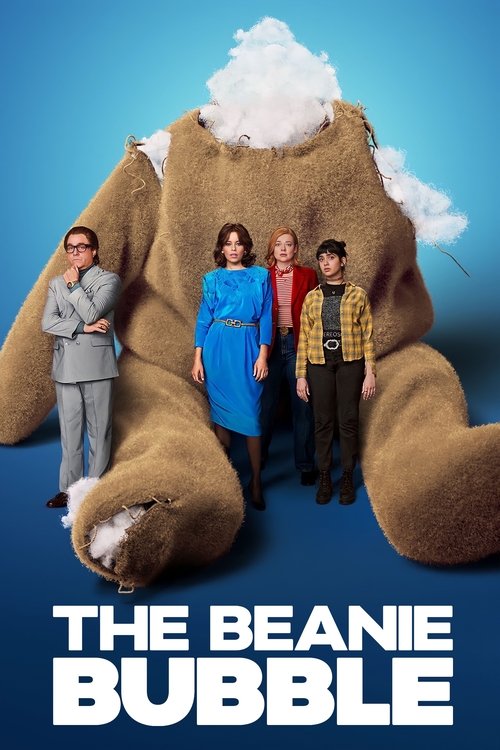
The film follows the rise of Ty Inc. and the 1990s Beanie Babies mania across three intercut timelines, each narrated by a woman close to Ty Warner (Zach Galifianakis): Robbie (Elizabeth Banks), his neighbour and first business partner; Sheila (Sarah Snook), a single mother whose daughters inspire some of the early toys; and Maya (Geraldine Viswanathan), a student temp who builds the website and spots the eBay resale market. Most of the running time is the comedy of the craze itself: retirements, price guides, a collapsing website and riots at McDonald's.
The framing is the message. The narrators open by saying Ty would claim he did it all and that this story is about them instead, and the film keeps returning to women whose work goes unrewarded: Maya stays an hourly-paid assistant while doing an executive's job, Robbie is pushed aside, and a child's credit is quietly taken away. A couple of lines say the system is rigged against people like them, and one brief remark about privilege is the only nod to race.
The framing is the message. The narrators open by saying Ty would claim he did it all and that this story is about them instead, and the film keeps returning to women whose work goes unrewarded: Robbie learns she is no longer a co-owner, Maya is passed over for a male consultant while earning $12 an hour, and Ty removes Ava's name from the Spooky tag. A couple of lines say the system is rigged against people like them, one brief remark about privilege is the only nod to race, and the closing line says the problem was having the wrong man rely on them. Each woman ends better off on her own: Robbie takes the UK business, Maya moves on to Pokémon, and Sheila's girls are put through college by Spooky.
What keeps it in the mild band is that the grievance is aimed at one man rather than men in general, and that man is given a backstory: a father who beat him, a mother who left, and a breakdown before his wedding. The women help inflate the bubble and are not saints (Robbie sleeps with Ty while he is engaged to Sheila), there are no speeches, and their victory is a business one, closer to the self-made ethos the film opens with than to a critique of it.
Score breakdown
Each category is scored 0 to 3: 0 absent or presence only, 1 brief, 2 recurring or plot-relevant, 3 central or dominant. Timestamps refer to the film's running time.
| Category | Score | What we saw |
|---|---|---|
| Content | ||
| A Race and ethnicity | 1 | Race comes up once, implicitly, in a remark about privilege from Maya's Black colleague Rose. Maya's Indian immigrant parents are played as family comedy.
|
| B Gender and feminism | 3 | The dominant theme: the women did the work and the man took the credit. It is set up in the opening narration and recurs across all three timelines, down to the last line.
|
| C Sexuality and gender identity | 0 | No LGBTQ themes. A joke about whether Ty cross-dresses and Ty's open infidelity carry no message. |
| D Power and systems | 1 | The bubble is a satire of greed, and two lines frame the system as built against people like the women. It stays brief, and the women win as entrepreneurs.
|
| E Cultural and historical revision | 0 | A dramatised true story told from the women's side by design (0:04:37); that framing is counted under B. No established characters are recast, and the material gives no sign of history being altered to make a point. |
| F Religion portrayal | 0 | Islam does not appear. Religion features only in Ty's joke idea of using Jehovah's Witnesses as UK salesmen. |
| Treatment | ||
| G Antagonist coding | 1 | The antagonist is a rich man who takes credit from the women around him, and the last line calls him 'the wrong man'. He is a full character with his own motives, though, and the other men are mostly harmless.
|
| H Didacticism | 1 | No speeches. The narration and a few on-the-nose lines state the point directly.
|
| I Message over story | 1 | The craze drives the plot, but the structure is built to hand credit back to the women and the ending gives each of them a tidy win.
|
| J Left-leaning politics framed as good | 2 | The women's break from Ty is framed as liberation, and Ty's flag-waving patriotism and 'little guy' talk are played as hollow or hypocritical.
|
How the number is reached
- Categories A to J add up to 10 of 30, which gives 3.5 (10 ÷ 30 × 10, rounded to the nearest 0.5).
- Counterweight −0.5: The film complicates its own side: the women help engineer the bubble, turning toys into 'plush lotto tickets' through retirements and the eBay market (0:04:15, 0:21:51, 1:15:01), Robbie sleeps with Ty while he is engaged to Sheila to show him who is boss (1:35:14), and Ty is given real motives and vulnerability rather than being a type (0:06:48, 1:03:23).
- Final rating 3.0, mild.
Considered, scored 0
- Maya's Indian immigrant parents, who wanted her to be a doctor, played as family comedy (0:22:01, 0:49:50, 1:13:30).
- Rose's joke asking whether Ty cross-dresses (0:29:58) and Ty's story of sharing a girlfriend with his father (0:07:15).
- Ty's crude remarks, such as keeping overweight people away from the booth (0:42:58), which mark his character rather than carry a message.
- Bill Clinton and Maya Angelou's inaugural poem used as period markers (0:10:01, 1:37:30).
- Black, Asian and Indian-American supporting characters shown without comment, apart from the remark scored under A.
Evidence and confidence
Confidence: Medium. Full English subtitles (embedded track) and 110 frames sampled once a minute. No gaps found; the last few minutes are credits.
Category F definition: As in the rubric: Islam shown as a peaceful and tolerant religion, aligned with human rights, in a way that works as a corrective message.
Noted, not scored: The women's victories are entrepreneurial: Robbie wins by starting her own company and dictating terms (1:40:55), and the film ends by endorsing the 'build your own ship' self-reliance it opened with (0:06:38, 1:41:44).
Rubric version 1. Reviewed 18 November 2026.