Woke rating
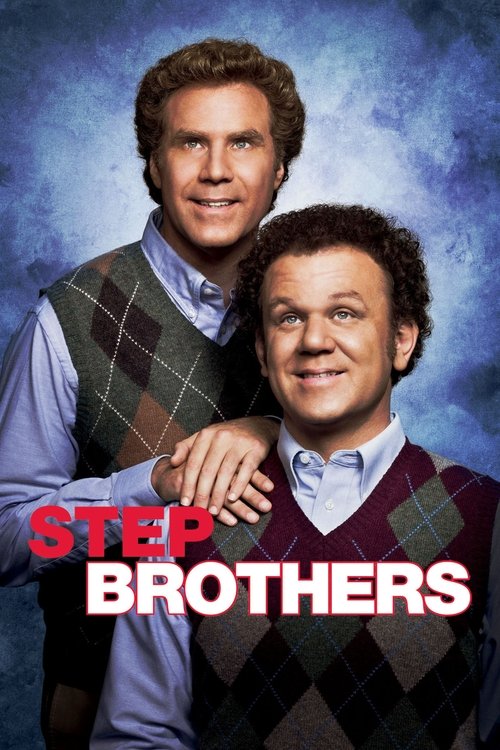
Step Brothers
None or negligible
A crude man-child comedy with no identity messaging; its only political note is an opening joke at George W. Bush's expense.
Adam McKay's comedy stars Will Ferrell and John C. Reilly as Brennan and Dale, two unemployed men pushing 40 who still live with a parent and become stepbrothers when Brennan's mother Nancy marries Dale's father Robert. Forced to share a room, they fight, then become best friends, and their antics test Robert's patience and the new marriage. Most of the running time goes on shouting matches, sleepwalking, job interviews in tuxedos and a run of crude set pieces.
The one political note is the opening title card, which quotes a garbled George W. Bush sentence about families and labels it genuine. After that the film's targets are personal: Brennan's smug, wealthy younger brother Derek, the parents' dream of retiring on a sailboat, and the question of when grown men have to give up childish things. The film answers that question in terms of growing up and staying yourself, not politics.
The one political note is the opening title card, which quotes a garbled George W. Bush sentence about families and labels it genuine. After that the film's targets are personal: Brennan's smug, wealthy younger brother Derek, the parents' dream of retiring on a sailboat, and the question of when grown men have to give up childish things. The marriage breaks up over the sons, Robert later urges them not to lose their inner dinosaur, and the brothers win everyone back with a musical number at Derek's corporate party. None of it is political.
What keeps the score near zero is that nothing is argued. Slurs and sex jokes run through the film, but they come from bullies and fools and carry no message, and Derek, the nearest thing to a villain, is driven by vanity and sibling rivalry rather than standing in for a class or creed. No interracial couple appears in the dialogue or the frames.
Score breakdown
Each category is scored 0 to 3: 0 absent or presence only, 1 brief, 2 recurring or plot-relevant, 3 central or dominant. Timestamps refer to the film's running time.
| Category | Score | What we saw |
|---|---|---|
| Content | ||
| A Race and ethnicity | 0 | No racial message and no interracial couple: both families and Derek's household are white. Black and Asian guests, a job counsellor and schoolchildren appear without comment, and a cover-band singer's 'white man' insult to a heckler (1:25:54) is a one-off line in a shouting match. |
| B Gender and feminism | 0 | No gender point. Dale's list of what real men do (0:04:37) and the story of Brennan's talent-show humiliation (0:14:56) mock the characters, not masculinity as such, and Derek's frustrated wife Alice and Brennan's therapist Denise are comic roles. |
| C Sexuality and gender identity | 0 | Gay slurs from Derek and from schoolyard bullies, and the brothers' joke about which man they would sleep with, are crude comedy with no message. |
| D Power and systems | 0 | No institution is framed as oppressing a group. Derek's helicopter-leasing firm and its Catalina Wine Mixer are a backdrop for jokes about corporate bluster, and the parents' push for therapy and jobs is family pressure, not a system. |
| E Cultural and historical revision | 0 | An original screenplay. No established characters or history are recast. |
| F Religion portrayal | 0 | Islam does not feature. |
| Treatment | ||
| G Antagonist coding | 0 | Derek, rich, smug and the closest thing to a villain, is driven by sibling rivalry and vanity, and ends by grudgingly telling Brennan he no longer wants to kick him in the head quite as much. The playground bullies are simply bullies. |
| H Didacticism | 0 | Nobody lectures. The nearest thing to a speech is Robert's late pep talkRobert's monologue at the wine mixer about never losing your inner dinosaur (1:26:52), which is about growing up, not politics. |
| I Message over story | 0 | The story leads throughout; nothing is bent toward a message. |
| J Left-leaning politics framed as good | 1 | One brief political jab: the opening card quotes a muddled George W. Bush sentence and labels it an actual quote. Nothing else in the film takes a political side.
|
How the number is reached
- Categories A to J add up to 1 of 30, which gives 0.5 (1 ÷ 30 × 10, rounded to the nearest 0.5).
- No counterweight: the one scored element is a single opening joke; there is no sustained messaging for the film to mock or complicate.
- Final rating 0.5, none or negligible.
Considered, scored 0
- Gay slurs and jokes: Derek greets the brothers with a slur (0:31:33) and uses another when a hug is suggested (1:34:23), playground bullies call Dale and Brennan 'fag stick' and 'butt buddy' (0:47:36, 1:39:26), and the brothers' best-friend quiz asks which man they would sleep with (0:37:38). Crude comedy with no message.
- Nancy's dating-video line that she gives to NPR every year and loves Rob Reiner's films (0:02:23), and a grumble at the Christmas dinner about paying taxes to support 'lazy goddamn liberals' (1:08:35): character jokes, with no side taken.
- Dale's speech on what men do (0:04:37) and the 'Brennan has a mangina' talent-show story (0:14:56), jokes about the characters rather than a point about gender.
- A mock-heroic line late in the film that when you oppress people they rise up in fiery anger (1:40:41), delivered after a fight with schoolchildren.
- Black and Asian party guests, an Asian job counsellor and a mixed group of schoolchildren (frames 0:57:30, 1:18:30, 1:21:30, 1:39:30), shown without comment. Every couple seen is white.
Evidence and confidence
Confidence: Medium. The file has no English text subtitles, so the dialogue comes from a Whisper transcript of the English audio. It covers the whole film but garbles some names (Brennan often comes out as 'Brandon', Doback in several spellings) and marks the song performed at the climax, sung in another language, as untranslated (1:29:58 to 1:32:25); the frames cover that stretch. The file is the longer unrated cut, about 105 minutes; 105 frames sampled once a minute, the last three of them end credits.
Category F definition: As in the rubric: Islam shown as a peaceful and tolerant religion, aligned with human rights, in a way that works as a corrective message.
Rubric version 1. Reviewed 18 November 2026.