Woke rating
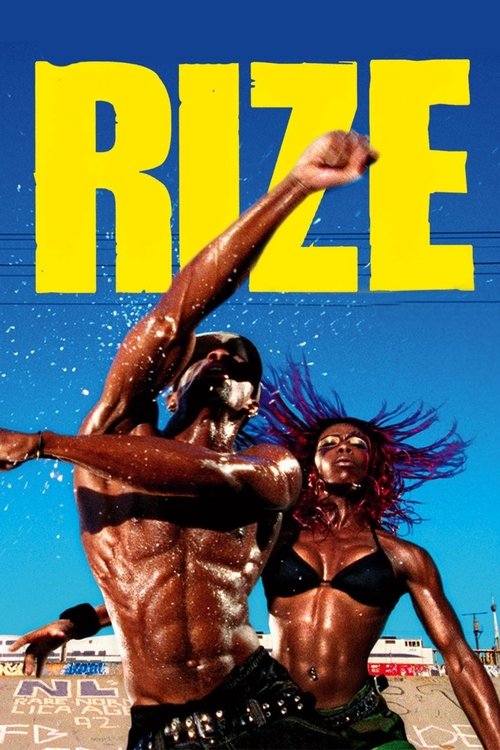
Rize
None or negligible
A documentary about the clown dancers and krumpers of South Los Angeles that mentions riots, poverty and oppression only in passing; it carries almost no progressive messaging and gives more weight to mentors, faith and family.
David LaChapelle's documentary follows two dance styles from the poor neighbourhoods of South Los Angeles. Clowning began with Tommy the Clown, a former drug dealer who became a hip-hop birthday-party clown and gathered dozens of young dancers around him. Krumping is the rawer style that some of his dancers, among them Tight Eyez, Lil C, Dragon and Miss Prissy, broke away to create. Interviews, home life and dance footage build to a Battlezone contest between the clowns and the krumpers at the Great Western Forum.
The messaging is thin and mostly framing. The film opens on newsreel of the 1965 Watts riots and colour footage of a later riot, which the dancers say they grew up through. In one short passage interviewees say their neighbourhoods have no after-school programmes or arts schools like richer ones do, and one says outsiders see them as ghetto thugs when they are really oppressed. A wordless montage sets krumping beside archive footage of African tribal dance, and the song over the closing montage lists Section 8 housing, government cheese and Chevron among the neighbourhood's ills.
What keeps the score at the bottom is that the film's account of the danger around these kids is gangs, drugs, drive-by shootings and absent or addicted parents, all inside the community, and its answer is mentors, church, family and the dance itself. No outside group is blamed and no policy is argued for. Several speakers credit God, jail or a strict father figure for turning their lives around.
Score breakdown
Each category is scored 0 to 3: 0 absent or presence only, 1 brief, 2 recurring or plot-relevant, 3 central or dominant. Timestamps refer to the film's running time.
| Category | Score | What we saw |
|---|---|---|
| Content | ||
| A Race and ethnicity | 1 | Race is the setting rather than the subject. The opening riot footage, one line about being oppressed and a montage linking krumping to African dance touch on it briefly; racism itself is never named.
|
| B Gender and feminism | 0 | Girls and women krump and battle alongside the men, and a girls' match is part of the Battlezone, but this is shown without a gender message. The film's praise goes to father figures. |
| C Sexuality and gender identity | 0 | No LGBTQ+ content. The 'stripper dance' done by young girls is discussed, with one mother defending small children 'poppin'' (0:22:01) and krumpers saying they do not do it (0:22:22); this is about dance, not sexual freedom. |
| D Power and systems | 1 | Neglect of poor neighbourhoods comes up in one short interview passage and in the closing song. No institution is shown oppressing anyone, and the police appear only once, neutrally.
|
| E Cultural and historical revision | 0 | An original documentary. Archive footage of the riots and of African dancers is used as archive, without recasting history. |
| F Religion portrayal | 0 | Islam does not appear. The religion on screen is Black Protestant Christianity, shown warmly but not scored here. |
| Treatment | ||
| G Antagonist coding | 0 | There are no villains coded by group. The threats are gang members, drive-by shooters and the burglars who rob Tommy, all from the same neighbourhoods, and Baby Tight Eyez's own father is described as a gang member who does not seem to care about him (0:38:55, 0:39:46). |
| H Didacticism | 1 | No speeches. The message comes in a few single lines from interviewees and in the closing song's lyrics.
|
| I Message over story | 0 | The film's argument is that the dance gives kids an alternative to gangs, and its structure follows the dancers, their rivalry and the Battlezone. The riot footage frames the opening but nothing is bent to make a political point. |
| J Left-leaning politics framed as good | 0 | No partisan politics is framed as good. The remedies the film shows are mentors, faith, family and the dance; the closing song's jab at Section 8 housing and government cheese is ambiguous and could as easily be read as a critique of welfare. |
How the number is reached
- Categories A to J add up to 3 of 30, which gives 1.0 (3 ÷ 30 × 10, rounded to the nearest 0.5).
- Counterweight −0.5: The film complicates its own brief 'oppressed' framing by putting personal and family choices at the centre: Tommy says he was a big drug dealer and thanks God he went to jail (0:08:18, 0:08:48), Dragon's mother says kids who do not get love at home go looking for it in the streets (1:09:41), a casket seller tells the young dancers they are killing themselves (1:07:34), and Tight Eyez recalls fetching his mother from a crack house (0:37:01).
- Final rating 0.5, none or negligible.
Considered, scored 0
- An almost entirely Black cast from South Central, Watts, Compton and Inglewood, shown without comment; Tommy is praised for what he does for the Black and Hispanic community (0:05:08).
- A white dancer and Asian dancers who say others doubted they could dance like this (1:18:17, 1:18:40), a passing remark.
- Girls krumping and battling, including a boy facing his girlfriend in what a krumper calls the classic battle of the sexes (0:26:26) and the girls' Little Mama match (0:44:29).
- Police appear once, briefly and neutrally, at a crime scenedusting Tommy's burgled house for prints (1:00:29).
- A news report on a shootingThe drive-by killing of 15-year-old dancer Quinesha Dunford (1:04:31), blamed on local gang members.
- 2Pac's 'Ghetto Gospel' over the end credits, which pairs a line about another form of slavery (1:24:29) with one saying it is not about black or white (1:23:44).
Evidence and confidence
Confidence: Medium. Full English subtitles from the embedded track, song lyrics included, and 87 frames sampled once a minute. A stretch with no dialogue (0:29:11 to 0:32:40) is covered only by the frames, which show a montage of krumpers and archive footage of African dancers.
Category F definition: As in the rubric: Islam shown as a peaceful and tolerant religion, aligned with human rights, in a way that works as a corrective message.
Noted, not scored: Christian faith and self-reliance are presented as the way out: Tommy prayed in jail for another chance (0:08:55) and says no one gave him a dime (0:08:01); Dragon's mother turned to God after 15 years of substance abuse (1:10:16) and krumps 'for Christ' (1:11:22); another speaker credits Dragon with bringing them back to church (1:11:51); and a krumper rejects commercial hip-hop for a generation of kids with morals and values (1:12:21). Strong father figures are the film's heroes: Tommy says he has been Larry's dad and makes him do his homework (0:11:40), and Tight Eyez vows to keep Baby Tight Eyez out of his father's gang as a mentor and role model (0:39:15).
Rubric version 1. Reviewed 18 November 2026.