Woke rating
Resident Evil
None or negligible
A near-wordless survival-horror reboot with no identity messaging; its only brushes with politics are the franchise's reckless corporation and a pro-choice slogan the film itself treats as a dodge.
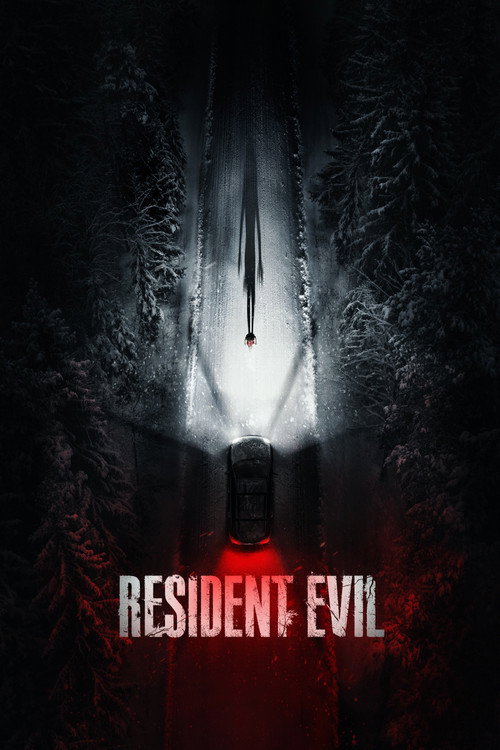
Zach Cregger's take on the video-game franchise follows Bryan, a medical courier who takes one last double-pay run on a snowy night: a top-priority cooler for Raccoon City General, up in the mountains. On the way he hits a woman who runs into the road, and the night turns into a running fight against infected people and animals in farmhouses, back alleys, car parks and hospital stairwells. Much of the film is Bryan alone, swearing and talking to himself.
The only real-world issue comes in the opening phone call: Bryan's girlfriend Michelle has a positive pregnancy test, and when she presses him for his view he offers 'your body, your choice', which she rejects as no answer at all. The subplot returns later as a personal matter, not a political one. The franchise's corporate villainy surfaces in a single mid-film scene of exposition.
The only real-world issue comes in the opening phone call: Bryan's girlfriend Michelle has a positive pregnancy test, and when she presses him for his view he offers 'your body, your choice', which she rejects as no answer at all. Believing he may die, he later records a message saying he hates that first response, that it came from fear of growing up, and that he does want a child with her, whatever she decides. The franchise's corporate villainy surfaces in one scene: a panicky Umbrella Corporation man admits the company built the agent under classified government contracts and that a lab accident, very likely his own, set it loose.
What keeps the score at the bottom of the scale is that the film has no message to deliver. There are no speeches, no identity themes and no political antagonists: the threats are monsters, and the one corporate figure is a bumbling man with a personal stake rather than a symbol. A capable woman fighter and a mixed hospital and lab staff appear without comment, and the pro-choice line is played as an evasion the film moves past.
Score breakdown
Each category is scored 0 to 3: 0 absent or presence only, 1 brief, 2 recurring or plot-relevant, 3 central or dominant. Timestamps refer to the film's running time.
| Category | Score | What we saw |
|---|---|---|
| Content | ||
| A Race and ethnicity | 0 | No race theme and no couple shown on screen; Bryan's girlfriend is only a voice on the phone. Staff of several ethnicities appear without comment. |
| B Gender and feminism | 0 | No gender message. A competent woman fighter outshines the two men she drives, but nothing is said about it. |
| C Sexuality and gender identity | 0 | No LGBTQ+ content. |
| D Power and systems | 1 | The franchise's corporate culprit is named in one sceneThe Umbrella Corporation, working on classified government contracts, made the agent and lost control of it. A genre staple, delivered in a single scene and partly played for laughs, not framed as oppression of a group.
|
| E Cultural and historical revision | 0 | A new story with a new lead. The franchise's Umbrella Corporation and Raccoon City are kept, and no established character was seen recast. |
| F Religion portrayal | 0 | Islam does not appear. |
| Treatment | ||
| G Antagonist coding | 0 | The antagonists are infected people, animals and mutated creatures. The only human foil, the Umbrella man, has a personal motive (covering for his own blunder) and is not coded by race, sex, faith or politics. |
| H Didacticism | 0 | No speeches or lectures. The one line touching a political slogan is a dodge in a domestic argument, not a statement of the film's view. |
| I Message over story | 0 | Story and set pieces lead throughout; nothing bends to make a point. |
| J Left-leaning politics framed as good | 0 | No political camp is framed as good or bad. Bryan's pro-choice line (0:04:54) is rejected by his girlfriend as an evasion (0:05:03), and he later disowns it as fear while leaving the decision with her (1:04:22, 1:05:05). |
How the number is reached
- Categories A to J add up to 1 of 30, which gives 0.5 (1 ÷ 30 × 10, rounded to the nearest 0.5).
- Counterweight −0.5: The film undercuts what little messaging it has: the one progressive slogan is played as a cop-out that the girlfriend rejects (0:05:03) and Bryan later disowns (1:04:22), and the corporate culprit is an individual with a personal stake rather than a faceless systema panicky man covering for his own blunder (0:44:42), while the company's lab team works to finish a cure (1:20:34).
- Final rating 0.0, none or negligible.
Considered, scored 0
- Bryan's 'your body, your choice' answer to his girlfriend's pregnancy news (0:04:54), framed by her as a non-answer; see Not scored.
- Maxine, a capable woman who fights off the infected while the two men in her car fumble with a gun (0:45:50, 0:49:04), with no comment on gender.
- Hospital and lab staff of several ethnicities, shown without comment (0:03:30, 1:21:30).
- A highway patrolman who threatens to treat Bryan as a criminal (0:12:51) and whom Bryan mocks once alone (0:13:07): a stock officious cop who also helps him, not a comment on policing.
Evidence and confidence
Confidence: Medium. Full English subtitles (embedded track) and 94 frames sampled once a minute. Long stretches are wordless action, so the frames carry much of the story, and many night scenes are too dark to show detail.
Category F definition: As in the rubric: Islam shown as a peaceful and tolerant religion, aligned with human rights, in a way that works as a corrective message.
Noted, not scored: The pregnancy subplot leans toward family rather than choice: Bryan's pro-choice slogan is treated as a dodge (0:05:03), and his arc moves toward welcoming the childand his last message says he wants a child with Michelle and that she would be an amazing mom (1:04:51, 1:05:14).
Rubric version 1. Reviewed 18 November 2026.