Woke rating
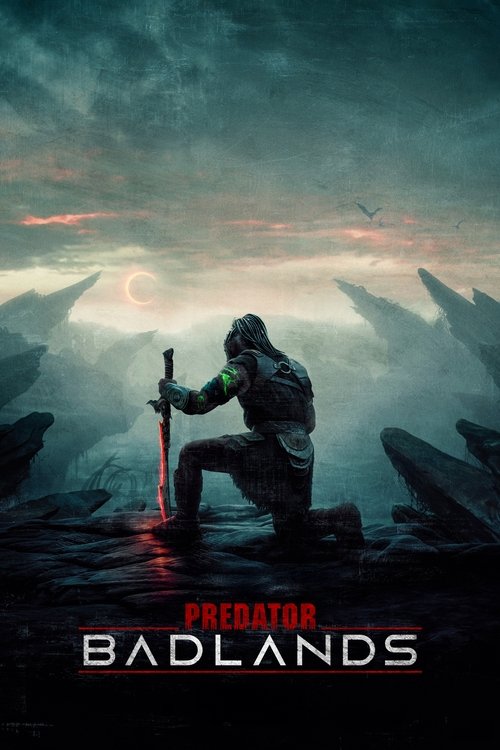
Predator: Badlands
None or negligible
A creature-hunting adventure with a Predator as its hero and no identity messaging; its only brush with politics is the franchise's exploitative Weyland-Yutani corporation, a genre fixture rather than an argument.
Dan Trachtenberg's entry in the Predator franchise makes a Predator the hero for the first time. Dek is the runt of his Yautja clan; when his father orders him culled as a weakness and his brother Kwei pays for defending him, Dek vows to earn his place by killing the Kalisk, an unkillable beast on the death planet Genna. There he teams up with Thia (Elle Fanning), a Weyland-Yutani research synth torn in half by the Kalisk, who will guide him if he helps her get her legs back and find her sister unit Tessa, and with a small local creature Thia names Bud. Much of the dialogue is subtitled Yautja, and most of the film is creature action and a bickering road trip.
The only contact with the rubric is the franchise's stock villain. Weyland-Yutani sent its synths to Genna for its own ends and threatens to decommission those who fail, and in the second half it takes over as the main antagonist, talking of exploiting the planet's creatures and treating whoever gets in the way as property. The film's own theme is about strength: Dek's father holds that weakness must be culled, and Thia answers with a story about wolves in which the alpha is the one who best protects the pack. That theme is about loyalty and chosen family, not identity or politics.
The only contact with the rubric is the franchise's stock villain. Thia admits the company sent the synths to capture the Kalisk and calls them in; Tessa takes the Kalisk and Dek captive, tells him he is company property, says the synths were given feelings to understand the creatures and exploit them, and Thia is ordered boxed up when she objects. Dek escapes, rescues Thia, sets the captured Kalisk, Bud's mother, loose on the company, and in the end turns down his father's offer of a place in the clan, saying he has his own. The film's own theme is about strength: Dek's father holds that weakness must be culled, and Thia answers with a story about wolves in which the alpha is the one who best protects the pack. That theme is about loyalty and chosen family, not identity or politics.
What keeps the score at the bottom is that nothing is argued about the real world. There are no humans of note on screen, no race, sex or sexuality themes and no speeches, and the company's villainy is the franchise's premise rather than a case against business. The creed the film rejects is not tied to any group either: it is voiced by Dek's father and later by a company synthlater by Tessa, and Dek himself starts out treating Thia as a mere tool, just as the company does, before he learns better.
Score breakdown
Each category is scored 0 to 3: 0 absent or presence only, 1 brief, 2 recurring or plot-relevant, 3 central or dominant. Timestamps refer to the film's running time.
| Category | Score | What we saw |
|---|---|---|
| Content | ||
| A Race and ethnicity | 0 | No race theme and no couple. The cast is almost entirely aliens and synths. |
| B Gender and feminism | 0 | No gender message. Thia and Tessa are female synths on opposite sides, and the cruel father's creed is never framed as a male one. |
| C Sexuality and gender identity | 0 | No LGBTQ+ content. Thia's tie to Tessa is framed as sisterhood. |
| D Power and systems | 1 | Weyland-Yutani, the franchise's ruthless company, is the second antagonist: it uses synths as disposable tools, wants the planet's creatures as specimens and turns on Dek and captures the Kalisk and Dek as specimens. Scored 1, not 2: its greed is a genre given carried by a few lines, not a case against corporations or capitalism, and the wronged parties are alien creatures and synths, not a human group.
|
| E Cultural and historical revision | 0 | An original story that ties the Predator films to the Alien films through Weyland-Yutani. Making a Predator the hero changes the franchise's point of view, not the sex or ethnicity of an established character. |
| F Religion portrayal | 0 | Islam does not appear. |
| Treatment | ||
| G Antagonist coding | 0 | The antagonists are Dek's father, the planet's creatures and the company's synths. The father has a stated reason, that the clan can have no weakness (0:09:37), and the company's lead synth has her ownTessa has a personal one (1:06:58). The company is faceless, but it is a franchise fixture, not a stand-in for any real-world group. |
| H Didacticism | 0 | No speeches or lectures on social or political issues. Thia's wolf story (0:50:18) states the film's theme of strength as protection, which is not an identity or social-justice position. |
| I Message over story | 0 | The hunt and the creature action lead throughout; nothing bends to make a point. |
| J Left-leaning politics framed as good | 0 | No political camp is framed as good or bad. The company's talk of helping humanity is shown as cover for exploitation, already counted under D, and no environmental or other real-world cause is named. |
How the number is reached
- Categories A to J add up to 1 of 30, which gives 0.5 (1 ÷ 30 × 10, rounded to the nearest 0.5).
- Counterweight −0.5: The film complicates its one critique. Dek treats Thia as a tool from the start (0:27:38, 0:47:58), the same view the company takes, and only grows out of it; Thia's own motives are not spotlessThia first uses Dek to bring the company to the Kalisk (0:54:55); and the antagonists have reasons of their own, from the father's creed that the clan can have no weakness (0:09:37) to a company synth's personal historyto Tessa's account of nearly losing everything protecting Thia (1:06:58).
- Final rating 0.0, none or negligible.
Considered, scored 0
- Thia and Tessa, two female synths played by Elle Fanning, one Dek's ally and the other a company loyalisthis captor; nothing is said about their sex.
- The father's creed that weakness must be culled (0:09:41, 0:12:04) set against Thia's story of the alpha who protects the pack (0:50:46) and Dek's chosen family: a theme of loyalty and protection that is never framed in terms of sex, and that Tessa, a female synth, also voices (1:07:18).
- Thia's reply to Dek's 'sensitivity is weakness' that sensitivity lets the synths understand the planet's creatures (0:30:50, 0:30:56), a character trait rather than a message.
- Dek's bond with Thia, a friendship with no romance.
Evidence and confidence
Confidence: Medium. Full English subtitles from the embedded track, with the forced track translating the Yautja dialogue, and 107 frames sampled once a minute. Long action stretches have little or no dialogue (for example 0:16:05 to 0:21:44 and 1:22:52 to 1:25:27) and many scenes are dark; the frames cover them.
Category F definition: As in the rubric: Islam shown as a peaceful and tolerant religion, aligned with human rights, in a way that works as a corrective message.
Noted, not scored: The film's ideal of strength is the protector: the alpha who guards the pack (0:50:52) and the brother who died shielding Dek (0:49:57). It sits closer to a traditional picture of the protective male than to a critique of masculinity.
Rubric version 1. Reviewed 18 November 2026.