Woke rating
Pain Hustlers
Mild
A brash pharma-crime drama that goes hard after the drug industry's bribery of doctors but makes its working-class heroine a willing accomplice rather than a victim, with little else on the rubric's list.
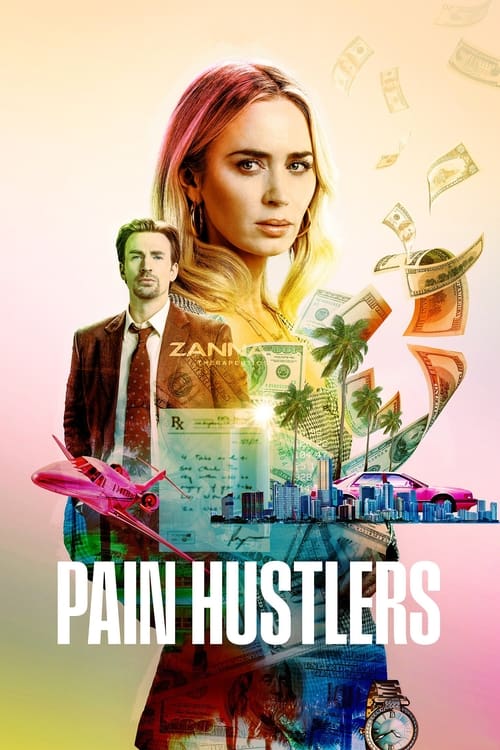
David Yates's drama follows Liza Drake (Emily Blunt), a broke single mother with no degree, from a strip club to a sales job at Zanna Therapeutics, a failing start-up selling a fentanyl spray for cancer pain. The salesman who hires her, Pete Brenner (Chris Evans), and their billionaire boss, Dr. Jack Neel (Andy Garcia), want growth at any cost. With a daughter who has a brain condition and a mother (Catherine O'Hara) who needs a job, Liza turns the company round by paying doctors to 'speak' at sham events. Black-and-white mock-documentary interviews with the players frame the story.
The messaging the rubric picks up is about the industry. Speaker programmes are called a legal grift everybody uses, a rival that was caught gets off with a fine, insurance will not cover the surgery Liza's daughter may need, and the company is pushed to sell its drug for any kind of pain, not only cancer. The human cost arrives in the last act. Sexism in pharma sales, from chat-room advice about push-up bras to a boss's crude pass, is part of the backdrop but never argued.
The messaging the rubric picks up is about the industry. Speaker programmes are called a legal grift everybody uses, a rival that was caught gets off with a fine, insurance will not cover the surgery Liza's daughter needs, and Neel pushes the drug off-label for any kind of pain. Matt, the veteran it first helped, overdoses; Lydell starts handing it to addicts; Liza goes to the prosecutors, and the closing stretch lines up the dead, the study's author explaining what the sales pitch left out, and prison sentences for everyone involved, Liza included. Sexism in pharma sales, from chat-room advice about push-up bras to a boss's crude pass, is part of the backdrop but never argued.
What keeps the score low is that the film is a crime story about people who chose greed, not a lecture about a system crushing its victims. Liza and her desperate reps are as eager to cash in as anyone above them, and Pete gets to argue that the drug really helped people. The film holds its heroine to account rather than excusing herLiza drops the defence that her bosses misled her, says she wanted the money, and goes to prison anyway, while the law catches up with the executives. Race and sexuality play no part.
Score breakdown
Each category is scored 0 to 3: 0 absent or presence only, 1 brief, 2 recurring or plot-relevant, 3 central or dominant. Timestamps refer to the film's running time.
| Category | Score | What we saw |
|---|---|---|
| Content | ||
| A Race and ethnicity | 0 | Race never comes up. Several authority figures are Black women and no interracial couple was seen in the dialogue or frames (see 'zeroed'). |
| B Gender and feminism | 1 | Liza claws her way up an industry where female reps are hired and used for their looks and men make crude passes. The film shows this with some disapproval but makes no argument about it, and Liza trades on it as readily as anyone.
|
| C Sexuality and gender identity | 0 | No LGBTQ content. The strip-club opening and the jokes about Liza's mother's love life are comedy and character, not a point about sexuality. |
| D Power and systems | 2 | The drug industry's bribery of doctors is the film's subject: speaker programmes are called a legal grift, regulators look toothless until the end, and gaps in insurance push the heroine on. Scored 2, not 3: it is told as a crime story of individuals, the protagonists are the perpetrators, and the law catches upprosecutors win prison sentences in the end.
|
| E Cultural and historical revision | 0 | The company, drug and characters are fictional, though the closing news footage ties the story to the real Insys bribery case. No established character or history is recast to carry a message. |
| F Religion portrayal | 0 | Islam does not feature, and religion plays no part. |
| Treatment | ||
| G Antagonist coding | 1 | The top villain is the billionaire founder, who pushes off-label sales, refuses Liza help and dodges blametries to buy his way out of the case, while the film's victims are ordinary patients. But he is drawn as an individual, a grieving widower turned erratic miser, and the heroine and her reps are just as greedy.
|
| H Didacticism | 2 | Liza's narration and the mock-documentary interviews explain the scheme and now and then editorialise about the industry and the law, and the ending adds more direct statementsand the ending adds the study author's explanation, a prosecutor's statement and a news report on corporate greed. Much of the rest is confession and character voice rather than lecture.
|
| I Message over story | 0 | The story leads throughout. The crimes and their consequences follow from the characters' choices, not from a bent plot. |
| J Left-leaning politics framed as good | 0 | No politics are argued and no party is named. The film is hard on corporate greed (scored under D) and notes gaps in health cover, but proposes no policy, and Liza even pitches paying doctors as how the market should work. |
How the number is reached
- Categories A to J add up to 6 of 30, which gives 2.0 (6 ÷ 30 × 10, rounded to the nearest 0.5).
- Counterweight −0.5: the film spares no one: the poor reps are as greedy as the bosses (0:49:14, 0:50:33), Liza is accused of growing a conscience only when it suits her (1:40:14), and Pete is given a real defence of the drug (1:51:03).the film spares no one: the poor reps are as greedy as the bosses (0:49:14, 0:50:33); Pete accuses Liza of growing a conscience only once her doctor was busted (1:40:14); Liza drops the 'naive pawn' defence and says she wanted the money (1:48:26, 1:48:51) and is jailed despite the prosecutors' plea (1:50:23); and Pete is given a real defence of the drug as the best cancer pain medicine (1:51:22).
- Final rating 1.5, mild.
Considered, scored 0
- Black women in authority, among them the school principal (0:06:30), a prosecutor (1:34:30) and a judge (1:47:30), and a Black woman working the market stall with Liza in the closing scene (1:52:30), shown without comment.
- The strip-club opening (0:03:13) and Liza's mother's love life, including a night with Neel (1:10:50), played for comedy and character.
- Dr. Lydell's German immigrant background, mentioned once (1:19:34).
Evidence and confidence
Confidence: Medium. Full English SDH subtitles from the embedded track, and 125 frames sampled once a minute (the last eleven are end credits). No gaps in the dialogue were found.
Category F definition: As in the rubric: Islam shown as a peaceful and tolerant religion, aligned with human rights, in a way that works as a corrective message.
Noted, not scored: Some points cut the other way: Liza pitches paying doctors to prescribe the best drug as how the market should work (0:40:25), and the film stresses personal responsibility: she rejects the defence that her bosses misled her (1:48:26) and the judge jails her because her greed cost lives (1:50:16).
Rubric version 1. Reviewed 18 November 2026.