Woke rating
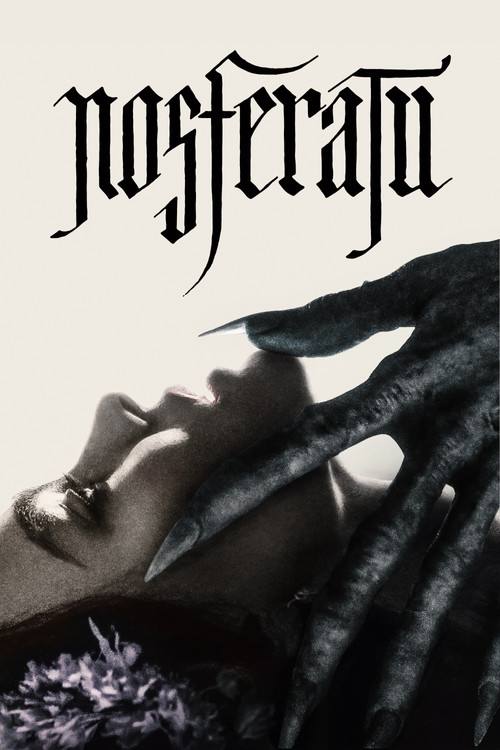
Nosferatu
None or negligible
A gothic vampire remake whose heroine is doubted, sedated and talked down to by the men around her, giving it a gender theme, though the film makes her own desire part of the horror and sides with old faith over modern progress.
Robert Eggers's remake of F. W. Murnau's 1922 silent film, itself drawn from Bram Stoker's Dracula, is set in the German port of Wisburg in 1838. The young estate agent Thomas Hutter (Nicholas Hoult) travels to the Carpathians to sell a house to Count Orlok (Bill Skarsgård), leaving his wife Ellen (Lily-Rose Depp) with their friends Friedrich and Anna Harding. A prologue shows Ellen as a lonely girl calling out to any spirit for comfort and being answered (0:00:51, 0:01:17), and while Thomas is away her old fits return as Orlok travels toward her.
The gender theme runs through the middle of the film. Ellen's sleepwalking and seizures are handled by men who bleed and sedate her, prescribe a corset to calm her womb and joke about tying her to the bed (0:48:31), and who put her visions down to a nervous female constitution (1:10:31). She is right about the danger and they are not, and she tells her host so to his face (1:33:26). Her father's shaming of her as sinful (1:06:45) adds a thread about sexual shame, and the last act gives her the decisive role.
The gender theme runs through the middle of the film. Ellen's sleepwalking and seizures are handled by men who bleed and sedate her, prescribe a corset to calm her womb and joke about tying her to the bed (0:48:31), and who put her visions down to a nervous female constitution (1:10:31). She is right about the danger and they are not, and she tells her host so to his face (1:33:26). Her father's shaming of her as sinful (1:06:45) adds a thread about sexual shame. In the last act von Franz tells her she is their salvation (1:49:39), sends the men on a hunt he knows is false, and Ellen gives herself to Orlok until dawn, destroying him and dying herself (2:03:32, 2:04:06), as the old book of vampire lore foretold.
What keeps the score low is that the film complicates its own theme. Ellen's longing is what summoned Orlok in the first place, and she says she brought the evil on them all (1:39:15), so her desire is part of the horror as much as its repression is. The men who doubt her are given grief and motives of their own, the one man who believes her also uses her, and the film sides with faith and old lore against modern science. The woman's self-sacrifice that ends the story comes from the 1922 film.
Score breakdown
Each category is scored 0 to 3: 0 absent or presence only, 1 brief, 2 recurring or plot-relevant, 3 central or dominant. Timestamps refer to the film's running time.
| Category | Score | What we saw |
|---|---|---|
| Content | ||
| A Race and ethnicity | 0 | Race is not a theme. An innkeeper drives out Romani villagers as 'filthy gypsies' (0:19:36) and Orlok sneers at their ritual (0:32:14), but the Romani turn out to know the vampire better than anyone, and the film makes no point of it. No interracial couple appears in the dialogue or the sampled frames. |
| B Gender and feminism | 2 | Doctors and a domineering host dismiss and restrain the heroine, she alone sees the danger, and the ending gives her the decisive roleand her self-sacrifice saves the town. Scored 2, not 3: it is shown as period behaviour rather than argued, the doctors are humane by their own lights, and the sacrifice ending comes from the 1922 film.
|
| C Sexuality and gender identity | 1 | A thread about shame over female desire: Ellen's father called her sinful, and she later credits Thomas with freeing her from her shame and says she has done no wrong but heed her nature. Scored 1, not more: the same desire is what summons Orlok and the film never treats it as simply goodand leads to her death, so it is not advocacy. There is no LGBTQ theme.
|
| D Power and systems | 0 | No institution is framed as oppressing a group. The doctors' treatment of Ellen is scored under gender; otherwise the film's criticism falls on modern science's blindness to the supernatural (1:24:42), which is not a progressive point, and Thomas's hunger for money and a house is personal (0:11:23, 1:41:06). |
| E Cultural and historical revision | 0 | A remake of Murnau's 1922 film that draws in more of Stoker's Dracula, such as the sleepwalking heroine and the madman who cries that the blood is the life (1:13:53). The characters keep their sex and ethnicity, and the self-sacrifice ending follows the 1922 film. The main addition, Ellen's childhood call to the spirit (0:00:51), feeds the horror rather than a message. |
| F Religion portrayal | 0 | Islam does not appear. Religion shows as Christian prayer, nuns and exorcism formulas alongside occult lore, all taken seriously (0:59:27, 1:21:44, 1:54:10). |
| Treatment | ||
| G Antagonist coding | 0 | The villain is Orlok, a supernatural predator driven by appetite and his bond with Ellen (1:26:59), with Knock as his deranged servant. The men who doubt Ellen are obstacles rather than villains, and each is given his own motives and grief. |
| H Didacticism | 1 | No speeches, but a few in-character lines state the point directly.
|
| I Message over story | 0 | The story leads. Ellen's role in the last actEllen's sacrifice and the men's failed hunt follow the 1922 film's plot rather than bending it. |
| J Left-leaning politics framed as good | 1 | No politics are named, but the men who demand propriety and deference from Ellen are shown to be wrong and lose everything, and her defiance is vindicated. Scored 1: it is the gender theme again, never argued as politics, and the film otherwise leans toward faith and old lore rather than progressive ideas.
|
How the number is reached
- Categories A to J add up to 5 of 30, which gives 1.5 (5 ÷ 30 × 10, rounded to the nearest 0.5).
- Counterweight −0.5: The film complicates its own theme: Ellen's longing summoned Orlok and she blames herself for the evil (1:39:15), the hospital doctor is humane by his lights (0:51:45), Friedrich asks everyone's forgiveness (1:47:36), and the one man who believes Ellen also manipulates her.Ellen's longing summoned Orlok and she says she brought the evil on them (1:39:15); Sievers forbids the old cells because his is a modern hospital, not a prison (0:51:45); Friedrich asks everyone's forgiveness (1:47:36); and von Franz, the one man who believes Ellen, sends the men on a false hunt so that she will sacrifice herself (1:49:52), which Sievers calls madness (1:57:06).
- Final rating 1.0, none or negligible.
Considered, scored 0
- The innkeeper's slur against Romani villagers (0:19:36) and Orlok's contempt for their ritual (0:32:14), period colour with no commentary.
- Ellen asking to spend the night in Anna's bed (1:23:20, frame 1:23:30), shown as close friendship.
- Frank sex scenes between Ellen and Thomas (0:14:14, 1:42:38) and between Ellen and Orlok (frames 2:00:30, 2:01:30), horror and desire with no message attached.
- Thomas's wish for money, a fine house and a maidservant (0:11:23) and Friedrich's shipyard fortune (0:12:13), character detail rather than a critique of capitalism.
Evidence and confidence
Confidence: Medium. Full English SDH subtitles, plus the forced track for the Romanian lines and Orlok's ancient language, and 133 frames sampled once a minute. A few Romanian and Romani exchanges and some chanting are marked in the subtitles but not translated (0:18:05, 0:21:53, 0:56:46, 0:58:33). Long wordless stretches (0:23:38 to 0:28:36, 0:41:20 to 0:45:30) were seen only through the frames, many of which are very dark, and the last seven frames are end credits.
Category F definition: As in the rubric: Islam shown as a peaceful and tolerant religion, aligned with human rights, in a way that works as a corrective message.
Noted, not scored: The film sides with old faith and occult learning against modern progress: von Franz says the age has been blinded by the light of science (1:24:42), the Romani and the nuns understand the danger first, and Christian prayer and a church are real protection (0:59:27, 1:21:44, 1:47:18), and the town is saved by a woman's willing self-sacrifice (2:04:47).
Rubric version 1. Reviewed 18 November 2026.