Woke rating
Léon: The Professional
None or negligible
A stylish New York hitman thriller about a lonely assassin who takes in an orphaned 12-year-old girl, with no progressive messaging: its villain is a crooked drug agent with personal vices, not a stand-in for a group.
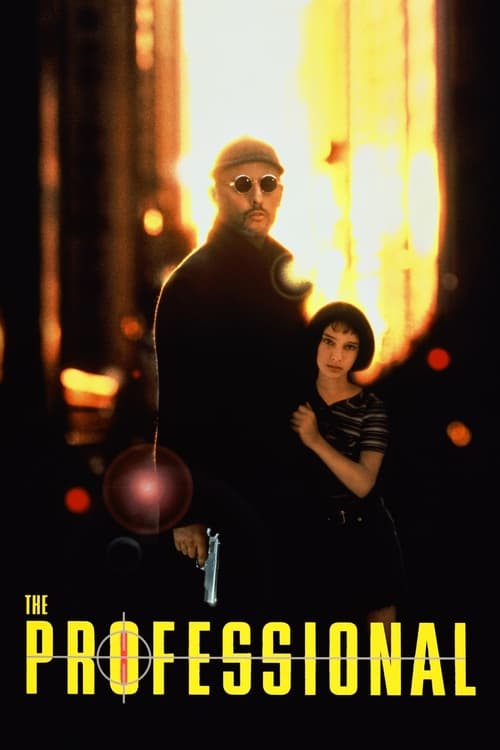
Luc Besson's thriller follows Léon (Jean Reno), an Italian hitman in New York who works for the restaurateur Tony (Danny Aiello), lives alone with a houseplant and drinks milk. Next door lives Mathilda (Natalie Portman), a 12-year-old with a bruised face and a family that ignores her. When the DEA agent Norman Stansfield (Gary Oldman) and his crew murder her family over stolen drugs, Léon opens his door to her, and she asks him to teach her his trade so she can avenge her four-year-old brother.
The places the rubric might look are all story, not commentary. The villain is a corrupt federal agent, but as one man's corruption: his own superiors question him about the dead children, and no group is cast as the victim of the police. Mathilda wants to be a killer and cites famous criminal pairs, but as a grieving child's bid for revenge and a home. The film's most uncomfortable thread is her crush on Léon, which this longer cut makes more explicit; he turns her down each time, and the film treats her feelings as a lonely child's attachment rather than something to champion.
The places the rubric might look are all story, not commentary. The villain is a corrupt federal agent, but as one man's corruption: his own superiors question him about the dead children, and no group is cast as the victim of the police. Mathilda wants to be a killer and cites famous criminal pairs, but as a grieving child's bid for revenge and a home; her attempt to kill Stansfield alone at the DEA building nearly gets her killed, and Léon has to rescue her. The film's most uncomfortable thread is her crush on Léon, which this longer cut makes more explicit; he turns her down each time, and the film treats her feelings as a lonely child's attachment rather than something to champion. Léon dies taking Stansfield with him, and Mathilda returns to her boarding school and plants his houseplant in the grounds.
The score stays at zero because nothing is argued. New York's mixed population fills the streets, the gangs and the police without comment, the one racial slur belongs to the villain, and the only lecture in the film is Léon telling Mathilda that revenge is no good. The film's concerns are loneliness, violence and a child's lost childhood, none of them framed in political terms.
Score breakdown
Each category is scored 0 to 3: 0 absent or presence only, 1 brief, 2 recurring or plot-relevant, 3 central or dominant. Timestamps refer to the film's running time.
| Category | Score | What we saw |
|---|---|---|
| Content | ||
| A Race and ethnicity | 0 | Race is never a theme. A mixed New York cast appears in the streets, the gangs and the police without comment, and Stansfield's slur about the Chinese gangsters (1:44:31) is the villain's voice. No interracial couple appears in the dialogue or the sampled frames. |
| B Gender and feminism | 0 | Mathilda is a resourceful girl who wants to become a 'cleaner', but the film presents this as a neglected, grieving child's wish for revenge and belonging, not as a statement about girls or women. She passes off a bruised face as a bike fall (0:11:43), and her stepmother and half-sister are no kinder to her (0:34:13). Léon's rule 'no women, no kids' (0:37:40) is a professional code. |
| C Sexuality and gender identity | 0 | No LGBTQ characters or themes. Mathilda's declared love for Léon (1:00:53) and, in this cut, her talk of a girl's first time (1:39:28) were considered; Léon refuses her each time (1:19:10, 1:40:04), and the film shows a lonely child's attachment, not sexual freedom as a cause. |
| D Power and systems | 0 | The villain is a corrupt DEA agent whose crew kills a family over stolen drugs (0:24:28, 0:30:39), but as one man's corruption rather than a system's: his superiors question him about the children (1:05:54), and no group is cast as the victim of the police or the state. |
| E Cultural and historical revision | 0 | An original screenplay. The International Cut is a longer version of the same film; nothing is recast or revised to carry a message. |
| F Religion portrayal | 0 | Religion plays no part beyond a devotional statue on a wall in one scene (1:25:30). |
| Treatment | ||
| G Antagonist coding | 0 | Stansfield is defined by his own vices: theatrical menace, a taste for Beethoven before a killing and casual cruelty (0:23:42, 0:25:25). His men are crooked cops, and the gangsters and Tony have ordinary criminal motives. Nobody is a villain for race, sex, faith or politics. |
| H Didacticism | 0 | No speeches carry a social message. Léon's warning that revenge is no good (1:10:33) and his demand that Mathilda stop cursing and smoking (1:00:06) are about a child's welfare, not politics. |
| I Message over story | 0 | The story is a lean thriller about an unlikely pair, and none of its turns bends toward a message. |
| J Left-leaning politics framed as good | 0 | No political positions are argued. Beyond one rogue agent, neither the state nor any political side is framed as good or bad. |
How the number is reached
- Categories A to J add up to 0 of 30, which gives 0.0 (0 ÷ 30 × 10, rounded to the nearest 0.5).
- No counterweight: There is no progressive messaging to mock or complicate.
- Final rating 0.0, none or negligible.
Considered, scored 0
- A racially mixed New York cast in the streets, the gangs and the police, shown without comment.
- Mathilda as a 12-year-old who wants to learn to kill and holds up Bonnie and Clyde and Thelma and Louise as teams (0:41:22), told as a grieving child's wish for revenge and a home, not a point about girls.
- Mathilda's crush on Léon: she says she is falling in love (1:00:53), tells the hotel manager he is her lover (1:03:39), tries to kiss him (1:18:56) and, in this cut, raises a girl's first time (1:39:28). Léon refuses each time (1:19:10, 1:40:04); it is drawn as a lonely child's attachment, not as sexual-freedom advocacy.
- Stansfield and his crooked DEA crew (0:24:28, 1:05:54), a rogue-cop villain rather than a point about policing.
- Stansfield's slur about the Chinese gangsters (1:44:31), in the villain's mouth.
- Tony holding Léon's money for him (0:58:30) and doling out an allowance to Mathilda after Léon's death (2:02:44), a mob boss's control rather than a point about class or capitalism.
Evidence and confidence
Confidence: Medium. The file is the longer International Cut (about 133 minutes with credits), so timestamps follow that version, and it includes scenes missing from the 111-minute US release. It has no English text subtitles, so the dialogue comes from a Whisper transcript of the English audio, which garbles some names (Léon often comes out as 'Leanne' or 'Liam') and a few lines but covers the whole film. Three short stretches of foreign-language dialogue (0:02:00, 0:10:06, 1:19:19) were not transcribed. 133 frames sampled once a minute.
Category F definition: As in the rubric: Islam shown as a peaceful and tolerant religion, aligned with human rights, in a way that works as a corrective message.
Rubric version 1. Reviewed 18 November 2026.