Woke rating
Kingsman: The Secret Service
Mild
A violent, comic spy caper with a running class theme and one scene mocking an American hate church; its villain is a tech-billionaire climate crusader, and its answer to privilege is self-improvement rather than grievance.
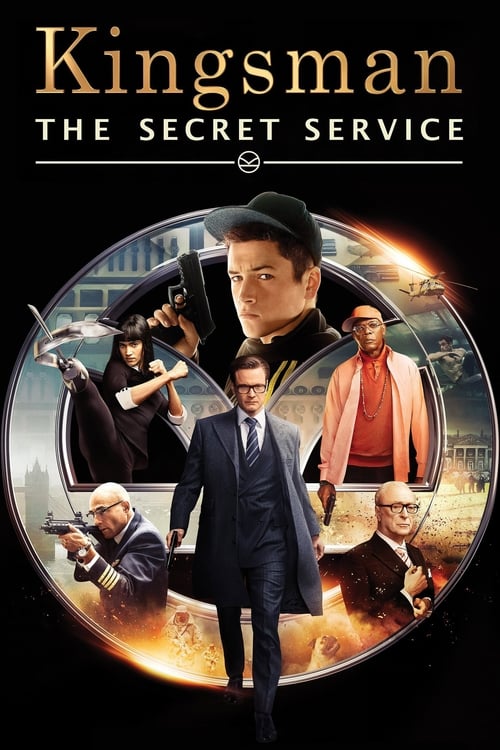
Matthew Vaughn's adaptation of the Mark Millar and Dave Gibbons comic is a pastiche of the old Bond films. Eggsy (Taron Egerton), a working-class London kid going nowhere, is put forward by Harry Hart (Colin Firth), the gentleman spy his late father saved, for a deadly selection course against a field of Oxbridge types. Meanwhile Harry investigates Richmond Valentine (Samuel L. Jackson), a tech billionaire linked to a wave of kidnappings and a worldwide giveaway of free SIM cards.
Class is the running theme. Eggsy rails against snobs born with silver spoons, the posh candidates sneer at him as a pleb and a product of positive discrimination, and Harry calls the head of his own order a snob. Valentine is a climate crusader who has given up on politicians. One set piece takes Harry to a Kentucky hate church whose preacher damns Jews, Black people, gays, abortion and divorce; Harry mocks it to a congregant's face before the scene turns into a long, violent action sequence. Late on, the plot puts much of the world's elite on the villain's side.
Class is the running theme. Eggsy rails against snobs born with silver spoons, the posh candidates sneer at him as a pleb and a product of positive discrimination, and Harry calls Arthur, the head of his own order, a snob; Arthur turns out to have joined Valentine. Valentine, a climate crusader who has given up on politicians, plans to cull humanity with a signal that makes people kill each other, sparing the rich and powerful who sign up. He tests it on a Kentucky hate church whose preacher damns Jews, Black people, gays, abortion and divorce and which Harry has just mocked to a congregant's face; under the signal Harry kills the whole congregation, and Valentine then shoots him. At the end the implanted elite's heads explode.
The score stays mild because the film's answer to privilege is self-improvement, not grievance. Harry tells Eggsy that blaming others is an excuse and that being a gentleman is learned, not inherited, and the heroes are a secret order founded by wealthy men. The villain is a green billionaire who decides humanity is the virus, and the church killing leaves Harry sickened rather than vindicated. The race and religion jabs are confined to one over-the-top scene.
Score breakdown
Each category is scored 0 to 3: 0 absent or presence only, 1 brief, 2 recurring or plot-relevant, 3 central or dominant. Timestamps refer to the film's running time.
| Category | Score | What we saw |
|---|---|---|
| Content | ||
| A Race and ethnicity | 1 | Race comes up in one scene: the hate church's preacher uses racial slurs, and Harry answers a congregant with a mocking boast that includes a Black Jewish boyfriend. Valentine and the mixed cast are otherwise shown without comment.
|
| B Gender and feminism | 0 | Roxy competes on equal terms and nothing is made of her sex. Eggsy's mother suffers at the hands of her violent partner, but it is Eggsy's family trouble, not a point about women. The princess subplot runs the other way (see Not scored). |
| C Sexuality and gender identity | 0 | No LGBTQ+ themes. Gay slurs come from a pub thug, from Charlie and from the hate preacher, as marks of character. |
| D Power and systems | 2 | Class privilege recurs: Eggsy argues that snobs judge working-class kids who never had a silver spoon, the Oxbridge candidates and Arthur sneer at him, and the plot's elite looks after itselfValentine's plan spares the rich and powerful who sign up while everyone else is culled. Scored 2, not 3: the answer is self-improvement inside an aristocratic institution, not a case against the system.
|
| E Cultural and historical revision | 0 | An adaptation of the Millar and Gibbons comic with its own villain and characters. Nothing observed recasts an established character or rewrites history to carry a message. |
| F Religion portrayal | 0 | Islam is not portrayed. The opening raid on a desert fortress (frames 0:01:30, 0:02:30) carries no comment on religion. |
| Treatment | ||
| G Antagonist coding | 1 | Snobbery marks several antagonists: the posh candidate Charlie, Arthur and the elite who side with Valentinethe rich and powerful who join Valentine's cull. Scored 1: the main villain has his own motive, a climate-driven belief that humanity is a virus, and the upper-class Harry is the hero. The hate church is a test target, not the film's antagonist.
|
| H Didacticism | 1 | One outburst states the class point directly. Harry's lessons on being a gentleman and Valentine's climate speeches are lecture-like but argue other points.
|
| I Message over story | 0 | The story leads. The church scene is how the villain tests his weapon and removes Harry, and the class theme runs through Eggsy's arc without bending the plot. |
| J Left-leaning politics framed as good | 1 | One scene sets religious-right views beside slurs: a Kentucky hate church whose preacher condemns sodomy, divorce and abortion in the same breath as Jews and Black people, and the hero mocks it. A quip about Margaret Thatcher is the only other partisan note.
|
How the number is reached
- Categories A to J add up to 6 of 30, which gives 2.0 (6 ÷ 30 × 10, rounded to the nearest 0.5).
- Counterweight −0.5: The film complicates its class message: Harry tells Eggsy that it is always someone else's fault with him (0:19:25), says there are exceptions among the snobs (0:23:27) and teaches that true nobility is being superior to your former self (1:05:30); the heroes' order was founded by wealthy, powerful men to preserve peace and protect life (0:27:51); and the villain has a motive of his own, is squeamish about killing (1:24:12), and Harry is sickened by the church killings (1:23:09).
- Final rating 1.5, mild.
Considered, scored 0
- Valentine, a Black American tech billionaire, and Eggsy's mixed group of friends (frame 0:13:30), shown without comment.
- Roxy as a capable candidate who wins the place (1:12:54), with nothing made of her sex beyond a remarkArthur's remark that at least the girl has balls (1:12:17).
- Gazelle, Valentine's lethal henchwoman (frames 0:07:30, 1:55:30), a genre villain.
- A pub thug's rent-boy taunt at Harry (0:20:36) and Charlie's sneer about Eggsy's mother (0:42:29), insults that mark the speakers rather than a message.
- No interracial couple appears on screen.
Evidence and confidence
Confidence: Medium. A Whisper transcript of the audio (the file has no English text subtitles), and 128 frames sampled once a minute. Whisper garbles names and some lines and may miss or soften a few, so some evidence is paraphrased from imperfect text. The foreign-language dialogue in the opening raid and in one Swedish exchange (0:43:12) is not transcribed.
Category F definition: As in the rubric: Islam shown as a peaceful and tolerant religion, aligned with human rights, in a way that works as a corrective message.
Noted, not scored: The villain is a tech billionaire who quit climate research and lobbying because politicians stood for nothing but re-election (0:32:43, 0:33:02), and whose answer is far darkerwho concludes that mankind is the virus and a cull is the only cure (1:28:16, 1:28:49); a politician who joins him is played for laughs (0:43:45). Tradition and manners are celebrated: bespoke suits, the order's founders and the motto that manners maketh man (0:20:52, 0:27:40, 1:04:18). Kingsman is described as above the politics and bureaucracy of government spy agencies (0:28:14). An old-Bond reward closes a subplot.The rescued princess promises Eggsy more than a kiss if he gets her out (1:50:24), and he goes back to collect at the end (1:58:42), an old-Bond reward the film plays straight.
Rubric version 1. Reviewed 18 November 2026.