Woke rating
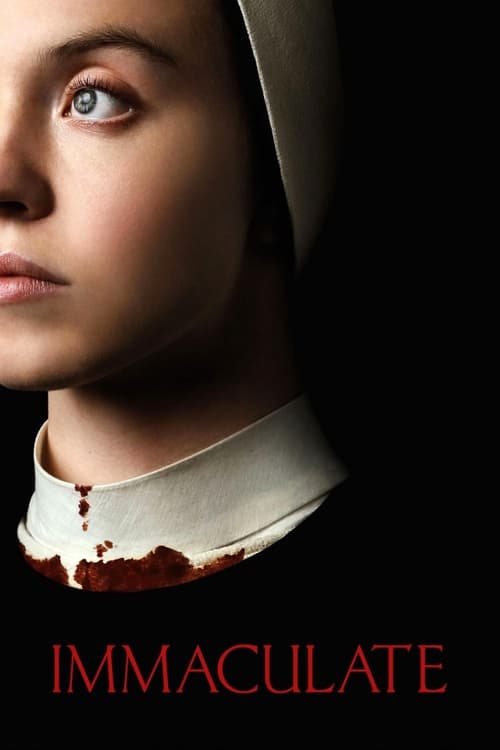
Immaculate
Mild
A convent horror film in which a young American nun's unexplained pregnancy makes her the prisoner of her church; its picture of clergy taking control of a woman's body gives it a mild slant, though it never argues the point and spreads the blame to the convent's women.
Michael Mohan's horror film stars Sydney Sweeney as Cecilia, a young American nun from near Detroit who, after her parish closes, accepts an invitation to Our Lady of Sorrows, a remote Italian convent where elderly sisters are cared for until they die. She takes her vows, makes a friend in the irreverent Gwen, and is unsettled by strange rituals at night. Then a doctor's examination shows she is pregnant though she has never been with anyone, and the priest and a cardinal declare a miracle.
Everything the rubric scores comes from how the film treats Cecilia's body. Male clergy question her about her chastity and the state of her hymen, she is told her only job is now the baby, and her requests to see a real hospital are refused. Gwen, who left a boyfriend who hit her, urges her to stand up for herself and tells the clergy she knows when a man is lying. As Cecilia tries to get away, the convent's methods grow harsher, and the story of a woman made to carry a pregnancy she never chose lends itself to a bodily-autonomy reading, though abortion is never mentioned.
Everything the rubric scores comes from how the film treats Cecilia's body. Male clergy question her about her chastity and the state of her hymen, she is told her only job is now the baby, and her requests to see a real hospital are refused. Gwen, who left a boyfriend who hit her, urges her to stand up for herself and tells the clergy she knows when a man is lying. The last act reveals that Father Tedeschi, a former geneticist, engineered the pregnancy from blood on a relic said to be a nail from the Crucifixion, with the Church's backing. Cecilia's escape attempts are punished with a red-hot cross, she is told that if she dies they will find another, and she ends the film by killing the newborn. The arc of a woman made to carry a pregnancy she never chose lends itself to a bodily-autonomy reading, though abortion is never mentioned.
What keeps the score in the mild band is that none of this is argued. There are no speeches beyond Gwen's one-liners, the story plays as convent horror rather than a case, and the guilt is spread: the Reverend Mother and the nuns enforce the regime as much as the men, the chief villain is given a history and a motive of his ownTedeschi is given a history and a sincere if monstrous faith, and Cecilia's own faith is treated with respect.
Score breakdown
Each category is scored 0 to 3: 0 absent or presence only, 1 brief, 2 recurring or plot-relevant, 3 central or dominant. Timestamps refer to the film's running time.
| Category | Score | What we saw |
|---|---|---|
| Content | ||
| A Race and ethnicity | 0 | Race never comes up. The cast are Italian clergy and nuns and an American heroine, and no interracial couple appears in the dialogue or the frames. |
| B Gender and feminism | 2 | A woman's body taken over by church authorities is the engine of the plot, with men as the examiners and planners and women as replaceable vessels. Scored 2, not 3: it is shown through horror, not argued as a point about men, and the convent's women are among her captors.
|
| C Sexuality and gender identity | 0 | No LGBTQ theme. Gwen's crude joke about the Reverend Mother (0:26:04) and Cecilia's insistence that she has never been with a man or a woman (0:33:32) carry no message. |
| D Power and systems | 2 | The Church apparatus, from priest and doctor to cardinal and Reverend Mother, is the menace throughout and preys on vulnerable young women. Scored 2, not 3: it is a horror conspiracy at one convent that the wider Church is said to have backed, not an argued critique of the Church as an institution.
|
| E Cultural and historical revision | 0 | An original story; no established characters or history are recast. |
| F Religion portrayal | 0 | Islam does not feature. Catholicism is the setting and is scored under D, G and J where it carries a point. |
| Treatment | ||
| G Antagonist coding | 1 | The villains are clergy and nuns acting from religious zeal, with Cecilia as their victim. Kept at 1 because the chief villainTedeschi is given a personal history and motive, and the jealousy of a rival nun is personal too.
|
| H Didacticism | 1 | No speeches. The nearest thing is Gwen's short, on-the-nose lines; Tedeschi's late monologue is a villain's explanation, not the film's voice.
|
| I Message over story | 0 | The story leads: a horror plot that builds to its reveal and escape, with nothing bent to make a point. |
| J Left-leaning politics framed as good | 1 | No politics are named, but a woman forced by church authorities to carry a pregnancy she never chose, who keeps trying to get free of it,, who fakes a miscarriage and finally kills the newborn, lends itself to a bodily-autonomy reading, with the convent's piety as the menace. Scored 1: it is never stated, and the child is a supernatural horror device rather than an ordinary pregnancy.
|
How the number is reached
- Categories A to J add up to 7 of 30, which gives 2.5 (7 ÷ 30 × 10, rounded to the nearest 0.5).
- Counterweight −0.5: The film complicates its own slant: women run the regime as much as men, a rival nun turns on Cecilia out of jealousy (0:39:30)Isabelle tries to drown Cecilia because the miracle was supposed to be hers (0:39:30), and the Reverend Mother leads the shaming (0:55:58); the chief villain has a personal motiveTedeschi has a personal history and motive as a scientist cast out of his field (0:58:56); and Cecilia's faith is sincere throughout, from her sense that God saved her for a reason (0:18:35) to her prayer under duressher answer that this is not God's work (1:03:36).
- Final rating 2.0, mild.
Considered, scored 0
- A passport officer and his colleague eye Cecilia and call her becoming a nun a waste (0:06:17), an establishing beat with no comment.
- Gwen's backstory of a boyfriend who hit her and the support group where she met nuns (0:29:53, 0:30:01), told as her reason for joining, not as a point about men.
- Tedeschi's account of leaving a career in biology for the priesthood (0:16:59), character background.
- The elderly and dying sisters in the convent's care (0:09:58), shown as setting.
- A nun's breakdownIsabelle's attack and suicide (0:39:30, 0:43:54), explained by the priest as mental illness (0:40:41), plot rather than a point about mental health.
Evidence and confidence
Confidence: Medium. Full English subtitles from the file's embedded track, with the forced track for the Italian lines (it mostly repeats the main track's own translations), plus 89 frames sampled once a minute. A few short Italian cries and asides are left untranslated, none of them significant. The last act has long stretches with no dialogue (1:09:38 to 1:15:29, and from 1:16:57 to the closing song), so the endingthe birth and the final scene were judged from the frames, which are very dark throughout.
Category F definition: As in the rubric: Islam shown as a peaceful and tolerant religion, aligned with human rights, in a way that works as a corrective message.
Rubric version 1. Reviewed 18 November 2026.