Woke rating
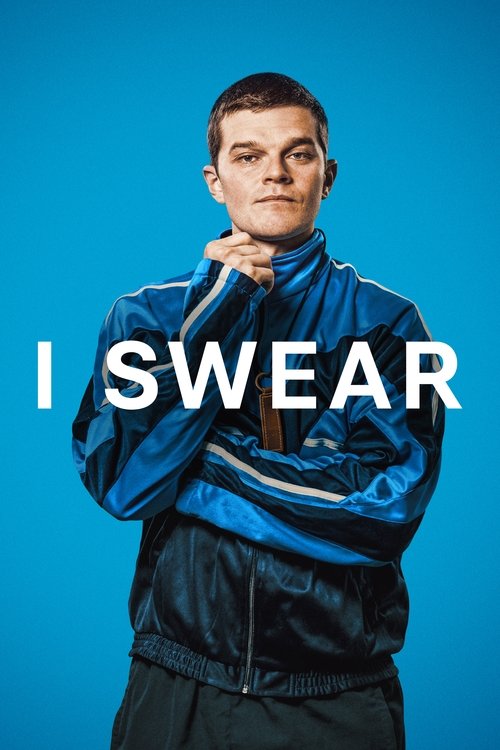
I Swear
None or negligible
A warm, foul-mouthed true story about a Scot with Tourette's syndrome. Its message is understanding for a medical condition, and the rubric finds almost nothing beyond some ignorant institutions and a few awareness speeches.
Kirk Jones's drama tells the true story of John Davidson, a boy from Galashiels in the Scottish Borders whose tics begin in his first year at secondary school. It opens at Buckingham Palace, where the adult John (Robert Aramayo) is about to receive an MBE, and then goes back to the start. His tics cost him a goalkeeping trial and his place at school, and he believes they drove his father away. Then his friend Murray's mother Dottie (Maxine Peake), a former mental-health nurse, takes him in, and Tommy, a gruff caretaker, gives him a job.
The message is disability awareness. A headmaster calls John's tics a scam, police take him away after a nightclub fight, and in the court case that follows, a document before the court argues that Tourette's is not a recognised condition. Tommy states the film's thesis: the problem is not Tourette's but how little people know about it, so John should teach the police, doctors and teachers. The last act shows him doing that.
The message is disability awareness. A headmaster calls John's tics a scam, police take him away after a nightclub fight, and in the court case that follows, a document before the court argues that Tourette's is not a recognised condition. Tommy states the film's thesis: the problem is not Tourette's but how little people know about it, so John should teach the police, doctors and teachers. The sheriff says the case should never have come to court. After Tommy's death, John helps a young woman with tics, runs a weekend for families, and gives a school talk introduced by a police officer who admits the force failed him. The film ends with the MBE, a reconciliation with his mother and the trial of a nerve-stimulation band that calms his tics. A closing card says research and support remain under-funded in the UK.
What keeps the score at the bottom of the scale is that disability awareness is not one of the rubric's categories, and the film only touches them at the edges. Its institutions fail John out of ignorance, not because they are hostile to a group, and they come round in the endthey come round: the sheriff rules for him, a police officer apologises and the Queen honours him. Race, sex and sexuality carry no message. The sexual, homophobic and racist outbursts are John's tics, played for shock and comedy and explained as symptoms. The harsh characters, from the headmaster to John's own mother, are given their reasons, and John makes mistakes of his own.
Score breakdown
Each category is scored 0 to 3: 0 absent or presence only, 1 brief, 2 recurring or plot-relevant, 3 central or dominant. Timestamps refer to the film's running time.
| Category | Score | What we saw |
|---|---|---|
| Content | ||
| A Race and ethnicity | 0 | Race never comes up as a theme. The community-centre receptionist (0:54:30) and a few other minor characters of other ethnicities appear without comment, and no interracial couple is shown. The racist remarks are John's tics, which his lawyer lists as symptoms (1:11:52). |
| B Gender and feminism | 0 | Nothing is framed as a point about gender. Dottie is the warm, practical heart of the film and John's mother is strict and worn out, but both are characters, not statements about women, and the father who walks out (0:23:20) is part of the family drama. |
| C Sexuality and gender identity | 0 | No LGBTQ characters or themes. Tics such as 'filthy fags' and claims to be gay (0:56:19, 1:41:18) are shown as involuntary outbursts, and the film draws no lesson from them. |
| D Power and systems | 1 | Institutions fail John again and again. A headmaster treats his tics as a scam, police arrest him after a club fight and later over shouted tics, and in court a submission argues that Tourette's is not a real condition. The film frames all this as ignorance of a medical condition, not as oppression of a group, and the institutions come roundcome round: the sheriff says the case should never have come to court, and a police officer later admits the force failed him. Scored 1, not 2, for that reason.
|
| E Cultural and historical revision | 0 | A true story about a real man, and the end credits show documentary footage of real people with Tourette's (1:56:30). Nothing in the material suggests characters or history were recast to carry a message. |
| F Religion portrayal | 0 | Religion plays no part beyond a hymn at a funeral and the oath in court, and Islam does not feature. |
| Treatment | ||
| G Antagonist coding | 0 | The people who hurt John are a headmaster, a bar-room bully, street thugs, a drug dealer and a solicitor's family pursuing a court case. Each acts out of ignorance, anger or self-interest, and none is defined by race, sex, religion, class or politics. |
| H Didacticism | 1 | The awareness message is stated directly several times: Tommy's pep talk and his court speech, a support worker's talk to parents, and John's own school talk. Scored 1, not 2: these are mostly explanations of a medical condition and pleas for patience, which the rubric does not measure as such. Only the framing that society's ignorance, not the condition, is the problem touches its categories.
|
| I Message over story | 0 | The story follows John's life, and the awareness work in the last act grows out of it, after Tommy's death and the meeting with a young woman with tics (1:33:06). No plot turn bends toward a political message. |
| J Left-leaning politics framed as good | 0 | No left-leaning politics are argued or framed as good. The tic 'Fuck the Queen' at the investiture (0:02:51) is played as a symptom, and the film treats the honour itself as a proud moment. |
How the number is reached
- Categories A to J add up to 2 of 30, which gives 0.5 (2 ÷ 30 × 10, rounded to the nearest 0.5).
- Counterweight −0.5: The film gives the people who fail John a fair hearing rather than making them villains. His mother, who made him eat facing the fireplace (0:19:25), gets her side and they reconcile (1:48:01, 1:48:18). A police officer who first met him as a young constable admits his own failure and brings John in to teach (1:43:01). The court case resolves calmlyThe sheriff rules that the case should never have been brought (1:16:30). John is no saint either: he carries a parcel for a drug dealer in return for money (1:26:09, 1:26:38).
- Final rating 0.0, none or negligible.
Considered, scored 0
- John's sexual, homophobic and racist tics (for example 0:56:19, 1:11:52, 1:41:18), shown as involuntary symptoms with no message.
- The community-centre receptionist (0:54:30) and other minor characters of other ethnicities, shown without comment.
- A girl's mother refusing to let them see a film about a man who dresses as a woman (0:13:07), a period joke with no comment attached.
- The harsh mother and the father who walks out (0:19:25, 0:23:20), family drama rather than a statement about gender roles.
- The council estate and its drug dealers (1:24:18, 1:26:38), shown as a bad place for John, not as a comment on class.
Evidence and confidence
Confidence: Medium. Full English subtitles from the embedded track, and 121 frames sampled once a minute. The HDR frames are dark but readable. The closing credits play over documentary footage of real people with Tourette's, and its audio is subtitled too. No gaps in the dialogue were found.
Category F definition: As in the rubric: Islam shown as a peaceful and tolerant religion, aligned with human rights, in a way that works as a corrective message.
Rubric version 1. Reviewed 18 November 2026.