Woke rating
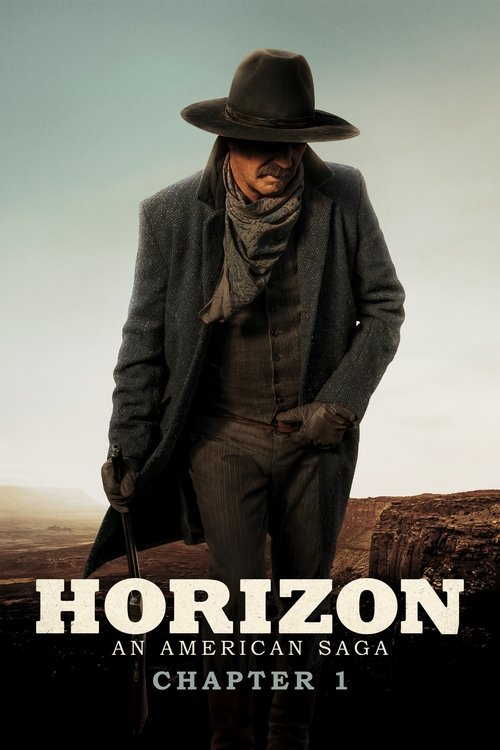
Horizon: An American Saga - Chapter 1
None or negligible
The first chapter of Kevin Costner's frontier epic treats the Apache wars as a tragedy for both sides, condemning scalp hunters and racist traders through story rather than speeches, while giving the settlers' suffering and grit their full weight.
Kevin Costner's three-hour opening chapter follows several stories in the territories around 1860. In the San Pedro valley, settlers drawn by handbills for a town called Horizon are attacked by Apaches at night; Frances Kittredge (Sienna Miller) and her daughter find shelter at an Army camp under Lieutenant Trent Gephart (Sam Worthington). In a Wyoming mining town, the drifter Hayes Ellison (Kevin Costner) crosses the Sykes brothers, who are hunting the woman who shot their father and fled with his baby. A wagon train led by Matthew Van Weyden (Luke Wilson) crosses the plains with a difficult English couple. Scenes in the Apache camp, in Athabaskan with subtitles, show a band arguing over the raid.
What messaging there is runs through the Apache wars. The film opens with Apache boys watching surveyors stake out land, gives an Apache elder a long speech warning that the white-eyes will keep coming and will hunt every band for what a few have done, and has Gephart object that a scalp bounty cannot tell an Apache scalp from a Pima's or a Mexican's. A colonel calls westward settlement unstoppable and admits it may never be explained to the Indigenous. Later scenes show a trader's contempt for an Apache father in front of his son and a foreman turning away Chinese workers, and the story of the Horizon volunteers who ride out with scalp hunters ends in an act the film plainly condemns.
What messaging there is runs through the Apache wars. The film opens with Apache boys watching surveyors stake out land, gives an Apache elder a long speech warning that the white-eyes will keep coming and will hunt every band for what a few have done, and has Gephart object that a scalp bounty cannot tell an Apache scalp from a Pima's or a Mexican's. A colonel calls westward settlement unstoppable and admits it may never be explained to the Indigenous. Later scenes show a trader's contempt for an Apache father in front of his son and a foreman turning away Chinese workers. The Horizon volunteers, among them a boy orphaned in the raid, ride out with scalp hunters, give up on finding the raiders and attack a camp of Apaches who had nothing to do with it.
What keeps the score low is that the film shows far more than it argues and gives both sides their due. The raid is filmed at length and in full horror from inside the settlers' houses, the Apache elder condemns his own young men, and Gephart points out that most Apaches never attacked. The settlers' courage and faith are treated with respect, the villains of the Wyoming story are white outlaws with a family grudge, and nothing is tied to present-day politics. Women carry much of the story without any point being made about men and women.
Score breakdown
Each category is scored 0 to 3: 0 absent or presence only, 1 brief, 2 recurring or plot-relevant, 3 central or dominant. Timestamps refer to the film's running time.
| Category | Score | What we saw |
|---|---|---|
| Content | ||
| A Race and ethnicity | 2 | Frontier racism recurs and is framed as wrong, mainly through the scalp-hunting thread that ends in the killing of an uninvolved band, a trader's cruelty to an Apache customer and a foreman's ban on Chinese workers. It is shown through story more than argued, and the Apache raiders get no softer treatment. No interracial couple appears.
|
| B Gender and feminism | 0 | Women carry much of the story and several suffer at men's hands (Ellen tells the Sykes brothers they never had to endure their father as she did, 1:28:42), but nothing is framed as a point about men and women. Frances, Ellen, Marigold, Juliette and Mrs. Riordan are varied characters, strong and flawed in different ways. |
| C Sexuality and gender identity | 0 | No LGBTQ characters or themes. |
| D Power and systems | 1 | The settling of Apache land is the backdrop to the whole film and is shown as a loss for the Apache, but as a tragedy and an inevitability rather than an oppression the film argues against. Two scenes put it into words.
|
| E Cultural and historical revision | 0 | An original story with new characters; nothing established is recast. |
| F Religion portrayal | 0 | Islam is not portrayed. Religion appears as Christian faith: a psalm recited under attack (0:31:23) and Amazing Grace over the end credits (2:53:00). |
| Treatment | ||
| G Antagonist coding | 0 | The antagonists come from every side: the Apache raiders, the Sykes brothers, the scalp hunters and a racist trader. Each has a motive of his own (fear for hunting grounds, family revenge, money), and no group is cast as the villain. |
| H Didacticism | 1 | A few speeches state the film's view of the frontier, all in character and in scenes that call for them.
|
| I Message over story | 0 | A sprawling, slow set-up for later chapters. The Apache scenes and the speeches fit the period and do not bend the story. |
| J Left-leaning politics framed as good | 0 | No present-day political cause is promoted, and conservative values are not mocked: the settlers' faith and grit are treated with respect (see below). |
How the number is reached
- Categories A to J add up to 4 of 30, which gives 1.5 (4 ÷ 30 × 10, rounded to the nearest 0.5).
- Counterweight −0.5: The film gives the other side a full hearing: the Apache raid is shown at length and in full horror from the settlers' side (0:20:10 to 0:31:31); the Apache elder condemns the raid and will not sing for it (0:41:05), and some of the band refuse to follow its leader (0:58:07); Gephart stresses that most Apaches did not attack (0:57:06); Russell joins the volunteers after losing both parents in the raid (0:42:28); and the colonel credits the settlers with the resolve that drove their forebears across the ocean (1:20:09).
- Final rating 1.0, none or negligible.
Considered, scored 0
- Apache, Pima, Mexican and Chinese characters, among them Gephart's friend Mr. Chavez (0:36:04), shown without comment.
- The settlers' folly in building on an Apache river crossing, a practical point the Army makes (0:37:53, 1:22:00) rather than a political one.
- The woman who shoots James Sykes in the opening (0:08:34) and flees with his baby, a personal history rather than a statement about men.
- Juliette Proctor's jibe that Owen Kittredge has bullied his daughters into fine young men (1:51:20), a snub she takes back.
- Caleb Sykes's sneer that Hayes may be from China (1:36:10), an insult from a villain.
- A passing argument over whether rain follows the plow (0:14:22), period colour rather than an environmental point.
Evidence and confidence
Confidence: Medium. Full English subtitles (SDH) from the embedded text track, with the forced track translating the Apache and Pima dialogue, and 181 frames sampled once a minute. The HDR source makes the frames washed out, and many night scenes are too dark to read. A few lines are untranslated: an Apache woman's speech (0:34:31), shouting in an Apache camp late in the filmshouting in the Apache camp during the scalp hunters' attack (2:42:00 to 2:42:18) and two lines in another language (2:29:33, 2:35:04). The film ends with a wordless montage (2:47:53 to 2:52:14) and the end credits.
Category F definition: As in the rubric: Islam shown as a peaceful and tolerant religion, aligned with human rights, in a way that works as a corrective message.
Noted, not scored: The settlers' faith and endurance are treated with respect: a psalm recited under attack (0:31:23), the colonel's tribute to the resolve that drove their forebears across the ocean (1:20:09), soldiers leaving for the Civil War with a girl's ribbons as her blessing (2:25:20), and Amazing Grace over the end credits (2:53:00).
Rubric version 1. Reviewed 18 November 2026.