Woke rating
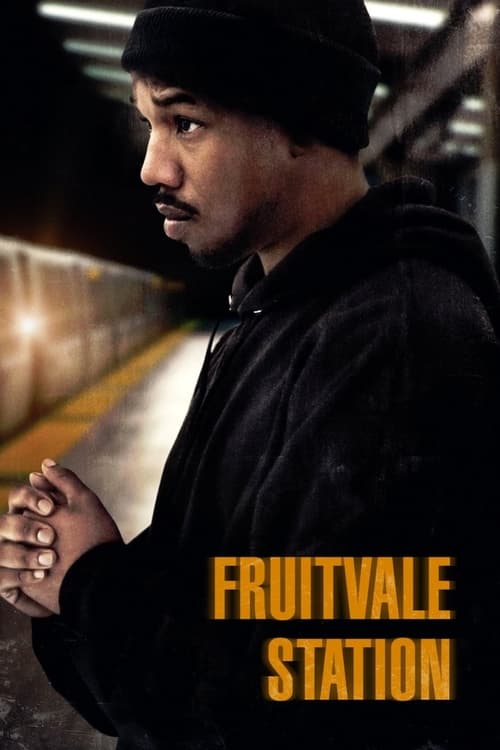
Fruitvale Station
Mild
Ryan Coogler's drama about the last day of Oscar Grant builds to a police confrontation on an Oakland train platform; it shows rather than argues, gives its hero real flaws, and scores mainly for its central interracial couple and the police scenes.
Ryan Coogler's first feature retells the last day of Oscar Grant (Michael B. Jordan), a young man from Oakland, on New Year's Eve 2008. It opens with real phone footage of transit police holding young men against a wall at Fruitvale BART station, then goes back to the morning and follows Oscar through the day: his girlfriend Sophina (Melonie Diaz) and their small daughter Tatiana, his mother Wanda's (Octavia Spencer) birthday, a supermarket job he has lost, the weed he has decided to stop selling, and a night out in San Francisco with friends.
Race is in the air more than argued. Oscar is Black and Sophina is Mexican-American, and the family's banter touches on race in passing, but nobody makes a point of it. The film's weight falls on the last act: after a fight on a crowded train, BART officers pull Oscar and his friends onto the platform and hold them against a wall while they insist they did nothing and passengers film on their phones. The confrontation escalates from there.
Race is in the air more than argued. Oscar is Black and Sophina is Mexican-American, and the family's banter touches on race in passing, but nobody makes a point of it. The film's weight falls on the last act: after a fight on a crowded train, BART officers pull Oscar and his friends onto the platform and hold them against a wall while they insist they did nothing and passengers film on their phones. An officer appears to call Oscar a racial slur, and as he is held face down Oscar is shot in the back. He dies in hospital, the death is ruled a homicide, and closing cards report that the officers were fired and the one who shot him was charged with murder.
What keeps the score in the mild band is that the film never lectures. There are no speeches about racism or policing; the police appear only in the last quarter, and the film makes no claim beyond this one night. Oscar is drawn with real flaws, from cheating and dealing to lying about his job and a temper that shows in a prison flashback, and the white strangers he meets during the day are friendly. Much of the score comes from the couple, which the rubric counts because it is the film's central romance, not because the film comments on it.
Score breakdown
Each category is scored 0 to 3: 0 absent or presence only, 1 brief, 2 recurring or plot-relevant, 3 central or dominant. Timestamps refer to the film's running time.
| Category | Score | What we saw |
|---|---|---|
| Content | ||
| A Race and ethnicity | 3 | Oscar, who is Black, and Sophina, who is Mexican-American, are the film's central and only romance, so the couple scores 3 under the rubric's rule even though race is never an issue between them. Race also enters the arrest through a slur. Light racial banter elsewhere is listed under 'zeroed'.
|
| B Gender and feminism | 0 | No gender message. The women around Oscar, his mother, Sophina and his sister, hold him to account (0:25:07, 0:34:36) as characters, not as a point about men. |
| C Sexuality and gender identity | 0 | No LGBTQ theme. Some women on the train say they are gay and Oscar's friends joke that they are too (0:50:21), banter with no message. |
| D Power and systems | 2 | The police confrontation is the film's frame and climax: it opens on real phone footage of BART officers holding young men against a wall and ends back on that platformwith the shooting, a homicide ruling and cards on the officers' fate. The officers detain men who insist they did nothing, curse them and order witnesses to stop filming. Scored 2, not 3: it fills the last quarter of the film, it is shown rather than argued, and the film never generalises beyond this one night.
|
| E Cultural and historical revision | 0 | Based on the real case, as the opening title says (0:00:30). The material cannot show how closely it follows the record, and nothing in it recasts established characters or history to carry a message. |
| F Religion portrayal | 0 | Islam does not feature. Faith appears only as the family's Christian prayers (0:40:38, 1:13:41). |
| Treatment | ||
| G Antagonist coding | 1 | The officers in the last act are the antagonists: profane, quick to escalate and given almost no inner life, with one of them using a racial slur. Scored 1, not higher: they are defined by their role rather than by race or politics, the fight that brings them is started by another passengera man who seems to know Oscar from prison, and the white civilians Oscar meets are friendly.
|
| H Didacticism | 0 | No speeches state a message. The film shows rather than tells, and the closing cards report facts about the case without comment (1:18:30). |
| I Message over story | 1 | The story leads and Oscar is not made a saint, but the day is arranged to build sympathy before the ending: the real footage at the start turns it into a countdown, and it piles up signs of a man trying to go straight alongside some pointed foreshadowing.
|
| J Left-leaning politics framed as good | 0 | No party politics or causes are argued. The closing cards and footage report the case's aftermathThe closing cards on the officers' fate (1:18:30) and real footage of a public gathering (1:19:30) without commentary. |
How the number is reached
- Categories A to J add up to 7 of 30, which gives 2.5 (7 ÷ 30 × 10, rounded to the nearest 0.5).
- Counterweight −0.5: The film complicates its own sympathies: Oscar cheated on Sophina (0:02:25), sold weed (0:00:33), hid losing his job for two weeks (0:34:14), leans on his old manager when begging for it back (0:14:28) and turns on his mother during a prison visit (0:25:51). The white strangers he meets are friendly, from Katie in the shop (0:14:54) to Peter outside a closed store (0:56:57)., the fight that brings the police is started by a man who seems to know Oscar from prison (0:59:31), and at the hospital an elder tells the angry friends it is not the time or place (1:10:52).
- Final rating 2.0, mild.
Considered, scored 0
- A mixed cast of family, friends and strangers, shown without comment.
- Racial banter: Oscar's sister wants a card for their mother with no white people on it (0:16:38), Oscar guesses that a customer's fried-fish-loving friend must be Black (0:12:13), and a relative backs the Steelers for their Black coach (0:39:28).
- The strip search before the prison visit (0:21:43), routine procedure shown without comment; in the visit Wanda blames Oscar's own choices for what the family goes through (0:25:07).
- The women on the train who say they are gay, and the friends' joke in reply (0:50:21).
- The family's grace at the birthday dinner (0:40:38) and the prayer in the hospital waiting room (1:13:41).
- The closing real footage of a public gathering, filmed by news cameras (1:19:30), shown without commentary.
Evidence and confidence
Confidence: Medium. The file has no English text subtitles, so the dialogue comes from a Whisper transcript of the English audio (a second run, after the first one looped), plus 85 frames sampled once a minute. The transcript covers the whole film but does not say who is speaking, which matters most in the shouting on the platform (1:00:34 to 1:04:07); it garbles some names (Sophina comes out as 'Fina' or 'Sofina') and repeats a line in a few short stretches (0:20:07, 0:45:30, 0:54:21). From 1:18:04 it has only music, over the closing cards and credits.
Category F definition: As in the rubric: Islam shown as a peaceful and tolerant religion, aligned with human rights, in a way that works as a corrective message.
Rubric version 1. Reviewed 18 November 2026.