Woke rating
Everest
None or negligible
A survival drama about the 1996 Everest disaster with no progressive messaging beyond a light, recurring look at how commercial guiding crowded the mountain.
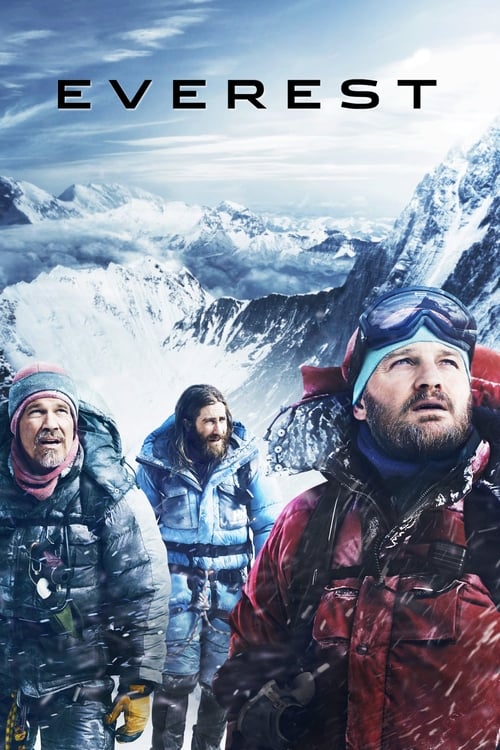
Baltasar Kormákur's dramatisation of the May 1996 disaster follows Rob Hall (Jason Clarke), the New Zealander who pioneered guided Everest climbs for paying amateurs, and the clients of his company, Adventure Consultants: the Texan Beck Weathers (Josh Brolin), the mailman Doug Hansen, the Japanese climber Yasuko Namba and the journalist Jon Krakauer. Scott Fischer (Jake Gyllenhaal) leads a rival team. Most of the film is the trek, the weeks of acclimatisation and the summit push, with Rob's pregnant wife Jan (Keira Knightley) at home and base camp manager Helen (Emily Watson) on the radio.
The one thread the rubric picks up is the business of Everest. The film opens on a card crediting Hall with inventing commercial guiding, and the early scenes dwell on oxygen at $325 a bottle, twenty teams packing base camp, a client fuming about queues in the icefall, and a rival leader telling Hall that Everest is just a business for him. On summit day the crowds, missing ropes and the pressure to get clients to the top all feed into what goes wrong.
The one thread the rubric picks up is the business of Everest. The film opens on a card crediting Hall with inventing commercial guiding, and the early scenes dwell on oxygen at $325 a bottle, twenty teams packing base camp, a client fuming about queues in the icefall, and a rival leader telling Hall that Everest is just a business for him. On summit day a queue at the Hillary Step and missing ropes cost hours, base camp worries about another year with no clients on top, and Rob lets Doug go on long past the turnaround time. The storm traps them high on the mountain: Rob says goodbye to Jan over the radio, and Beck, left for dead, walks back into camp.
The score stays at the bottom because nothing is argued. The antagonist is the mountain and the weather, there are no speeches about society, and climbers and Sherpas from Nepal, Japan, Taiwan and South Africa appear without comment, as do the women who run base camp, report for NBC and wait at home. The business thread is never turned into a case against a system: Rob is the careful guide who turns clients back and cuts Doug a discount, and the rival who calls Everest a business is the one who refuses to coordinate.
Score breakdown
Each category is scored 0 to 3: 0 absent or presence only, 1 brief, 2 recurring or plot-relevant, 3 central or dominant. Timestamps refer to the film's running time.
| Category | Score | What we saw |
|---|---|---|
| Content | ||
| A Race and ethnicity | 0 | No race theme. Sherpas, the Japanese Yasuko and teams from Taiwan and South Africa appear without comment. Ang Dorje's retort that he speaks English better than 'Mr. America' (0:16:07) is banter in character. No interracial couple appears. |
| B Gender and feminism | 0 | Women run base camp (Helen, the team doctor Caroline), report for NBC (0:17:57) and wait at home, but nothing is framed through gender. Fischer's crack that his reporter is easier on the eye than Krakauer (0:18:10) is banter, and Yasuko is presented as a climber chasing her seventh summit (0:36:55), not as a point about women. |
| C Sexuality and gender identity | 0 | No LGBTQ characters or themes. The talk of relationships is about marriages strained by climbing (0:35:55, 0:36:05). |
| D Power and systems | 1 | The commercialisation of Everest recurs through the first hour and feeds the summit-day delays: prices, crowds, queues, and a rival's charge that Everest is a business for Hall. It is aimed at crowding and risk, not framed as a system oppressing a group, and Hall himself is shown putting clients' safety first (0:13:03) and giving Doug a discount (0:11:35).
|
| E Cultural and historical revision | 0 | A dramatisation of real events, introduced with a factual title card (0:01:30). Nothing seen in the material suggests real people were recast with another sex or ethnicity, or that the history was bent to carry a message. |
| F Religion portrayal | 0 | Islam is not portrayed. Religion appears only as a Buddhist blessing ceremony before the climb (0:40:23). |
| Treatment | ||
| G Antagonist coding | 0 | There is no human villain; the antagonist is the mountain and the storm. The South African leader's refusal to cooperate (0:30:57) and Fischer's swagger about guiding (0:32:23) are individual traits. |
| H Didacticism | 0 | No speeches carry a social message. Krakauer's dinner-table question about why they climb (0:36:27) draws out personal motives, and Beck's admission that climbing lifts his depression (0:46:16) is private. |
| I Message over story | 0 | The story follows the climb and the storm; none of its turns bends toward a message. |
| J Left-leaning politics framed as good | 0 | No politics appear, left or right. |
How the number is reached
- Categories A to J add up to 1 of 30, which gives 0.5 (1 ÷ 30 × 10, rounded to the nearest 0.5).
- No counterweight: None needed. The film does complicate its business thread: Hall is the careful guide who turns clients around (0:13:03) and gives Doug a discount (0:11:35), and the rival who calls Everest a business for him is the one who refuses to coordinate (0:30:57). But that is already why D stays at 1.
- Final rating 0.5, none or negligible.
Considered, scored 0
- Ang Dorje's comeback to Beck's question whether he speaks English (0:16:07), a joke rather than a message about race.
- Sherpas, Taiwanese and South African teams and Nepalese officialsa Nepalese army helicopter pilot who flies Beck out (frame 1:50:30), shown without comment.
- Yasuko Namba, 47, going for her seventh summit (0:36:55), which she reaches (1:01:34), presented as an achievement rather than a point about women.
- Women in the base camp roles and Sandy Hill Pittman as an NBC reporter (0:17:57), shown without comment.
- Beck's wife pressing officials to act (1:45:32)Peach Weathers browbeating the US embassy into finding a helicopter for Beck (1:45:32), a wife's determination rather than a statement about women.
- Doug's hope that schoolchildren will see a regular guy follow an impossible dream (0:37:28), a personal motive rather than a point about class.
Evidence and confidence
Confidence: Medium. No English text subtitles, so the dialogue comes from a Whisper transcript of the audio, with 121 frames sampled once a minute. The prepared transcript got stuck repeating one phrase from 0:26:46 to 1:26:00 and again in the last half hour, so those stretches (0:26:30 to 1:26:30 and 1:39:50 to the end) were transcribed again from the same audio. Whisper garbles some names and a few shouted lines in the storm scenes, and a few short exchanges in other languages are not translated.
Category F definition: As in the rubric: Islam shown as a peaceful and tolerant religion, aligned with human rights, in a way that works as a corrective message.
Rubric version 1. Reviewed 18 November 2026.