Woke rating
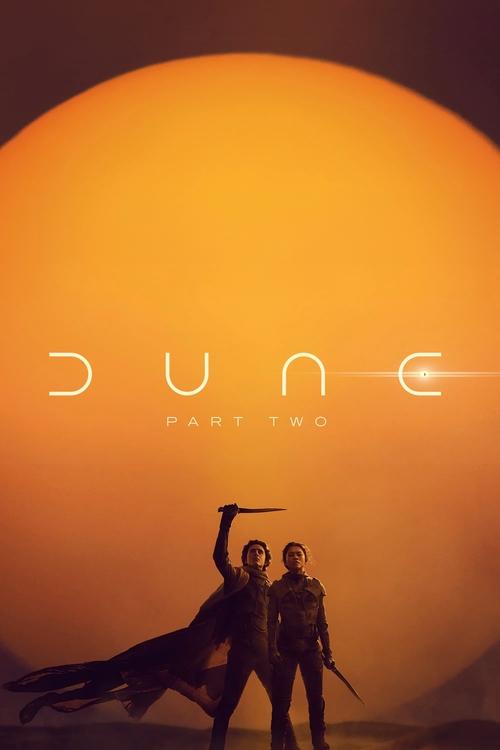
Dune: Part Two
Mild
A sci-fi epic whose anti-colonial frame and wariness of manufactured messiahs come from its world-building, with an interracial central romance counted on sight; it argues no present-day politics and distrusts every faction, including the one it sides with.
Denis Villeneuve's second film from Frank Herbert's 1965 novel picks up after the fall of House Atreides. Paul (Timothée Chalamet) and his pregnant mother Jessica (Rebecca Ferguson) are taken in by the Fremen of the desert planet Arrakis. Paul learns their ways, falls for the warrior Chani (Zendaya) and leads raids on the Harkonnen spice harvest, while Jessica, now a Reverend Mother, spreads a prophecy that casts him as their messiah. On Giedi Prime the Baron (Stellan Skarsgård) readies his nephew Feyd-Rautha (Austin Butler) to take over Arrakis.
What scores comes mostly from the world-building. The Fremen are an occupied people fighting to free their planet, and the film is wary of the faith that rallies them: Chani says messiahs are stories told to control people, Paul tells his mother the Fremen deserve to be led by one of their own, and the Bene Gesserit openly plant their prophecy among the vulnerable. Chani also says that among the Fremen men and women are equal. The romance between Paul and Chani is interracial, which the rubric counts on sight, and it supplies almost a third of the total.
What scores comes mostly from the world-building. The Fremen are an occupied people fighting to free their planet, and the film is wary of the faith that rallies them: Chani says messiahs are stories told to control people, Paul tells his mother the Fremen deserve to be led by one of their own, and the Bene Gesserit openly plant their prophecy among the vulnerable. Chani also says that among the Fremen men and women are equal. Her scepticism becomes the film's conscience: she protests at the war council that the prophecy is how they are enslaved, and when Paul claims the role, kills the Baron and Feyd and takes the Emperor's daughter as his bride, she walks away as the holy war begins. The romance between Paul and Chani is interracial, which the rubric counts on sight, and it supplies almost a third of the total.
What keeps the rating mild is that the film argues no present-day politics, its few pointed lines are short and in character, and it distrusts every side. The liberation it sympathises with takes a darker turnbecomes a fanatical holy war led by an outsider who uses atomic blackmail and the faith he distrusts, the all-female Bene Gesserit are the chief manipulators, the Fremen are split between sceptics and fundamentalists, and the villains have ambitions of their own.
Score breakdown
Each category is scored 0 to 3: 0 absent or presence only, 1 brief, 2 recurring or plot-relevant, 3 central or dominant. Timestamps refer to the film's running time.
| Category | Score | What we saw |
|---|---|---|
| Content | ||
| A Race and ethnicity | 3 | Race is never a theme, but the central romance is interracial, which the rubric counts on sight: Chani, played by the mixed-race Zendaya, and Paul, who is white. Scored 3 because theirs is the film's central romance.
|
| B Gender and feminism | 1 | One line states that Fremen men and women are equal, and Fremen women fight alongside the men. Women hold real power on every side, but the film makes no point about the sexes beyond that line.
|
| C Sexuality and gender identity | 0 | No LGBTQ themes. Margot Fenring's seduction of Feyd-Rautha serves the Bene Gesserit breeding plan, not a point about sexuality. |
| D Power and systems | 2 | Colonial exploitation and institutional manipulation run through the plot: the Harkonnens and the Emperor occupy Arrakis for its spice, the Fremen fight to be free, and the Bene Gesserit plant a religion to steer them. Scored 2, not 3: it is Herbert's power politics among rival houses and orders rather than oppression framed in present-day terms, and the film's main point is the danger of messiahs.
|
| E Cultural and historical revision | 1 | Chani is reworked from the novel's devoted companion into the film's sceptic, who rejects the prophecy throughout and leaves Paul at the end instead of accepting his political marriage. The change sharpens Herbert's warning about messiahs, and with it comes the point, also voiced by Paul (1:01:53), that the Fremen should lead themselves. No recast character was identified in the material.
|
| F Religion portrayal | 0 | Islam is not portrayed. The Fremen's fictional faith borrows Islamic words such as Mahdi and holy war (0:15:57, 2:36:44), but its fundamentalist strand is presented as a danger, the opposite of a corrective portrayal. |
| Treatment | ||
| G Antagonist coding | 1 | The villains are colonial overlords, the Harkonnens drawn as grotesques with mass rallies and contempt for the Fremen as vermin, and the Fremen are their victims. Scored 1, not higher: the Baron, Feyd-Rautha and the Emperor each have their own ambitions, and the hero himself becomes a threatthe hero ends as the greatest threat.
|
| H Didacticism | 1 | A handful of on-the-nose lines, from Chani and from Paul to his mother, state the point about messiahs and self-rule. Each is short and in character.
|
| I Message over story | 0 | The story leads. The scepticism is built into the plot and characters from the start, and nothing bends to make a point. |
| J Left-leaning politics framed as good | 1 | No real-world politics are argued. The film's sympathies lie with a colonised people's right to rule themselves and with Chani's secular scepticism, and the religious fundamentalists of the South are framed as the danger.
|
How the number is reached
- Categories A to J add up to 10 of 30, which gives 3.5 (10 ÷ 30 × 10, rounded to the nearest 0.5).
- Counterweight −1.0: The film complicates the cause it sympathises with: the Fremen are split between sceptics and believers (0:23:28), Paul says his friends have become followers (1:32:21), the all-female Bene Gesserit are the chief manipulators (0:34:37, 1:10:45), and the liberation takes a dark turn.The film complicates the cause it sympathises with: the Fremen are split between sceptics and believers (0:23:28), Paul says his friends have become followers (1:32:21), the all-female Bene Gesserit are the chief manipulators (0:34:37, 1:10:45, 2:07:29), Paul wins the South by playing the messiah he distrusts (2:05:43), threatens to destroy the spice fields with atomics (2:26:22), and the liberation ends in a holy war against the Great Houses (2:36:44).
- Final rating 2.5, mild.
Considered, scored 0
- Fremen played largely by actors of Arab, North African and other backgrounds, and the pale, hairless Harkonnens (frames 1:14:30, 1:20:30): casting and design without comment on race.
- Fremen women fighting alongside the men (frame 0:27:30), shown without comment.
- The Fremen faith's Islamic vocabulary, from Mahdi to holy war: a fictional religion, scored under F as 0.
- The Reverend Mother rite being lethal for men (0:22:04): lore, not a point about the sexes.
Evidence and confidence
Confidence: Medium. Full English subtitles from the embedded track, with the forced track supplying the translated Fremen and other foreign-language lines, and 166 frames sampled once a minute. The sampled frames are dim and washed out (an HDR source), so faces in crowd and night scenes are hard to make out.
Category F definition: As in the rubric: Islam shown as a peaceful and tolerant religion, aligned with human rights, in a way that works as a corrective message.
Rubric version 1. Reviewed 18 November 2026.