Woke rating
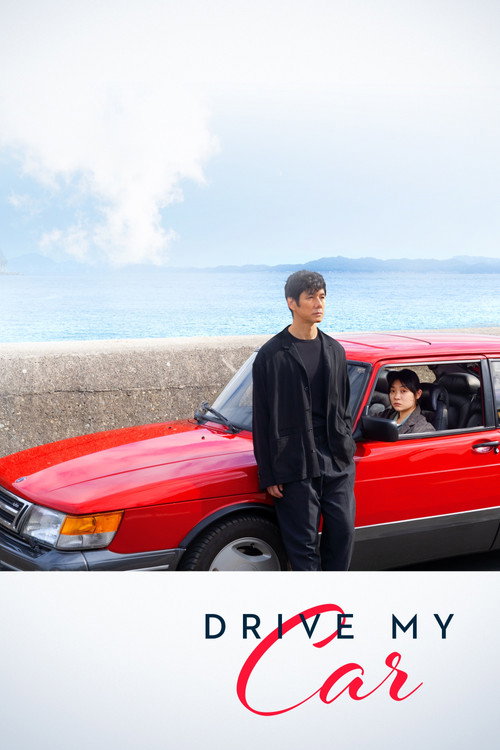
Drive My Car
None or negligible
A long, quiet Japanese drama about grief, marriage and a multilingual staging of Uncle Vanya, with no progressive messaging: its international cast and frank treatment of sex serve the characters, not a cause.
Ryusuke Hamaguchi's adaptation of a Haruki Murakami short story follows Yusuke Kafuku (Hidetoshi Nishijima), a Tokyo stage actor and director whose wife Oto, a screenwriter, dies suddenly. Two years later he takes a residency at a theatre festival in Hiroshima to direct Uncle Vanya, and the festival insists that a young woman, Misaki Watari (Toko Miura), drive his red Saab. Most of the film is auditions, rehearsals and long drives, with Oto's recording of Chekhov's lines playing in the car.
There is very little here for the rubric to find. The Vanya company comes from Japan, Korea, Taiwan and the Philippines and acts in several languages, including Korean Sign Language, as Kafuku's working method rather than as a statement. Sex is frank and matters to the story, since Oto spins her stories after making love, and her secrets are the thing Kafuku cannot face. The film treats all of this as grief and guilt, not as a cause.
There is very little here for the rubric to find. The Vanya company comes from Japan, Korea, Taiwan and the Philippines and acts in several languages, including Korean Sign Language, as Kafuku's working method rather than as a statement. Sex is frank and matters to the story, since Oto spins her stories after making love, and her affairs with actors from her dramas, which Kafuku saw and never raised, are the wound he finally faces in the snow outside Misaki's ruined childhood home. Misaki suggests that Oto's love for him and her other men need not contradict each other; Kafuku answers that he wants to scold her for lying and to apologise for not listening. The film treats all of this as grief and guilt, not as a cause.
The score is zero because nothing is argued. Misaki asks once whether she is turned down for being a young woman, and the answer is no; a mute Korean actress asks not to be treated more gently than the others; Hiroshima's Peace Memorial is a sightseeing stop. The film's subject is loss, guilt and going on living, and its people are individuals rather than stand-ins for a group.
Score breakdown
Each category is scored 0 to 3: 0 absent or presence only, 1 brief, 2 recurring or plot-relevant, 3 central or dominant. Timestamps refer to the film's running time.
| Category | Score | What we saw |
|---|---|---|
| Content | ||
| A Race and ethnicity | 0 | Race and nationality are never argued. The international, multilingual cast of the play is Kafuku's method (0:10:21, 0:43:39), and no interracial couple appears in the dialogue or the sampled frames. |
| B Gender and feminism | 0 | Misaki asks once whether Kafuku refuses her as a driver because she is a young woman, and he says the old car is the reason (0:46:59). Her skill is then shown, not argued, and the women are drawn as individuals. |
| C Sexuality and gender identity | 0 | No LGBTQ content. Sex is frank and central to the marriage and to Oto's affairs, but the film treats it as a private mystery and a source of grief, not as advocacy of sexual freedom. |
| D Power and systems | 0 | No institution is criticised. The festival's rule that a hired driver must take the wheel (0:44:51) sets up the story, and the police appear once, doing their jobthe police arrest Takatsuki for a fatal assault he admits (2:18:27). |
| E Cultural and historical revision | 0 | Adapted from a Haruki Murakami short story and expanded with new characters and the staging of Uncle Vanya. The main characters keep their sex and ethnicity, and no history is revised. |
| F Religion portrayal | 0 | Islam does not appear. Religion figures only in Chekhov's lines about God's pity and the rest to come (2:51:02). |
| Treatment | ||
| G Antagonist coding | 0 | There are no antagonists defined by a group. The most troubled character's faults are his ownTakatsuki's fatal violence comes from his own lack of self-control, which Kafuku names earlier (1:58:15). |
| H Didacticism | 0 | No speeches carry a social message. The long monologues are about knowing another person, grief and going on living (2:12:03, 2:44:25), and much of the rest is Chekhov's text. |
| I Message over story | 0 | The story leads throughout; it is a slow character study. |
| J Left-leaning politics framed as good | 0 | No political positions are raised or framed as good or bad. |
How the number is reached
- Categories A to J add up to 0 of 30, which gives 0.0 (0 ÷ 30 × 10, rounded to the nearest 0.5).
- No counterweight: There is no progressive messaging to mock or complicate.
- Final rating 0.0, none or negligible.
Considered, scored 0
- The multinational, multilingual Uncle Vanya company (casting read-out 1:05:13; rehearsal frames 1:07:30, 1:51:30), Kafuku's artistic method. Asian actors playing Chekhov's Russians is ordinary stage casting inside the story, not a recast of established characters.
- Lee Yoon-A, a mute Korean actress who plays Sonya in Korean Sign Language (1:00:39); she tells Kafuku he need not be kinder to her than to the others (1:26:39). Disability shown as presence.
- Yoon-su and Yoon-A, a Korean married couple who host Kafuku and Misaki for dinner (1:22:13; frames 1:23:30, 1:24:30); not an interracial couple.
- Takatsuki's implied night with the Taiwanese actress Janice, raised only when they arrive late to rehearsal (1:41:31); no couple is shown.
- Misaki's question whether she is refused as a driver for being a young woman (0:46:59), answered at once; Kafuku later praises her driving (1:28:54).
- Oto's secretsOto's affairs (2:04:39) and Misaki's view that her love for Kafuku and her other men need not contradict each other (2:41:14), treated as grief and a failure to talk, not as advocacy; Kafuku answers that he wants to scold her for lying (2:43:00).
- Frank sex scenes (frames 0:04:30, 0:26:30) and Oto's story of a schoolgirl who sneaks into a classmate's room (0:01:23, 0:28:45), part of how Oto writes, not a message.
- Misaki's hard upbringing by a mother who worked nights and hit her when her driving woke her (1:33:23, 1:33:56), told as personal history, not a comment on class.
- An actor's past scandal, reported on the newsTakatsuki's past scandal over a relationship with a minor (2:31:45), reported on the news without comment.
- The waste plant built on the line of Hiroshima's Peace Memorial, the 'axis of peace' (1:44:13), a sightseeing remark.
Evidence and confidence
Confidence: Medium. Full English subtitles from the embedded track, which also translates the Korean, Mandarin, English and Korean Sign Language lines in the rehearsals and the play, and 179 frames sampled once a minute. A wordless stretch from 0:13:50 to 0:17:54 is covered by the frames only.
Category F definition: As in the rubric: Islam shown as a peaceful and tolerant religion, aligned with human rights, in a way that works as a corrective message.
Rubric version 1. Reviewed 18 November 2026.