Woke rating
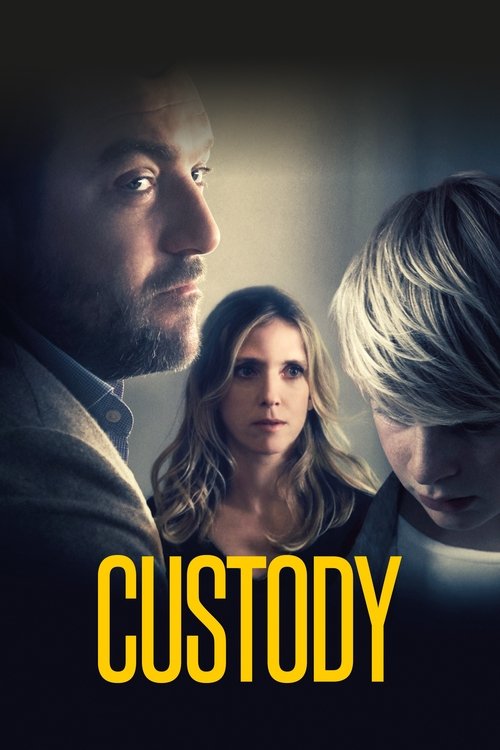
Custody
None or negligible
A tense French drama about a custody fight with a violent father that puts domestic abuse at its centre but shows rather than argues it, gives the father's side a hearing and carries no other progressive messaging.
Xavier Legrand's first feature opens with a long family-court hearing. Miriam Besson (Léa Drucker) wants sole custody of 11-year-old Julien (Thomas Gioria), whose written statement says he never wants to see his father again; Antoine (Denis Ménochet) says he is a loving father being shut out, and his lawyer suggests the boy's words are not his own. The judge rules in Antoine's favour, and the film follows Julien's weekends with his father while his sister Josephine prepares her 18th birthday party.
Domestic violence is the film's subject, and it is told almost wholly through what happens. The hearing sets the two versions side by side: a school nurse's note about Josephine's injured wrist and claims of stalking against affidavits calling Antoine calm and generous. Over the weekends Antoine questions and pressures the boy to find out where his mother now lives, and his temper surfaces with his own parents and later at the party. The last act turns into a thriller.
Domestic violence is the film's subject, and it is told almost wholly through what happens. The hearing sets the two versions side by side: a school nurse's note about Josephine's injured wrist and claims of stalking against affidavits calling Antoine calm and generous. Over the weekends Antoine questions and pressures the boy to find out where his mother now lives, his own parents throw him out, and at the party he grabs Miriam and hits her. The last act is a siege: Antoine returns at night with a hunting rifle and shoots through the door, and Miriam and Julien hide in the bathtub while an emergency operator talks her through until the police arrive.
What keeps the score low is that the film makes no argument beyond its story. No one generalises about men, Antoine is a specific man with his own grievances and moments of grief, and other men in the film side with Miriamanother man at the party stands up for Miriam and his own parents turn him out. The court's ruling sets the danger in motion, but the film does not lecture about the justice system, and the police arrive in time.
Score breakdown
Each category is scored 0 to 3: 0 absent or presence only, 1 brief, 2 recurring or plot-relevant, 3 central or dominant. Timestamps refer to the film's running time.
| Category | Score | What we saw |
|---|---|---|
| Content | ||
| A Race and ethnicity | 0 | No race theme, and no interracial couple was seen in the frames or the dialogue. |
| B Gender and feminism | 2 | A man's violence against his wife and children is the film's subject and drives every scene, ending in an armed attack. It is shown, not argued: no one generalises about men, and Antoine has his own motives, so 2, not 3.
|
| C Sexuality and gender identity | 0 | No LGBTQ+ content. Josephine's teenage romance is part of the family conflict, not a message. |
| D Power and systems | 1 | The opening hearing shows a family court that cannot tell which parent is lying, and its ruling sends Julien to his father. The film lets the consequences speak; the court is not framed as oppressing women, and the authorities are not painted as a wholethe police respond quickly at the end.
|
| E Cultural and historical revision | 0 | An original story. No established characters or history are recast. |
| F Religion portrayal | 0 | Islam does not appear. |
| Treatment | ||
| G Antagonist coding | 0 | The antagonist is one man driven by possessiveness, jealousy and fear of losing his son, not a stand-in for a group. He weeps and insists he has changed (0:55:21), and his own family rebukes himhis own parents berate him and throw him out (0:41:12, 0:41:39), and another man stands up for Miriam at the party (1:10:44). |
| H Didacticism | 0 | No speeches. The lawyers argue the case on facts, each side in turn (0:04:11, 0:07:21), and the rest of the film is largely silent. |
| I Message over story | 0 | The story leads throughout; the tension comes from character and situation, not from a point being made. |
| J Left-leaning politics framed as good | 0 | No political cause is framed as good or bad. |
How the number is reached
- Categories A to J add up to 3 of 30, which gives 1.0 (3 ÷ 30 × 10, rounded to the nearest 0.5).
- Counterweight −0.5: The film gives the father's side a hearing and keeps its abuser human: his lawyer's case for a father's bond with his son opens the film on equal terms (0:07:24, 0:10:09), the judge openly doubts both parents (0:13:00), and Antoine is given grief as well as menace (0:55:21).
- Final rating 0.5, none or negligible.
Considered, scored 0
- Josephine's romance with her boyfriend Samuel (0:12:16, frame 1:13:30), a teenage couple shown without comment.
- A Black call-centre workeremergency operator who talks Miriam through the attack (frame 1:21:30), shown without comment.
- Antoine's mother sneering that a woman who lives alone in the projects has let herself go (0:40:00), character talk.
Evidence and confidence
Confidence: Medium. Full English subtitles (the embedded track) and 94 frames sampled once a minute; the last four are end credits and the night scenes (1:14:30 to 1:20:30) are very dark. Much of the film plays without dialogue, but everything spoken is covered by the subtitles.
Category F definition: As in the rubric: Islam shown as a peaceful and tolerant religion, aligned with human rights, in a way that works as a corrective message.
Rubric version 1. Reviewed 18 November 2026.