Woke rating
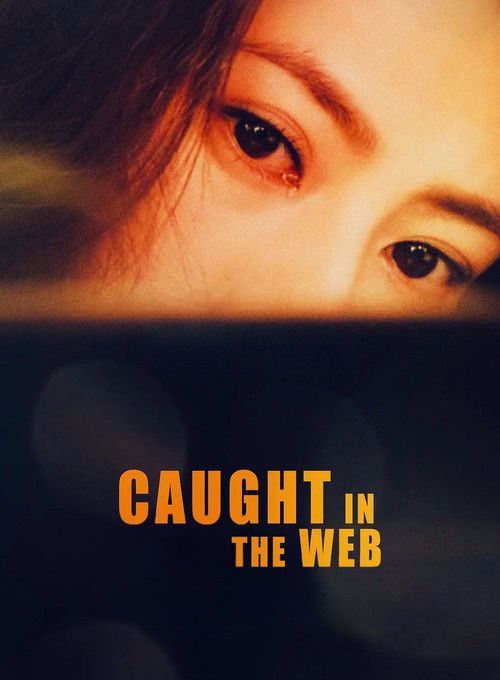
Caught in the Web
None or negligible
A Chinese drama about an online mob and a ratings-hungry media turning on one woman; it takes aim at sensationalism and the arrogance of wealth, with only a light thread about a controlling husband, and carries no identity messaging.
Chen Kaige's drama follows Ye Lanqiu, a company chief's executive secretary who, on the day she learns she has advanced lymphatic cancer, refuses to give her bus seat to an old man and tells him he can sit on her lap. A trainee reporter films it, her ambitious cousin Chen Ruoxi puts it on the evening news, and within days netizens have dug up Ye's name and employer and a rumour that she is her boss's mistress. The fallout spreads to the boss, his wife, the two reporters and their partners.
The film's target is the online manhunt and a media that chases hits: the station counts its text-message earnings, a producer asks the studio pundits to argue for effect, and the boss strikes back at the press with planted stories of his own. Gender enters lightly through the boss's marriage, where he controls his wife's money and tells her she has no say in a divorce. Race, sexuality and religion carry no message.
The film's target is the online manhunt and a media that chases hits: the station counts its text-message earnings, a producer asks the studio pundits to argue for effect, and Shen strikes back with planted stories, a bribery set-up that costs Ruoxi her job, and, after Ye's suicide, a televised plan for a foundation in her name. Gender enters lightly through the boss's marriage, where he controls his wife's money and tells her she has no say in a divorce; she leaves him at the end. Race, sexuality and religion carry no message.
What keeps the score at the bottom of the scale is that the blame is spread across everyone: netizens, pundits, ambitious journalists, a wounded wifea wounded wife who turns out to have made the anonymous call that started the mistress rumour and a powerful husband with plain business motives. Women do as much damage as men, nobody is defined by a group, and there are no speeches beyond the in-character arguments about truth and privacy that the story is built on.
Score breakdown
Each category is scored 0 to 3: 0 absent or presence only, 1 brief, 2 recurring or plot-relevant, 3 central or dominant. Timestamps refer to the film's running time.
| Category | Score | What we saw |
|---|---|---|
| Content | ||
| A Race and ethnicity | 0 | No race theme. The cast is Chinese, and the company's foreign partner, Mr. Stone, appears only through an interpreter (0:56:43), without comment. No interracial couple appears in the dialogue or the sampled frames. |
| B Gender and feminism | 1 | A light thread: Shen treats his wife Mo as a dependant, cutting off her cards and denying her a say in a divorce, and she walks out on him at the end; the newsroom also notes that a pretty young woman draws spite whatever she has done. Shown through character, never argued as a point about men, and the women here do as much harm as the men.
|
| C Sexuality and gender identity | 0 | No LGBTQ content. A young couple's private photos on a stolen phone (0:20:09) are played for comedy, not as a statement about sexual freedom. |
| D Power and systems | 1 | The film's central subject is a media and internet culture that turns one woman's bad moment into profit and a public hunt, and a rich chief executive who uses his power to strike back. It is a critique of sensationalism and of wealth's reach, not of a system oppressing a group, which keeps it at 1.
|
| E Cultural and historical revision | 0 | A contemporary story. No established characters or history are recast. |
| F Religion portrayal | 0 | Islam does not feature, and religion plays no part in the story. |
| Treatment | ||
| G Antagonist coding | 0 | There is no ideological villain. Shen, the nearest thing to an antagonist, is driven by a deal with a foreign partner, a falling share price (1:16:19) and his pride, and the damage is shared with netizens, pundits and the reporters themselves. |
| H Didacticism | 0 | No speeches state a progressive message. The lines about what truth is (0:09:12) and whether success costs a man his privacy (0:51:28) are in-character arguments about media ethics. |
| I Message over story | 0 | The story leads: the plot is a chain of personal choices, rumours and misunderstandings, and nothing bends toward a message. |
| J Left-leaning politics framed as good | 0 | No left-right politics are argued. The film's moral touchstones, giving up a seat to the elderly and helping an old person who falls (1:08:22), are civic virtues rather than partisan positions. |
How the number is reached
- Categories A to J add up to 2 of 30, which gives 0.5 (2 ÷ 30 × 10, rounded to the nearest 0.5).
- No counterweight: None needed. The film does spread the blame widely, with ambitious journalists, a wronged wife who does harm of her own and a boss with real motives, but that is already why B and D stay at 1.
- Final rating 0.5, none or negligible.
Considered, scored 0
- The young couple's worries about property prices and renting for life (0:02:43, 0:19:15, 1:14:02), everyday background rather than a message about capitalism.
- Talk-show and vox-pop complaints that today's spoilt only children are selfish (0:34:58, 0:39:00), shown as part of the media circus the film mocks.
- Mr. Stone, a foreign business partner who speaks through an interpreter (0:56:43), shown without comment.
- Office banter about Ye's looks and weight (0:01:33), character colour.
Evidence and confidence
Confidence: Medium. Full English subtitles of the Mandarin dialogue (the embedded track flagged as forced, which carries every line and translates on-screen web posts and headlines), and 122 frames sampled once a minute. The subtitles do not always make clear who is speaking in group scenes.
Category F definition: As in the rubric: Islam shown as a peaceful and tolerant religion, aligned with human rights, in a way that works as a corrective message.
Noted, not scored: Traditional respect for the elderly is upheld even as the mob's outrage is mocked: Ye's taped apology says she behaved terribly and should have given up her seat (0:29:41), and the corporate video Ruoxi is asked to advise on is about helping an old person who falls (1:08:22).
Rubric version 1. Reviewed 18 November 2026.