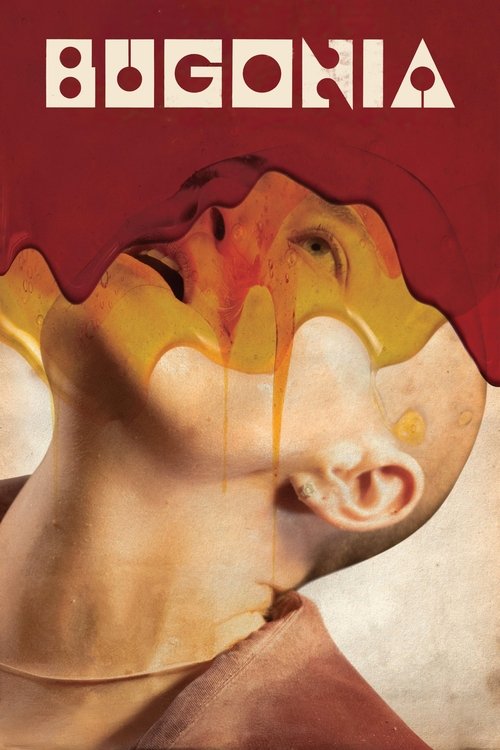
Woke rating
Bugonia
Mild
A pitch-black kidnapping comedy whose anti-corporate and ecological themes give it a mild slant, though it mocks corporate diversity talk and puts its case against big business in the mouth of a violent conspiracy theorist.
Yorgos Lanthimos's English-language remake of the Korean film Save the Green Planet! (2003) follows Teddy (Jesse Plemons), a warehouse worker and beekeeper steeped in online conspiracy theories, who with his cousin Don kidnaps Michelle Fuller (Emma Stone), CEO of the pharmaceutical firm Auxolith, convinced she is an alien from Andromeda. Most of the film is a battle of wills in Teddy's basement: interrogation, bargaining, a strained dinner and worse.
The messaging is mostly about corporations and the planet. Teddy blames Michelle's company for a pesticide he links to dying bees, a coworker is punished for missing quotas after company machinery cut her, and Teddy's grudge has a personal root in what the company did to his family. The last act turns these grievances into a wider verdict on humankind, which is what pushes the score up.
The messaging is mostly about corporations and the planet. Teddy blames Michelle's company for a pesticide he links to dying bees, a coworker is punished for missing quotas after company machinery cut her, and Teddy's mother lies in a coma after an Auxolith drug trial. The last act reveals that Teddy was right: Michelle is an alien, and in a long speech she says humans ruined their waters, ravaged their climate and ignored the evidence of their own self-destruction. Her people then decide humanity's time is over, and the film ends on a montage of the dead and the bees still thriving, set to an anti-war folk song.
What keeps the score mild is that the film mocks nearly everyone. Michelle's first scene sends up corporate diversity talk and a leave-early policy hedged into meaninglessness. The anti-corporate case belongs to a violent, paranoid man who chemically castrates himself and his cousin, tortures his captive and dismisses most activism as personal branding, while Michelle argues back and is given motives of her own. There is no race, gender or sexuality messaging.
Score breakdown
Each category is scored 0 to 3: 0 absent or presence only, 1 brief, 2 recurring or plot-relevant, 3 central or dominant. Timestamps refer to the film's running time.
| Category | Score | What we saw |
|---|---|---|
| Content | ||
| A Race and ethnicity | 0 | No race messaging. A mixed warehouse crew and police appear without comment. |
| B Gender and feminism | 0 | Michelle is a powerful female CEO, but no gender point is made; she raises her sex only as a bargaining chip about media optics (0:24:57). |
| C Sexuality and gender identity | 0 | No LGBTQ themes. The cousins' chemical castration is part of Teddy's paranoid self-discipline, not a point about sexuality. |
| D Power and systems | 2 | Corporate harm drives the plot: a pesticide blamed for the bees' decline, workers ground down by quotas, and an injury to Teddy's familya drug trial that left Teddy's mother in a coma, framed as a company preying on poor people, which Michelle herself admits. Scored 2, not 3: the case is pressed by a paranoid kidnapper, and the film treats his wider worldview as unhinged.
|
| E Cultural and historical revision | 0 | A remake of the Korean film Save the Green Planet! (2003). The kidnapped executive, a man in the original, is now a woman, but the characters are new and renamed rather than established ones recast, and the change carries no message. |
| F Religion portrayal | 0 | Islam and religion play no part. |
| Treatment | ||
| G Antagonist coding | 1 | The target is defined by wealth and corporate power, and Teddy insists she is not a person but corporate evil; the ending proves him right about what she is. Scored 1: Michelle is a fully drawn character with her own motives, and the kidnappers, not the CEO, are the menace for most of the film.
|
| H Didacticism | 2 | The ecological message is stated outright, in Teddy's opening narration and in a long late speechin Michelle's late history of humankind, which the alien council then turns into a verdict. Teddy's other tirades are conspiracy rants the film plays for unease, not as its own voice.
|
| I Message over story | 0 | The story leads. The ending pays off the premiseThe twist and humanity's end pay off the premise and follow the original film. |
| J Left-leaning politics framed as good | 1 | Ecological ruin, climate included, is the film's last wordthe stated reason for humanity's end, and the bees outlast us. No political camp is flattered, though: corporate progressivism is mocked and the anti-corporate crusader is a dangerous fantasist.
|
How the number is reached
- Categories A to J add up to 6 of 30, which gives 2.0 (6 ÷ 30 × 10, rounded to the nearest 0.5).
- Counterweight −0.5: The film mocks corporate progressivism, with a diversity video Michelle finds has too many 'diverses' (0:13:39) and a leave-early policy hedged into meaninglessness (0:14:15); its anti-corporate voice is a violent conspiracy theorist who harms the people around himchemically castrates his cousin (0:09:23) and tortures his captive (0:54:27) and calls most activism personal branding (1:01:11); and Michelle is allowed to argue back on the science of the bees (1:04:27).
- Final rating 1.5, mild.
Considered, scored 0
- Michelle as a powerful female CEO; she cites being a high-profile female executive only as negotiating leverage (0:24:57).
- The remake's change of the kidnapped executive from a man to a woman, as such.
- Teddy and Don's chemical castration (0:09:23), part of Teddy's paranoid regimen.
- Black coworkers at the Auxolith warehouse (frame 0:38:30) and a Black detective and paramedic (frame 1:43:30), as such.
- Michelle's talk of reparations for Teddy's family (1:07:46, 1:16:53), meaning compensation from her companycompensation for the drug trial, not race.
Evidence and confidence
Confidence: Medium. Full English (CC) subtitles from the embedded track, with the forced track covering the scene in an alien language (1:46:09 to 1:47:20), and 118 frames sampled once a minute. The last six minutes are end credits with no dialogue.
Category F definition: As in the rubric: Islam shown as a peaceful and tolerant religion, aligned with human rights, in a way that works as a corrective message.
Noted, not scored: Satire aimed at progressive corporate and activist culture: Michelle's diversity-training video is played as hollow box-ticking (0:13:02), Teddy mocks talk of safe spaces and good-faith dialogue (0:44:58), and he calls most activism exhibitionism and brand maintenance (1:01:11) after drifting through alt-right and Marxist phases (1:01:38).
Rubric version 1. Reviewed 18 November 2026.