Woke rating
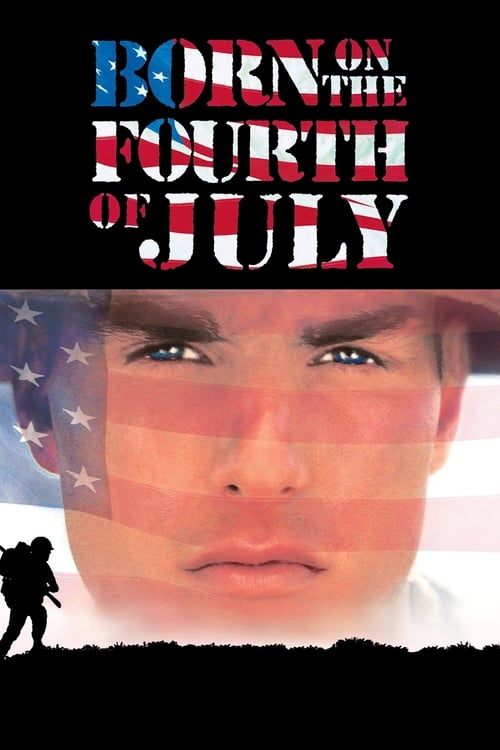
Born on the Fourth of July
Moderate
Oliver Stone's Vietnam biopic is an open anti-war polemic whose speeches indict the government, the military and the patriotic faith that sent its hero to war, though identity politics barely feature and the hero is no saint.
Oliver Stone's adaptation of Ron Kovic's memoir follows Kovic (Tom Cruise) from a flag-waving Long Island boyhood, through the Marines and Vietnam, to a wound that leaves him paralysed from the chest down. The second half is his return: a rat-infested veterans' hospital, a family and town that do not want to hear about the war, drink, despair, and his turn against the war he volunteered for.
The message is the film's spine. The war is presented as a lie sold to a generation by the government, the Church and their parents; the Marines cover up the killing of civilians; wounded veterans are neglected and later beaten and arrested when they protest. Speeches carry it throughout: a Black orderly calling Vietnam a white man's and rich man's war, a girlfriend turned campus organiser, a rally naming Nixon and Agnew as killers, and Kovic's own outbursts and convention-floor speeches. The patriotic establishment, from his pious mother to Nixon's convention crowd, is the opposition, and the film ends with Kovic's cause vindicated.
The message is the film's spine. The war is presented as a lie sold to a generation by the government, the Church and their parents; the Marines cover up the killing of civilians and of Wilson, whom Kovic shot by mistake; wounded veterans are neglected and later beaten and arrested when they protest at Nixon's 1972 convention. Speeches carry it throughout: a Black orderly calling Vietnam a white man's and rich man's war, a girlfriend turned campus organiser, a rally naming Nixon and Agnew as killers, and Kovic's own outbursts and convention-floor speeches. The patriotic establishment, from his pious mother to Nixon's delegates, is the opposition, and the film ends with Kovic wheeled out to address the 1976 Democratic convention, saying he feels at home.
What keeps the score in the moderate band is that nearly all of it is anti-war and anti-government rather than identity politics: race, gender and sexuality come up only briefly, and there is no recasting or religious corrective. The film also lets its hero be ugly: he drinks, rages at his mother and owns his own killings, and it treats a patriotic Georgia military family with real dignity.
Score breakdown
Each category is scored 0 to 3: 0 absent or presence only, 1 brief, 2 recurring or plot-relevant, 3 central or dominant. Timestamps refer to the film's running time.
| Category | Score | What we saw |
|---|---|---|
| Content | ||
| A Race and ethnicity | 1 | Race comes up briefly: one Black orderly's speech about racism at home, a protester's line about Jackson State, and Kovic's paid encounter with a Mexican prostitute, counted as the rubric requires. The Marines' slurs for the Vietnamese and a fellow veteran's tirade against Mexicans are shown as ugly, not argued.
|
| B Gender and feminism | 1 | The film ties the war to a myth of manhood, with recruiters promising to make men of boys and Kovic's wound framed as lost manhood. It is a critique of the war myth rather than a gender argument; the women are mostly his mother, a girlfriend turned activist and prostitutes.
|
| C Sexuality and gender identity | 0 | No LGBTQ theme. Sex runs through the film (his mother's horror at a Playboy, his impotence, the Mexican brothel), but as part of his loss and his mother's prudishness, not as advocacy. |
| D Power and systems | 3 | The dominant message. The government and military are shown lying a generation into an unjust war, covering up the killing of civilians, neglecting wounded veterans in squalid hospitals, and beating and arresting them when they protest. The Vietnamese are cast as a peasant people fighting for independence.
|
| E Cultural and historical revision | 0 | An adaptation of Kovic's own memoir, told from his account. No established characters are recast. |
| F Religion portrayal | 0 | Islam does not appear. Religion in the film is the family's Catholicism, scored under J. |
| Treatment | ||
| G Antagonist coding | 2 | The antagonists are the pro-war establishment: a pious, flag-waving mother, the brass, a bar-room veteran, police and Nixon's convention crowd, largely defined by patriotic and religious conviction. Some get motives and dignity: the parade speaker mourning local boys, the Iwo Jima veteran, and the Wilsons.
|
| H Didacticism | 3 | Speeches state the message again and again, and the film builds toward them.
|
| I Message over story | 2 | Kovic's conversion is the story and is earned through his suffering, but several supporting characters exist mainly as positions (the pious mother, the recruiters, Willie, Donna the organiser), and set-pieces are staged to land points, down to his mother's dream of him speaking to a crowd coming true as an anti-war speech.
|
| J Left-leaning politics framed as good | 3 | The anti-war movement is framed as the truth Kovic has to learn, and patriotism, anti-communism and the Church as the lies that sent him. Nixon's Republicans are the final villains, and the film ends with Kovic welcomed home at the Democratic convention.
|
How the number is reached
- Categories A to J add up to 15 of 30, which gives 5.0 (15 ÷ 30 × 10, rounded to the nearest 0.5).
- Counterweight −0.5: the hero is deeply flawed and not every patriot is a fool: Kovic begins as a sincere believer, drinks and rages at his family, a veteran's rebuke of him gets a hearing (1:30:38), and a patriotic Georgia military family is treated with dignity (2:00:37).Kovic begins as a sincere believer, drinks and rages at his family (1:33:56), and admits his own killings (1:19:02); a veteran's rebuke of his self-pity gets a hearing (1:30:38); the anti-war Stevie is a hustler who stayed in college (1:05:34); and the Wilsons, a patriotic Georgia military family, are treated with dignity, their faith offering him a measure of forgiveness (2:00:37, 2:04:30).
- Final rating 4.5, moderate.
Considered, scored 0
- The Marines' use of 'gooks' (0:28:01 onward) and Charlie's slurs against Mexicans (1:52:21), shown as part of the brutality, not argued.
- The hospital's Black orderlies and nurse and the mixed ward, shown without comment beyond Willie's speech.
- His mother's horror at a Playboy magazine (0:11:31) and Kovic's outburst about sin and his useless body (1:37:08), grief rather than advocacy of sexual freedom.
- Slurs such as 'pansy demonstrators' (1:19:14) and 'maricón' (1:51:44), characters' language.
- A convention aide's passing mention of a feminist speaker running over time (2:15:24).
Evidence and confidence
Confidence: Medium. Full English subtitles (the embedded SRT track) and 144 frames sampled once a minute. A few short Vietnamese and Spanish phrases in the Vietnam and Mexico scenes are not translated; none carries plot or message.
Category F definition: As in the rubric: Islam shown as a peaceful and tolerant religion, aligned with human rights, in a way that works as a corrective message.
Noted, not scored: Some points cut the other way: the Wilsons' family tradition of service and their faith are treated with respect (2:00:37, 2:04:30), Kovic insists he still loves America (2:09:01), and Nixon is heard asking that Vietnam veterans get the honour they have earned (2:11:19).
Rubric version 1. Reviewed 17 November 2026.