Woke rating
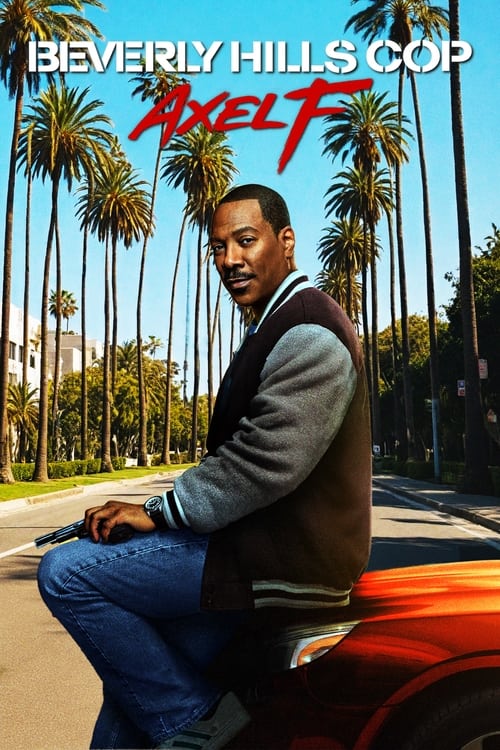
Beverly Hills Cop: Axel F
None or negligible
A nostalgic action-comedy sequel whose only rubric points come from a supporting interracial romance and a crooked-cop plot; its race jokes mostly poke fun at racial sensitivity rather than preach.
Mark Molloy's Netflix sequel brings Axel Foley (Eddie Murphy) back from Detroit to Beverly Hills forty years after the first film. His old friend Billy Rosewood (Judge Reinhold) has gone quiet, and his estranged daughter Jane (Taylour Paige), a defence lawyer, has been threatened over her client, a young man charged with killing an undercover cop. With Detective Bobby Abbott (Joseph Gordon-Levitt) and the now-chief Taggart (John Ashton), Axel works the case through chases, impersonations and shoot-outs while trying to patch things up with Jane.
What the rubric picks up is incidental. Jane and Bobby, a Black woman and a white man, are former lovers whose lingering spark is a running joke. The case points at corruption inside the police, and the client is a young Latino man who may have been set up. Axel gets one line about being Black when officers draw guns on him, and race turns up in several gags.
What the rubric picks up is incidental. Jane and Bobby, a Black woman and a white man, are former lovers whose lingering spark is a running joke. The villain is Cade Grant (Kevin Bacon), a narcotics task-force captain on the cartel's payroll, who had the undercover cop killed and framed Jane's client, a young Latino man. Axel gets one line about being Black when officers draw guns on him, and race turns up in several gags.
What keeps the score at the bottom is that none of it is argued. The corruption is one man's greedGrant's greed and grievance over pay, the other cops are decent, and the film's heart is a father-daughter reconciliation, not politics. Its race humour mostly cuts the other way: the opening has Axel fake offence to tease a white colleague and then lampoon his apology, and Bobby's sensitive-modern-man routine is a joke at his expense.
Score breakdown
Each category is scored 0 to 3: 0 absent or presence only, 1 brief, 2 recurring or plot-relevant, 3 central or dominant. Timestamps refer to the film's running time.
| Category | Score | What we saw |
|---|---|---|
| Content | ||
| A Race and ethnicity | 2 | Jane and Bobby, a Black woman and a white man, are exes whose romance is a recurring supporting thread, scored on sight. Race otherwise appears as one line about police and a handful of jokes.
|
| B Gender and feminism | 0 | No gender messaging. Jane's quarrel with Axel is about an absent father, and Bobby's line about modern manhood is a joke at his own expense. |
| C Sexuality and gender identity | 0 | No LGBTQ themes. Serge's flamboyance and his talk of sex parties are a comic turn without commentary. |
| D Power and systems | 1 | The plot turns on police corruption and a young Latino man who may have been set upframed for a cop's murder, but it is told as one officer'sone captain's greed, not as a system oppressing a group; the chief, Rosewood and Abbott are good cops.
|
| E Cultural and historical revision | 0 | A legacy sequel with Eddie Murphy, Judge Reinhold, John Ashton, Paul Reiser and Bronson Pinchot back in their old roles. Jane is a new character; nothing established is recast. |
| F Religion portrayal | 0 | Islam does not appear, and religion plays no part in the story. |
| Treatment | ||
| G Antagonist coding | 0 | The villain is defined by his crimes and an individual motivehis greed and resentment over pay, not by belonging to a group; the cartel henchmen are genre muscle. |
| H Didacticism | 0 | No speeches about race, gender or politics. The film's heart-to-hearts are about parenting (0:56:05, 1:45:31). |
| I Message over story | 0 | The story leads. It is a buddy-cop caper built around a father-daughter reunion. |
| J Left-leaning politics framed as good | 0 | No politics are argued. Jane's defence of her client is framed as plain justice, not as a cause. |
How the number is reached
- Categories A to J add up to 3 of 30, which gives 1.0 (3 ÷ 30 × 10, rounded to the nearest 0.5).
- Counterweight −0.5: The film's race humour mostly mocks racial sensitivity: the opening has Axel invent a Black hockey league to make a white colleague feel guilty, then lampoon his promise to be a better white man (0:03:00, 0:03:43); Bobby's lecture that the world has changed and his manhood cannot be threatened is played for laughs (0:28:34); and the corruption is pinned on one man with individual motives (1:19:20) while Taggart, Rosewood and Bobby are shown as good police.
- Final rating 0.5, none or negligible.
Considered, scored 0
- Serge (Bronson Pinchot), the flamboyant estate agent from the earlier films, joking about sex parties (1:07:07), as a comic turn.
- Jane as a capable defence lawyer; the film makes no point about her sex.
- A largely Black and Latino supporting cast, and passing race gags such as Serge's monkey remark (1:05:40) and a car valet mocking Axel's appeals to brotherhood and his code-switching (1:28:53, 1:29:05), as comedy.
- Axel's brief flirting with the estate agent's assistant Ashley, a white woman (1:09:39), a passing exchange rather than a couple.
Evidence and confidence
Confidence: Medium. Full English subtitles from the embedded track, with the forced track for two short Spanish exchanges, and 118 frames sampled once a minute; the last nine are end credits. No gaps in the dialogue were found.
Category F definition: As in the rubric: Islam shown as a peaceful and tolerant religion, aligned with human rights, in a way that works as a corrective message.
Noted, not scored: Axel's Detroit boss Jeffrey grumbles that departments no longer want swashbucklers on the street, only social workers (0:11:40), and the opening gag mocks a white colleague's anxious apology (0:03:43).
Rubric version 1. Reviewed 18 November 2026.