Woke rating
Am I Racist?
None or negligible
A conservative comedy-documentary in which Matt Walsh poses as a budding DEI expert to mock the anti-racism industry; every progressive claim on screen is there to be ridiculed, so it scores at the bottom of the scale, while its own message runs the other way.
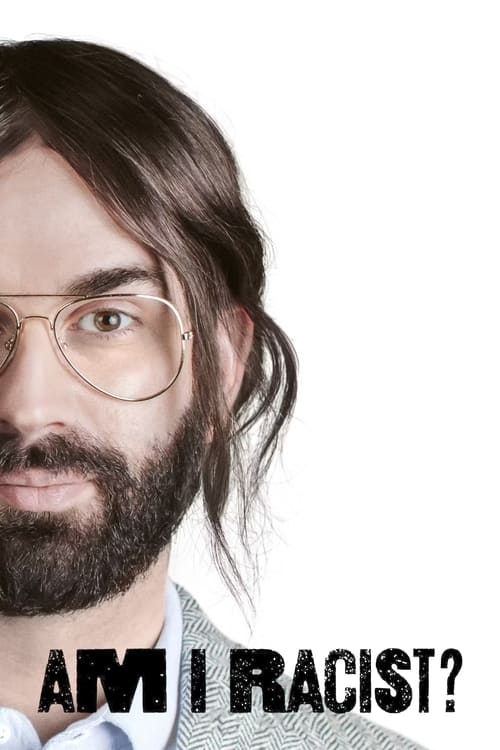
Matt Walsh, who calls himself a well-known conservative (0:14:00), sets out to learn whether he is racist. With a man bun, a fake name at first and an online DEI certificate, he interviews an anti-racism educator, a bookseller and a founding member of Black Lives Matter Phoenix, sits in on a $30,000 white-grief workshop and a Race2Dinner evening, takes his questions to a biker bar and to Black business owners in the South, and finally meets Robin DiAngelo, the author of White Fragility, before running a workshop of his own. Most scenes are real encounters with people who do not know who he is; a few are staged, and the credits list actors for Uncle Frank and the 'MAGA thugs' (1:36:30).
The screen is full of progressive claims, said straight by the people who hold them: America is racist to its bones, whiteness should be abolished, Republicans are Nazis, the whole system has to burn. Walsh draws them out with deadpan questions and the editing sets each one up for a laugh, often with the fee paid for the interview stated. Against them the film sets bikers and Black shop owners who say race should not matter, and a Black academic who argues that many famous hate crimes were hoaxes. The last act turns the anti-racist playbook on itself.
The screen is full of progressive claims, said straight by the people who hold them: America is racist to its bones, whiteness should be abolished, Republicans are Nazis, the whole system has to burn. Walsh draws them out with deadpan questions and the editing sets each one up for a laugh, often with the fee paid for the interview stated. Against them the film sets bikers and Black shop owners who say race should not matter, and a Black academic who argues that many famous hate crimes were hoaxes. DiAngelo ends up handing cash 'reparations' to Walsh's Black producer, Walsh's own workshop ends with a whip handed round for self-flagellation, and Walsh drops the act to say on air that the whole thing is a scam, then closes with a monologue calling the anti-racism industry a lie sold by 'race-baiting con artists'.
The score is zero because the rubric measures progressive messaging that a work promotes, and messaging the work itself mocks counts less. Here nothing is promoted: every DEI idea on screen is the target of the satire, and the film never presents one as its own view. Its own message is conservative, colour-blind and openly argued, especially in the closing monologue and song, so it is listed under 'not scored' rather than counted. The rating says nothing about whether the film is fair to the people it films.
Score breakdown
Each category is scored 0 to 3: 0 absent or presence only, 1 brief, 2 recurring or plot-relevant, 3 central or dominant. Timestamps refer to the film's running time.
| Category | Score | What we saw |
|---|---|---|
| Content | ||
| A Race and ethnicity | 0 | Race is the film's whole subject, but every systemic-racism and white-privilege claim on screen comes from interviewees the film is mocking, such as the call to abolish whiteness (0:34:44) and the claim that America is racist to its bones (0:08:07). The film's own position is colour-blind. No interracial couple is shown; a dinner guest mentions her Black husband in one line (0:41:25). |
| B Gender and feminism | 0 | Gender comes up only in passing and is mocked with the rest: DiAngelo's aside that we live in patriarchy (1:08:16), Walsh asking what 'mansplain' means (1:08:32), and a Race2Dinner host scolding white women over reproductive rights (0:42:56). |
| C Sexuality and gender identity | 0 | No LGBTQ theme. Pronoun rounds (0:15:30), a callback to Walsh's earlier question 'What is a woman?' (0:27:30) and his jargon question to bikers about heteronormativity (0:49:30) are jokes at progressive language, not advocacy. |
| D Power and systems | 0 | Claims that the system is racist, that police kill with a badge (0:33:22) and that the country is built on stolen land (0:36:00) are all presented to be ridiculed. The institution the film attacks is the DEI industry itself, from the right. |
| E Cultural and historical revision | 0 | A documentary with staged comic scenes. Nothing is recast to carry a progressive message; the petition to rename the Washington Monument after George Floyd (0:36:37) is a prank that mocks such renaming. |
| F Religion portrayal | 0 | Islam does not feature. Religion appears as Christian faith, shown favourably (see 'not scored'). |
| Treatment | ||
| G Antagonist coding | 0 | The film's targets are anti-racism educators and activists, defined by their ideology and their fees. That is the reverse of the rubric's pattern: no white, male, Christian or conservative group is cast as the villain, and the Trump-poster biker bar (0:47:30) comes off well. |
| H Didacticism | 0 | Plenty of lecturing is filmed, from the grief workshop's opening speech (0:16:38) to DiAngelo's definitions (1:07:42), but it is the material being satirised. The one speech that states the film's own message is Walsh's anti-DEI monologue (see 'not scored'). |
| I Message over story | 0 | The structure is built to make a point, but the point is anti-progressive; nothing bends toward the messages the rubric counts. |
| J Left-leaning politics framed as good | 0 | Left-leaning positions, from reparations (0:29:27) to gun control framed as white supremacy (0:43:15), are presented as absurd, and conservatives are not portrayed as bad. |
How the number is reached
- Categories A to J add up to 0 of 30, which gives 0.0 (0 ÷ 30 × 10, rounded to the nearest 0.5).
- No counterweight: There is no progressive score to offset. The film's satire of everything it shows is already why every category scores 0.
- Final rating 0.0, none or negligible.
Considered, scored 0
- The Ibram X. Kendi epigraph on past and present discrimination (0:00:30), quoted to set up the satire.
- Kate Slater's interview on reallocating white people's resources (0:06:01) and on talking to children about racism before they can talk (0:06:36).
- The bookseller's anti-racism section and her definition of 'diverse' as anyone not white (0:10:47).
- The white-grief workshop, its cry room (0:23:59) and Walsh's ejection once he is recognised (0:25:30).
- Sarra Tekola's call to abolish whiteness and her line that white culture is buying and stealing (0:34:44 to 0:34:57).
- The Race2Dinner hosts' claims that Republicans are Nazis (0:42:14) and that the system has to burn (0:43:31).
- The mother who called a costumed character's snub of her daughters an intentional racist act (0:55:47).
- Robin DiAngelo's interview on over-smiling and under-smiling at Black colleagues (1:08:59, 1:12:01), ending with her paying 'reparations' in cash to Walsh's Black producer (1:16:51).
- Walsh's own Do the Work! Workshop, with its 'racism is non-binary' scale (1:21:02) and the staged confrontation with Uncle Frank (1:25:48).
- A dinner guest's mention of her Black husband (0:41:25); no interracial couple is shown.
Evidence and confidence
Confidence: Medium. Full English subtitles from the file's embedded track, which covers the whole film including the songs, plus 100 frames sampled once a minute. A few profanities are left blank in the subtitles (for example 1:27:27), which does not affect the scoring.
Category F definition: As in the rubric: Islam shown as a peaceful and tolerant religion, aligned with human rights, in a way that works as a corrective message.
Noted, not scored: The film argues a conservative, colour-blind position throughout: bikers say race should not be thrown into everything and people should be treated right (0:48:03, 0:51:20), and Black interviewees in the South say love is the answer to racism and America has been good to them (0:52:45, 0:54:24). Wilfred Reilly, author of Hate Crime Hoax, argues that the hate-crime 'epidemic' is a media creation and that many famous cases were faked (0:58:22 to 1:02:08), followed by a mocking re-enactment of the Jussie Smollett story (1:02:47). Christian faith is shown favourably: a former drug dealer says he got out through the Word of God (0:52:01), and a shop owner says the only thing he reads is the Bible (0:53:35). The ending states the film's own thesis outrightWalsh's closing monologue calls the anti-racism industry a lie meant to manipulate people (1:34:01), and the closing song says that when everybody is called racist, the word stops meaning anything (1:36:00).
Rubric version 1. Reviewed 18 November 2026.