Woke rating
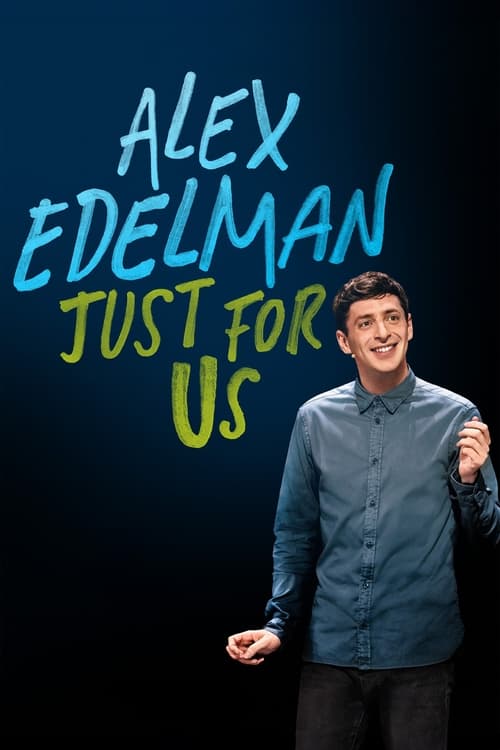
Alex Edelman: Just for Us
Mild
Alex Edelman's stand-up story about going to a white-nationalist meeting in Queens is mostly about Jewish identity and the limits of empathy, with a mild progressive edge in its talk of White privilege and its mockery of the meeting's anti-diversity grievances.
Alex Edelman's one-man stand-up show, filmed on a Broadway stage, tells one long story: after a radio show of his draws a flood of antisemitic tweets, he spots an invitation for anyone in New York with 'questions about your Whiteness' and goes to the meeting, in a Queens apartment, alone. Around it he weaves stories about growing up religious and Jewish in Boston, his brother's Olympic skeleton career for Israel, the year his family held Christmas for a bereaved friend, and a fight with an old schoolfriend and his wife who will not vaccinate their baby.
The rubric's material sits in the meeting and the questions of Whiteness around it. Edelman describes Boston's hierarchy of White people and his childhood wish to seem less Jewish, then relays the group's grievances (Meghan Markle, Confederate statues, 'replacement', diversity hiring, reverse racism and the 'myth' of White privilege) for laughs. As the night goes on he argues to the group that Whiteness is a social construct and that he benefits from White privilege, a later girlfriend calls the whole trip the epitome of White privilege, and the close warns that some of these people want everyone in the audience gone. In silent asides he places himself on the left, nodding along to a workplace 'reckoning' and campaign finance reform.
The rubric's material sits in the meeting and the questions of Whiteness around it. Edelman describes Boston's hierarchy of White people and his childhood wish to seem less Jewish, then relays the group's grievances (Meghan Markle, Confederate statues, 'replacement', diversity hiring, reverse racism and the 'myth' of White privilege) for laughs. When his yeshiva schooling gives him away, the room turns; he argues that Whiteness is a social construct and that he benefits from White privilege, the group insists he is not White at all, and Chelsea, the woman he had hoped to charm, tells him the meeting is 'just for us' and throws him out. A later girlfriend calls the whole trip the epitome of White privilege, and the close warns that some of these people want everyone in the audience gone. In silent asides he places himself on the left, nodding along to a workplace 'reckoning' and campaign finance reform.
What keeps the score mild is that the show's real subject is antisemitism, Jewish identity and how far empathy should reach, not party politics, and that its main target is Edelman himself. He mocks his own sanctimony and 'good guy' fantasies, says he was performing to be liked and admits he caved and apologised on his way out, gives the nationalists a human side, is just as hard on his own community, and ends by defending talking to people who disagree with you, on the far left as well as the far right.
Score breakdown
Each category is scored 0 to 3: 0 absent or presence only, 1 brief, 2 recurring or plot-relevant, 3 central or dominant. Timestamps refer to the film's running time.
| Category | Score | What we saw |
|---|---|---|
| Content | ||
| A Race and ethnicity | 2 | Whiteness and who counts as White run through the show, and White privilege is affirmed at its climax. Most of it is told for laughs and at the expense of open racists, and the main thread is antisemitism rather than race politics, so it stops short of 3. No couples appear; the frames show Edelman alone on stage.
|
| B Gender and feminism | 0 | Gender is not a theme. A silent, mock-agreeing aside about a workplace 'reckoning' for men (0:49:44) is a political joke and is counted under J; the line that he dates very assertive women (0:36:28) sets up a joke about himself. |
| C Sexuality and gender identity | 0 | One self-deprecating joke: raised secular in a liberal city he would call himself bisexual, but raised religious in Boston he is 'straight with a couple of secrets' (0:40:19). No message is drawn from it. |
| D Power and systems | 0 | No institution is shown oppressing a group. A nationalist's complaint that billionaires and corporations control elections (0:50:04) is used for a joke about Edelman's own politics (counted under J), and his explanation of social-media algorithms and echo chambers (0:50:53) is about how ideas spread, not about a group. |
| E Cultural and historical revision | 0 | Original autobiographical material; no established characters or history are recast. |
| F Religion portrayal | 0 | Islam is not mentioned. Religion here is Judaism, plus the story of the family's Christmas for a grieving Christian friend, which falls outside this category's definition. |
| Treatment | ||
| G Antagonist coding | 1 | The antagonists are a White-nationalist group, defined by their ideology and set against a Jewish narrator, which follows from the story being told. They are individuals rather than a faceless bloc (the jigsaw-puzzle lady, Chelsea, Witt, 'Cortez'), and Edelman says they feel powerless and voiceless (1:09:30) and are not life's winners (0:52:03). The mainstream conservative positions they voice are scored under J.
|
| H Didacticism | 1 | Stand-up is monologue by nature, and most of Edelman's reflections are about empathy and Jewish identity, which the rubric does not score. A few lines state a progressive point outright.
|
| I Message over story | 0 | The show is built as one true story with digressions, and it bends toward Edelman's questions about empathy and belonging rather than toward a political point. His own failures drive the ending as much as the nationalists do. |
| J Left-leaning politics framed as good | 2 | Edelman's own politics surface in recurring asides and are plainly left of centre, while mainstream conservative positions (opposition to removing Confederate statues, doubts about White privilege, objections to diversity hiring, talk of reverse racism) appear only in the mouths of the White-nationalist meeting and are played for mockery. Not 3, because the show's subject is antisemitism and empathy rather than politics, and it names the far left alongside the far right.
|
How the number is reached
- Categories A to J add up to 6 of 30, which gives 2.0 (6 ÷ 30 × 10, rounded to the nearest 0.5).
- Counterweight −0.5: Edelman complicates his own side: he mocks the sanctimony of scrolling a list of bigots to feel like 'a good boy' (0:08:39), and his self-congratulation over empathising with the group (0:53:26) and his 'good guy' fantasies of fixing them (1:10:23); he admits he was performing to be liked (1:21:19) and that he caved and apologised to the room on his way out (1:24:48, 1:25:04). He gives the nationalists a human side (0:34:36, 1:09:30), is as hard on his own community as on anyone (0:45:12, 1:08:38), and defends talking to people you disagree with, naming the far left as well as the far right (1:25:26, 1:25:38).
- Final rating 1.5, mild.
Considered, scored 0
- The frames show Edelman alone on stage throughout; no couples or other performers appear.
- The bisexual joke (0:40:19), self-deprecation with no message attached.
- The argument with an old friend and his wife who will not vaccinate their baby (0:45:12), a point about science that Edelman turns into a question about his own lack of empathy (0:48:59).
- 'It used to be skin color, but someone had a dream' (0:47:42), a Martin Luther King gag inside the vaccine argument.
- The family's Christmas for a bereaved Christian friend and the rabbi who calls it idol worship (1:08:38), a story about interfaith kindness, outside the rubric's definition of F.
- The joke that these are racists in Queens, the most diverse borough, two blocks from Little Ethiopia (0:52:33), aimed at the group's situation rather than making a point.
- Chelsea's rant about Jared Kushner and Edelman's jokes about Kushner at his synagogue (0:17:19), personal gags, not a political message.
- His brother competing for Israel (0:27:18), which he calls 'a whole separate kettle of fish' and does not discuss.
Evidence and confidence
Confidence: Medium. Full English SDH subtitles from the file's embedded track, covering the whole show from the opening song (0:00:04) to the closing song (1:28:29), plus 89 frames sampled once a minute. One short aside is marked inaudible (0:27:35), and the slur used at the meeting is described rather than spoken (0:34:26); neither affects the scoring.
Category F definition: As in the rubric: Islam shown as a peaceful and tolerant religion, aligned with human rights, in a way that works as a corrective message.
Noted, not scored: A passing jab at political correctness: he appreciates the 'politically correct world' in which everyone pretends all holidays are equal, then says they are not (0:56:19). Social media is mocked as a place people go to be outraged at 'the other team' (0:08:28), and the close argues against shutting yourself in a room with people who agree with you (1:25:26).
Rubric version 1. Reviewed 18 November 2026.