Woke rating
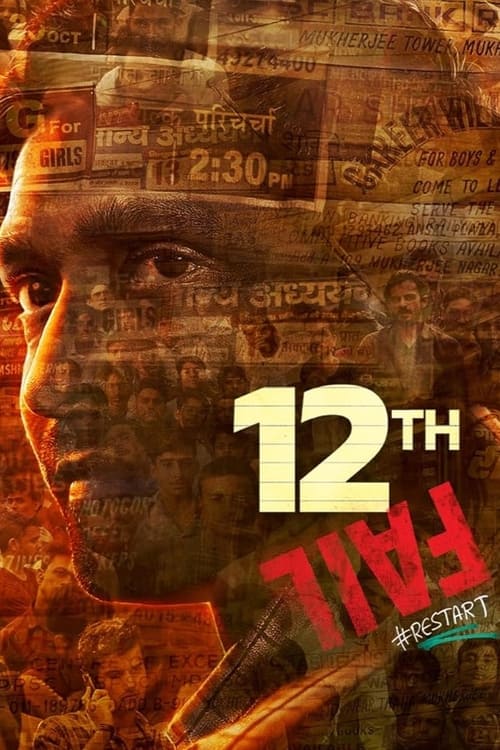
12th Fail
Mild
A true-story underdog drama about honesty and India's civil-service exam, with a clear class-and-corruption theme and a few pointed speeches, though its heroes are honest officers and its faith is in the system rather than against it.
Vidhu Vinod Chopra's film tells the true story of Manoj Kumar Sharma, a boy from a village in the Chambal region who fails his final school exams in the year a new police officer stops his school's organised cheating. Inspired by that officer, he heads to Delhi's coaching district to sit the UPSC exam for the Indian Police Service. His friend Pandey narrates years of toilet cleaning, flour-mill shifts, failed attempts, friendships and a romance with a fellow aspirant, Shraddha.
The messaging is about class and corruption. A local Mayor's network robs farmers, runs the cheating school and gets the police to arrest Manoj's brother; later a coaching centre fakes its results and a constable asks for a bribe. Manoj speaks up twice for the poor, Hindi-speaking students who cannot pay for coaching, and in his interview he says the powerful keep the poor uneducated so they can be led, quoting Ambedkar. Shraddha's reason for joining the civil service is a domestic-violence death the police wrote off as an accident.
The messaging is about class and corruption. A local Mayor's network robs farmers, runs the cheating school and gets the police to arrest Manoj's brother; later a coaching centre fakes its results and a constable asks for a bribe. Manoj speaks up twice for the poor, Hindi-speaking students who cannot pay for coaching, and in his interview he says the powerful keep the poor uneducated so they can be led, quoting Ambedkar. Shraddha's reason for joining the civil service is a domestic-violence death the police wrote off as an accident. The interview board that seemed set against him selects him, and Pandey's closing narration sends the Mayor and his cronies off in a makeshift rickshaw.
What keeps the score mild is that the film's main sermon is about honesty and persistence, which no political camp owns. It is firmly on the side of the institutions: the hero's model is an honest police officer, the exam is presented as hard but fair, and the closing card dedicates the film to the honest officers who keep the country safe. The poor characters are flawed too: Manoj starts out cheating and lies to impress Shraddha, and his father nearly gives up and joins the fraud. Race, sexuality and religion carry no message.
Score breakdown
Each category is scored 0 to 3: 0 absent or presence only, 1 brief, 2 recurring or plot-relevant, 3 central or dominant. Timestamps refer to the film's running time.
| Category | Score | What we saw |
|---|---|---|
| Content | ||
| A Race and ethnicity | 0 | No racial or ethnic message, and no interracial couple. Caste comes up once, as a plain fact about exam rules, and once in the interview as something politicians exploit. |
| B Gender and feminism | 1 | Shraddha's choice of career comes from a domestic-violence death, told in one scene, and she later stands up to her father's distrust as a newly qualified officer. Otherwise she is a supportive partner, and nothing else is framed as a point about gender.
|
| C Sexuality and gender identity | 0 | No LGBTQ+ content. |
| D Power and systems | 2 | Corruption drives the plot from the first scene, and the film ties it to the poor: the Mayor's network robs farmers, keeps a cheating school and has the police arrest the hero's brother, and the hero later says the powerful keep the poor uneducated on purpose. Scored 2, not 3: the remedy is honest officers inside the system, and the police and exam board are not shown as oppressors as such.
|
| E Cultural and historical revision | 0 | The narrator presents it as a true story (0:02:26). Nothing in the material suggests established characters or history were recast to carry a message. |
| F Religion portrayal | 0 | Islam does not feature. Muslim names appear among the candidates and the interview board without comment. |
| Treatment | ||
| G Antagonist coding | 1 | The villains are the Mayor's network and a few corrupt policemen, defined by greed and power with no inner life, and the poor family are their victims. Wealth or class alone does not make anyone a villain: well-off characters such as the IAS officer Deep Mohan and Shraddha's family are not.
|
| H Didacticism | 2 | Several speeches state the class theme directly, though each is a retort or an interview answer the scene calls for. The film's most frequent sermon is about honesty, which is not scored here.
|
| I Message over story | 0 | The story leads: the speeches come at natural points in a story about exams, and the turns follow the true story's years of attempts rather than bending toward a message. |
| J Left-leaning politics framed as good | 0 | The moral axis is honesty against corruption, not left against right. The single Ambedkar line is a call to educate the poor, and nothing conservative is put down; the 'age-old tradition' the film condemns is cheating. |
How the number is reached
- Categories A to J add up to 6 of 30, which gives 2.0 (6 ÷ 30 × 10, rounded to the nearest 0.5).
- Counterweight −0.5: The film complicates its own underdog side and does not cast the privileged as villains: Manoj starts out cheating (0:02:16) and lies to Shraddha about being an engineer (1:05:31); his father, broken, proposes joining the seed fraud (1:24:53); the interview chairman's reply that Hillary found the way for the Sherpa is left standing (2:11:28); and the officers who matter, from the honest police chief (0:17:44) to the interview boardthe board that selects Manoj (2:15:40), are shown as fair.
- Final rating 1.5, mild.
Considered, scored 0
- Gauri's two extra exam attempts as a candidate from a backward caste (0:37:31), stated as a rule without comment.
- Muslim characters such as the candidate Tauheed Raza (2:01:53) and a panellist on the interview board, shown without comment.
- Pandey's drunken claim that all girls leave a loser (1:37:31), which the romance answers rather than argues against.
- Shraddha taking the lead in the romance and proposing marriage (2:06:24), shown as love rather than a point about roles.
- Manoj's mother and sister running the household and tending cows (1:21:25), shown without comment.
Evidence and confidence
Confidence: Medium. Full English subtitles (the embedded track, which translates the Hindi dialogue and songs) and 147 frames sampled once a minute. The HDR frames are dark but readable, and no stretch of dialogue was missing.
Category F definition: As in the rubric: Islam shown as a peaceful and tolerant religion, aligned with human rights, in a way that works as a corrective message.
Noted, not scored: Much of the message is one conservatives also hold: an honest third-class pass over a dishonest first (2:08:17), hard work and duty to family, and patriotism, from the grandfather who died in the war (0:12:18) to the closing praise of the country (2:20:39) and the dedication to honest officers (2:21:30). Manoj's interview answer also attacks politicians who manipulate the uneducated by caste and religion (2:08:51), a criticism of identity politics.
Rubric version 1. Reviewed 17 November 2026.